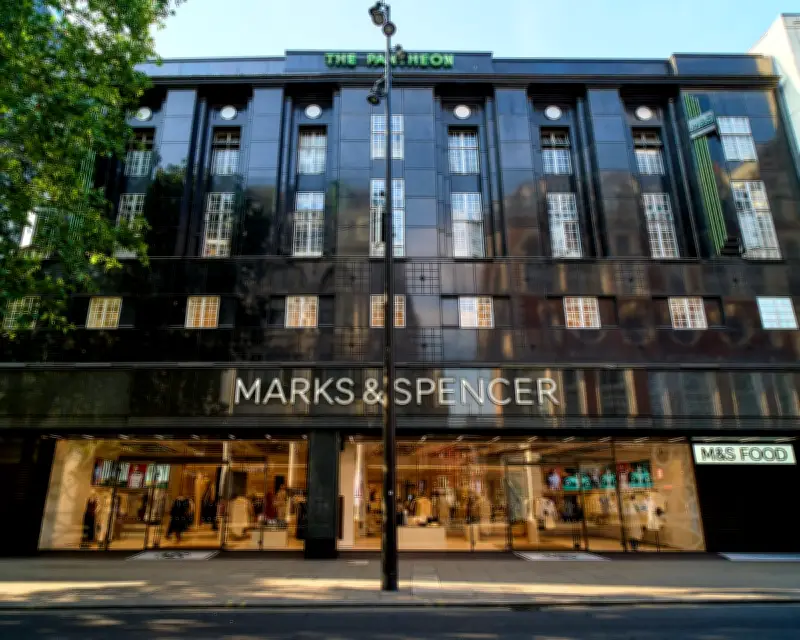
Marks & Spencer's chief executive, Stuart Machin, has unveiled a major revamp of the company's landmark Pantheon store on Oxford Street, positioning it as a blueprint for a £700m growth strategy. The 88-year-old outlet, which first opened in the 1930s, has been transformed into an upmarket shopping experience, complete with digital displays, green-tiled pillars, and modern shelving. The move comes as M&S aims to modernise its store estate and online presence, with Machin describing the coming year as “one of the most important in our history.”
Pantheon Revamp: A Blueprint for Change
The Pantheon store, originally built in the late 18th century as an opera house, has been redesigned to test new approaches to retail. “We know we’ve got a big job modernising the store experience and modernising the online experience as well,” Machin told a crowd of fashion influencers, models, journalists, and City analysts at the launch event. The store now features bright “rooms” for different brands and product types, aimed at making shopping “easier, more curated and more inspiring,” according to Machin.
The revamp is part of a broader strategy to update M&S's 227 full-line stores across the UK, with plans to reduce that number to 200 over the next two years. The company has already closed dozens of old and out-of-place outlets, but Machin emphasised that legacy stores, such as those in Newcastle and central London, had remained profitable, which is why previous leadership kept them open. However, he is now focused on a more aggressive modernisation plan.

Marble Arch Store: A Controversial Rebuild
The next big project for M&S is the redevelopment of its Marble Arch store, located at the other end of Oxford Street. The current building, described by Machin as “profitable but low-ceilinged and labyrinthine,” will be demolished next year. The plan has sparked outrage over its potential environmental impact, but it received planning permission in 2024 after a legal challenge and approval by the housing secretary, Angela Rayner.
The new 10-storey building will include just two and a half floors of shop space, down from five at present, with the upper floors dedicated to offices and a gym. It will sit at the eastern tip of Mayor Sadiq Khan's pedestrianisation of Oxford Street, which is due to be completed next year. The rebuild is expected to take four years, during which M&S will lease a temporary store across the road, near Zara. Machin joked that he hoped to still be chief executive when the project is completed, adding, “So let’s see how we do.”
Financial Performance and Growth Targets
M&S's underlying profits fell to £671m last year, partly due to a cyber-attack that disrupted online trading for almost seven weeks and cost the company more than £300m. Despite this, Machin said climbing back to £1bn in profits was not the goal. “Profit will be what it will be,” he told the Guardian. “Our plan is for a growth business.” The £700m investment plan focuses on revitalising stores, modernising the supply chain and distribution system, and improving product offerings.
The company, which employs more than 65,000 people, is expanding its food arm, with 18 food-only stores opening this year. It aims to reach 420 food-only stores, up from 335 directly operated outlets, with franchise partners running another 466 in the UK and overseas. M&S is already the fastest-growing food retailer in the UK, with sales up 16% in the latest three-month tally from Worldpanel by Numerator. Its market share stands at an all-time high of 4.1%, or 4.6% including Ocado sales.
Fashion Revival and Market Share
On the fashion front, M&S has regained its position as the No 1 retailer for style perception, overtaking Zara, according to Worldpanel. It now controls more than 10% of the UK fashion market and is driving for more. The company has even had to buy in more smaller-sized womenswear and lingerie as younger consumers in their 20s, 30s, and 40s reappraise the brand. Marketing director Sharry Cramond, who previously boosted M&S's food image, is now applying her social media expertise to fashion, creating a buzz around the brand.

Senior industry insiders believe M&S is now “in a solid place.” One said it had “re-established itself and its credentials,” while another noted it had “a lot more self-confidence.” A former senior executive added, “Clothing has finally got its mojo back.” However, another former executive was more critical, suggesting that despite Machin's “quite high ego quotient,” there is more work to do, particularly in womenswear, where M&S has lost significant market share that it will never recover.
Overseas Challenges and Future Outlook
M&S continues to struggle overseas, with a presence in 70 countries but many operations small. The acquisition of a 50% stake in Ocado's retail arm in 2019 has been largely unprofitable, though it has brought in a younger audience. Machin acknowledged that revamping the international business has been harder than expected, but he believes the fashion revival is helping overseas operations.
Looking ahead, Machin faces significant challenges, including major warehouse projects in south-west England and the Midlands. “Deadlines are realistic. We are not going from zero to 10 overnight,” he said. Despite the obstacles, Machin remains optimistic, telling shareholders that the next three years are “critical for M&S as we invest for growth.” The Pantheon revamp is just the beginning of what he hopes will be a lasting transformation.