
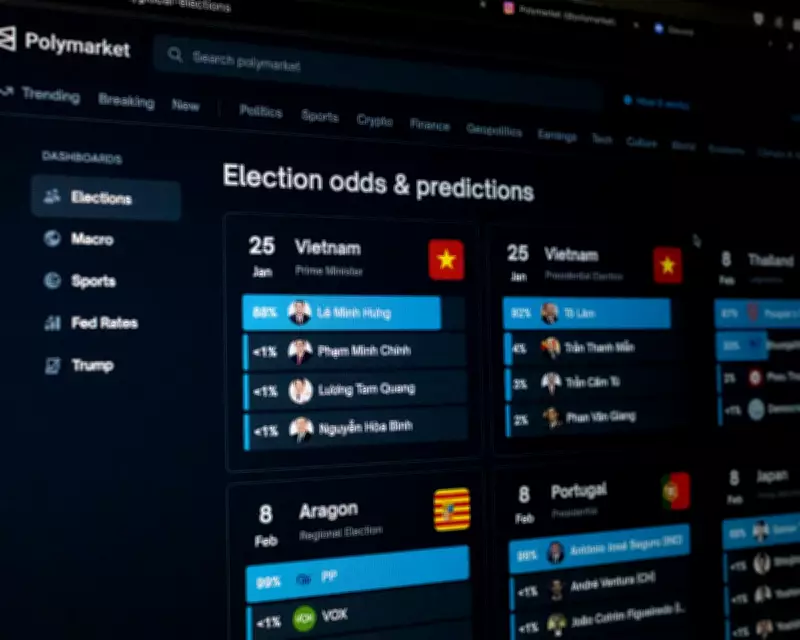
The Rise of Prediction Markets in Global Gambling
Prediction markets have transformed into a massive industry where virtually any world event becomes a potential betting opportunity. Platforms like Polymarket and Kalshi now handle hundreds of millions in daily trades, allowing users to gamble on outcomes ranging from geopolitical conflicts to celebrity social media activity. This phenomenon represents a fundamental shift in how people interact with global news, turning serious international developments into tradable commodities.
From War Zones to Betting Markets
The ongoing conflict in Ukraine illustrates how prediction markets operate. On Polymarket, millions of dollars are currently wagered on whether Russian forces will capture specific Ukrainian cities by certain dates. Users buy "yes" or "no" options based on their predictions, with potential returns reaching one hundred times their initial investment if they correctly anticipate unlikely outcomes. All transactions occur anonymously using cryptocurrency, mirroring traditional derivatives trading but applied to real-world events.
These markets rely on third-party information to settle bets, often without the knowledge of the organizations providing the data. The Institute for the Study of War, a U.S. think tank that publishes daily frontline maps of the Ukraine conflict, has become an unwitting arbiter for Polymarket wagers. Similarly, journalists covering conflicts have found themselves targeted by bettors seeking favorable outcomes for their financial positions.
Ethical Concerns and Regulatory Challenges
The ethical implications of gambling on human suffering have sparked significant controversy. Critics argue that platforms like Polymarket, which counts Peter Thiel among its backers, should face gambling regulations or outright bans. Some countries, including France, have already prohibited the platform, though users continue finding ways to place bets on French current affairs.
Journalist Emanuel Fabian experienced firsthand how prediction markets can spill into real-world harassment. After reporting on an Iranian missile strike near Jerusalem, Fabian received threatening messages from Polymarket users who stood to profit from a $23 million bet about whether Iran would strike Israel on a specific date. The users demanded he modify his reporting to reflect that missile fragments hit after interception rather than constituting a direct strike.
Insider Trading and Market Manipulation
Prediction markets face serious questions about corruption and insider information. Before the recent U.S.-Iran ceasefire announcement, several newly created Polymarket accounts placed nearly $70,000 in bets predicting the pause just before President Trump made the official declaration. Similar patterns occurred before U.S.-Israeli strikes against Iran in February, with six wallets created simultaneously making correct predictions about the attacks.
Regular users have begun tracking these suspicious accounts, setting up alerts to copy their trades. One account allegedly belongs to a U.S. Federal Reserve insider, triggering notifications whenever they bet on interest rate decisions. This creates an environment where privileged information could significantly influence market outcomes.
The Defense from Users
Despite ethical concerns, prediction market users defend the platforms as valuable sources of truth. They argue that when governments and news organizations might distort information, betting markets provide transparent, crowd-sourced predictions. Some view participation as a free speech issue, claiming these markets offer alternative perspectives on world events.
However, even longtime users acknowledge the platforms have evolved into something resembling casinos. The proliferation of arbitrage opportunities and geopolitical betting has attracted thousands seeking profit from global instability. Financial institutions like Goldman Sachs now reference Polymarket sentiment in their market updates, demonstrating how these prediction platforms are influencing traditional finance.
Broader Implications and Industry Growth
The prediction market industry has flourished particularly under the Trump administration in the United States. Donald Trump Jr. joined Polymarket's advisory board last year, signaling political support for the rapidly expanding sector. As wagers grow larger, official announcements about troop movements or diplomatic developments carry new significance beyond their immediate news value—they become evidence for settling lucrative bets.
Platforms face disputes over bet resolutions, sometimes requiring anonymous adjudicators to vote on outcomes. A famous example involved millions wagered on whether Ukrainian President Volodymyr Zelenskyy would wear a suit to the World Economic Forum. The decision hinged on whether his garment, which featured cargo pockets, qualified as a proper suit.
Polymarket declined to comment for this article, leaving unanswered questions about their internal operations and oversight mechanisms. As prediction markets continue growing, they present complex challenges at the intersection of finance, ethics, and global affairs, creating new ways for people to profit from—and potentially influence—world events.




