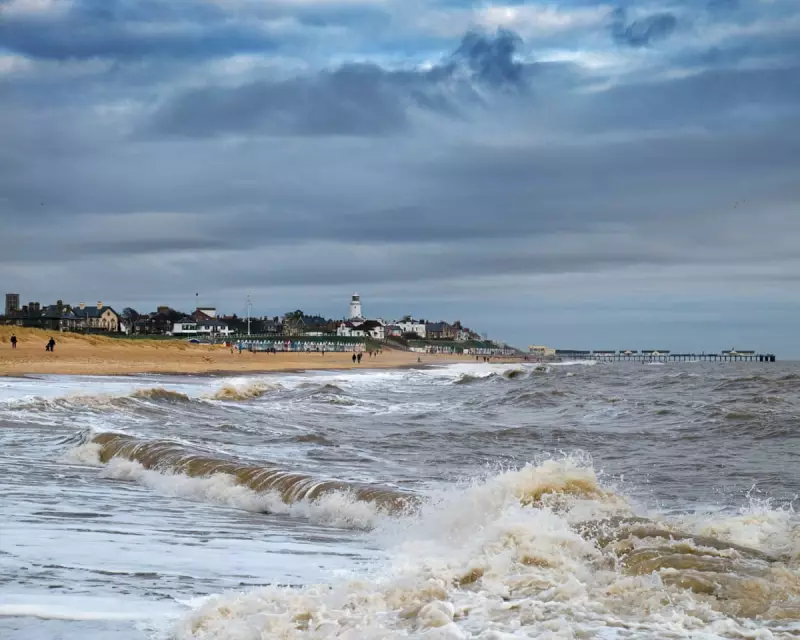
On the rapidly changing Suffolk coastline, where the North Sea claws relentlessly at the land, a novel form of holiday accommodation offers a front-row seat to nature's raw power. The newly opened Kraken lodge at Still Southwold, a stylish wooden cabin perched near crumbling cliffs, is designed with an uncertain future in mind: it can be moved when the ground beneath it eventually succumbs to the waves.
A Base on the Brink
Waking in the Kraken cabin, the first guest is greeted by a dramatic panorama. An automatic blind reveals a storm-surging sea, with great black-backed gulls circling and a distant ship on the horizon. A watery gold sunrise illuminates the turbulent grey water, a daily spectacle from the bed. This lodge is part of Still Southwold, a former farm in Easton Bavents that has been transformed due to aggressive coastal erosion.
Owner Anne Jones explains the stark reality. Climate-exacerbated storms have eroded more than 40 hectares (100 acres), rendering the family farm unviable. In response, they have pivoted to creating low-carbon holiday cottages and cabins, all conceived to be relocated. Their latest ventures include a sea-view sauna and a 'dune hut' on the beach for reflexology sessions with the ocean as a backdrop.
Walking a Disappearing Path
Exploring the area reveals the tension between timeless beauty and imminent threat. A short walk from the cabin leads to Southwold's iconic pier, where waves crash over the concrete promenade. The cheerful row of brightly painted beach huts, adorned with candy stripes and stained-glass dolphins, stands in stark contrast to the heaving, uncontainable ocean behind them—a poignant symbol of the coast's fragility.
The official coast path between Lowestoft and Southwold has largely been rerouted inland due to dangerous, soft cliff edges. Opting for a beach walk at low tide, the journey passes Kessingland, where author H Rider Haggard once summered and planted marram grass to hold back the sea. The cliffs here are a sandy archive, containing fossil traces of steppe mammoths, hippos and sabre-toothed cats.
The walk is a solitary one, punctuated by warnings. A Natural England sign declares the route ahead near Easton Bavents impassable. The landscape is littered with kelp and driftwood hurled ashore by winter waves. A meeting with a hardy hiker provides a vivid analogy for the storm surge: "The wind's from the north and the North Sea's wider at the top than the bottom – it's like someone blowing on a teacup."
Wild Beauty and Historic Loss
The route reveals stunning, vulnerable habitats. Benacre Broad is a beautiful freshwater lake isolated from the sea by a shifting shingle bank, now often breached by saltwater. Its shores are a natural sculpture garden of salt-bleached roots and tree trunks. Nearby, the atmospheric ruins of the huge medieval St Andrew's Church in Covehithe stand sentinel on the cliffs, a testament to the passage of time both historical and geological.
After a day of bracing winds, the warm bar of The Swan in Southwold offers sanctuary with port-laced mulled wine and local delights like creamy Baron Bigod brie. A second day's exploration leads across Southwold Common to Walberswick, following part of the Sandlings Walk through fragments of heathland—90% of Suffolk's once-continuous heath has been lost since medieval times.
The marshes are alive with the sudden trill of a Cetti's warbler and the rare song of a bearded tit. A rowing boat ferry crosses the Blyth estuary, leading to a harbourside lunch, all while the ghost of the drowned medieval town of Dunwich lingers beneath the waves not far away, a Suffolk Atlantis.
The experience at Still Southwold is ultimately one of profound contrast: the deep comfort of a stylish cabin against the untameable wilderness beyond its windows, and the enduring appeal of this coastline set against the undeniable reality of its retreat.