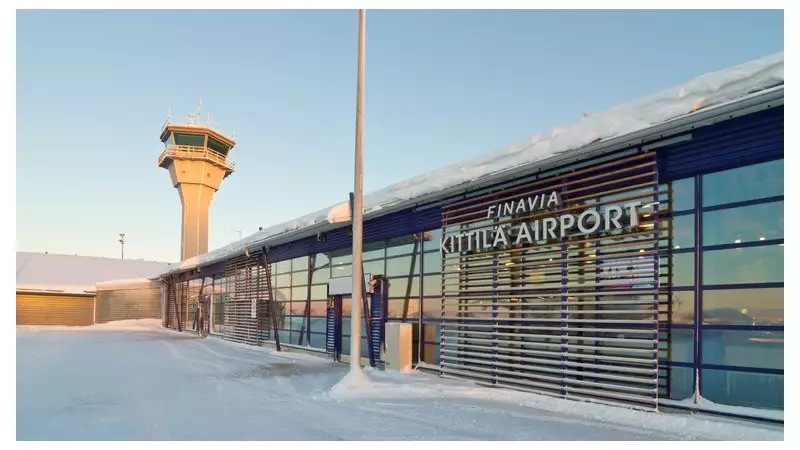
Thousands of holidaymakers, including many British tourists, have found themselves trapped in the Arctic conditions of northern Finland after a severe cold snap forced the cancellation of all flights from Kittila Airport.
Arctic Freeze Halts Air Travel
The crisis began after temperatures at the airport plummeted to a bone-chilling -37 degrees Celsius on Sunday morning. This followed several days of similarly extreme Arctic weather, which made standard airport operations, particularly aircraft de-icing, impossible to conduct safely.
Kittila Airport serves the popular tourist region of Finnish Lapland. Despite the area's reputation for frosty winters, locals have noted this year's conditions are notably more severe and persistent than usual.
Glimmer of Hope for Stranded Britons
For the stranded British tourists, there is a tentative chance of escape. Flights to Manchester and London are scheduled to attempt take-off on Monday afternoon. However, the Met Office forecast suggests temperatures will still be around a formidable -28C at that time, posing a significant challenge to operations.
The extreme weather is not confined to Finland. A vast swathe of northern, central, and eastern Europe is grappling with the same brutal conditions. Heavy snowfall, high winds, and treacherous icy roads have made travel dangerous across the continent.
Widespread Disruption Across Europe
The fallout from the freeze is widespread. In Germany, the national rail operator Deutsche Bahn suspended all long-distance services in the north of the country on Sunday following heavy snowfall, causing major delays and cancellations for passengers.
Authorities in North Rhine-Westphalia, Germany's most populous state, announced that all schools would remain closed on Monday, switching to online classes due to the icy temperatures.
Further east, the Baltic states are also on high alert. Estonia and Lithuania advised drivers to postpone all non-essential travel due to expected blizzards, while neighbouring Latvia issued an official snow alert for its western regions.
This intense cold spell, affecting regions accustomed to harsh winters, underscores the significant disruption caused by this year's particularly severe Arctic weather system.