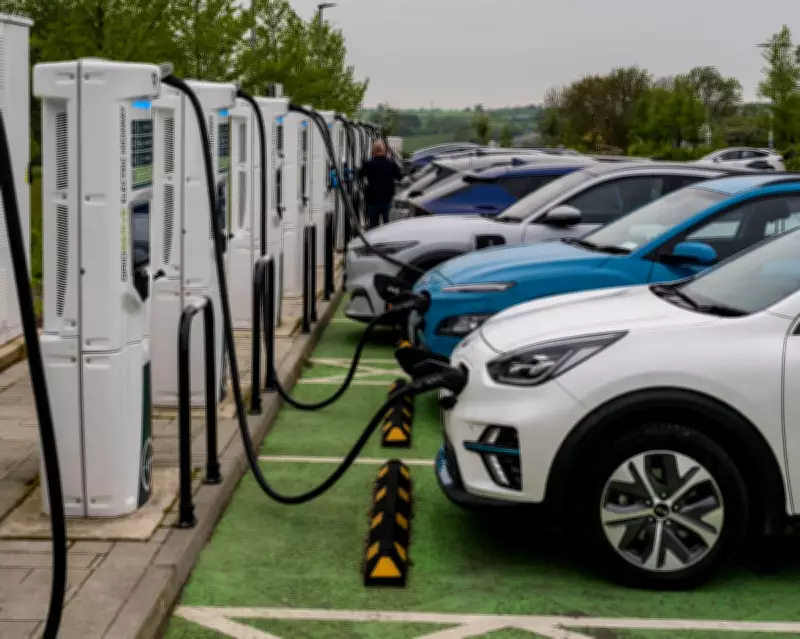
UK Tax Authority Fights Ruling to Slash VAT on Public Electric Car Chargers
The UK's tax authorities, HM Revenue and Customs (HMRC), have confirmed they will appeal against a landmark tax tribunal ruling that would cut VAT on all public electric car chargers from 20% to 5%. This decision comes despite a judge finding that HMRC has been overcharging for years under current law, a move that charge point operators warn could significantly delay the transition away from petrol and diesel vehicles.
Background of the VAT Dispute
Last month, Charge My Street, a not-for-profit charging company, successfully argued at a London tax tribunal that VAT should have been applied at the reduced rate of 5% for public EV chargers, rather than the standard 20% business rate. The ruling, if upheld, could have a profound impact on electric car drivers' costs, particularly for the approximately 40% of the UK population without off-street parking who rely on public charging infrastructure.
Electric car drivers have long complained about the unfair VAT disparity: those charging at home pay only 5% VAT on electricity for domestic use, while public chargers are subject to the 20% rate. Campaigns to equalize these rates have struggled for years, with successive governments reluctant to lose future electricity VAT revenues, which are projected to replace the £24.5 billion in annual fuel duties from petrol and diesel sales.

Financial and Environmental Implications
According to calculations by Zapmap, a charger map company, the VAT difference currently brings in an extra £85 million annually for the Treasury. This figure is projected to rise to £315 million by 2030 and potentially billions thereafter as electric car adoption increases. However, the government's appeal suggests a preference to maintain this revenue stream, even as it faces fiscal pressures from global events like the Iran war and internal calls to abandon planned fuel duty increases.
Will Maden, a director at Charge My Street, emphasized the environmental stakes: "My personal view is I think we should be making the transition to EVs as cheap as we can. This is an environmental issue." He noted that the 20% VAT adds a significant cost barrier for many drivers, undermining efforts to accelerate EV adoption.
Industry Reaction and Legal Details
Charge point operators have expressed deep disappointment with HMRC's appeal. John Lewis, chief executive of char.gy, a charge point operator, stated: "The government talks about accelerating EV adoption, yet is actively choosing to maintain a tax structure that makes public charging more expensive than it needs to be and undermines the transition." He confirmed that his company would immediately pass on any VAT cut to customers if the ruling is upheld.
The legal case hinges on the interpretation of the VAT Act, which specifies that electricity is considered "always for domestic use" if one person does not use more than 1,000 kilowatt hours (kWh) per month at a single premises—enough to recharge a Tesla Model Y 16 times. Accountancy firm Deloitte discovered this discrepancy and worked pro bono with Charge My Street. After three days of arguments focusing on minutiae like the definitions of "a month" and "premises," Judge Harriet Morgan ruled that applying the 20% rate would be a "strained construction."
Future Outlook and Potential Claims
If HMRC's appeal fails, operators are prepared to lodge their own claims for overpaid VAT dating back years, which could result in significant refunds and further financial pressure on the Treasury. An HMRC spokesperson defended the appeal, stating: "We're appealing this case, as our position is that standard rate VAT applies to electricity supplied through public EV charging infrastructure."
This ongoing legal battle highlights the tension between government revenue needs and environmental goals, with the outcome likely to shape the affordability and accessibility of electric vehicle charging in the UK for years to come.