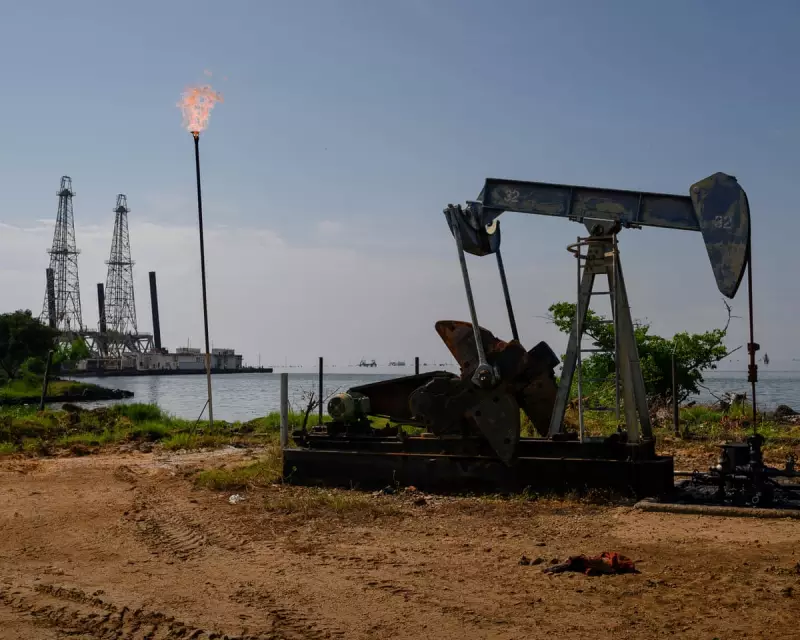
The global oil market has offered a notably subdued reaction to Donald Trump's recent declaration of intent to extract a 'tremendous amount of wealth' from Venezuela's beleaguered oil industry. Despite the bold political rhetoric, analysts point to a complex and costly long game ahead, with the fate of specialised US refineries hanging in the balance.
The Gulf Coast's Thirst for Heavy Crude
Lining the US Gulf coast are some of the world's most sophisticated heavy-oil refineries. These vast industrial complexes, operated by major American energy firms, were engineered for a specific purpose: processing the dense, sulphurous crude historically imported from Latin America. Venezuelan oil, which is notoriously thick and tar-like, is a perfect match for this infrastructure, unlike the lighter shale oil produced domestically.
Consequently, the United States remains a significant crude importer to feed these facilities, even as it stands as one of the globe's top oil exporters. Access to cheap Venezuelan heavy crude is seen as pivotal to fuelling Trump's vision for a US 'reindustrialisation' driven by affordable energy. The industry these refineries support is vast; while they directly employ around 80,000 people, a study by Oxford Economics found they underpin approximately 3 million jobs nationwide, boasting the highest job 'multiplier' of any US sector.

A Steep Decline and a Daunting Challenge
Imports of Venezuelan crude to the US have collapsed from a peak of nearly 2 million barrels per day in the late 1990s to a mere 135,000 barrels per day by the end of last year. This dramatic fall is attributed to the decay of Venezuela's oil infrastructure under President Nicolás Maduro, rampant corruption, and the impact of US sanctions.
Analysts at Energy Aspects suggest US refineries could readily absorb an extra 1 million barrels per day from Venezuela, reducing reliance on costlier Canadian heavy crude. This shift could also divert exports away from China, forcing a geopolitical rival to pay more for energy. However, reviving Venezuela's output is a Herculean task.
According to consultancy Rystad Energy, restoring Venezuela's production to 3 million barrels a day would require 16 years and a staggering $185bn in investment. Jorge León, Rystad's head of geopolitical analysis, stated, "A rapid recovery in Venezuelan oil production in the short term is highly unlikely. Years of chronic underinvestment have severely eroded oil infrastructure, much of the skilled workforce has left the country, and ongoing political instability continues to undermine operational confidence."
The Market's Muted Verdict
The financial markets have responded with caution, not euphoria. Less than 48 hours after Trump's call to action, the international oil benchmark Brent crude saw only a slight increase. In contrast, shares in US oil giants Chevron and Exxon Mobil rose by more than 3% and 6% respectively, indicating investor speculation on their potential involvement.
The central hurdle remains attracting the $30-35bn of international capital needed within the next few years to make any recovery plausible. As Rystad notes, this investment would only materialise if global oil companies have "full confidence in the stability of the country’s systems and its investment climate." For now, Trump's Venezuelan oil gamble appears to be a high-stakes, long-term strategic play, with the complex refineries of the Gulf Coast awaiting a feedstock revival that is far from guaranteed.