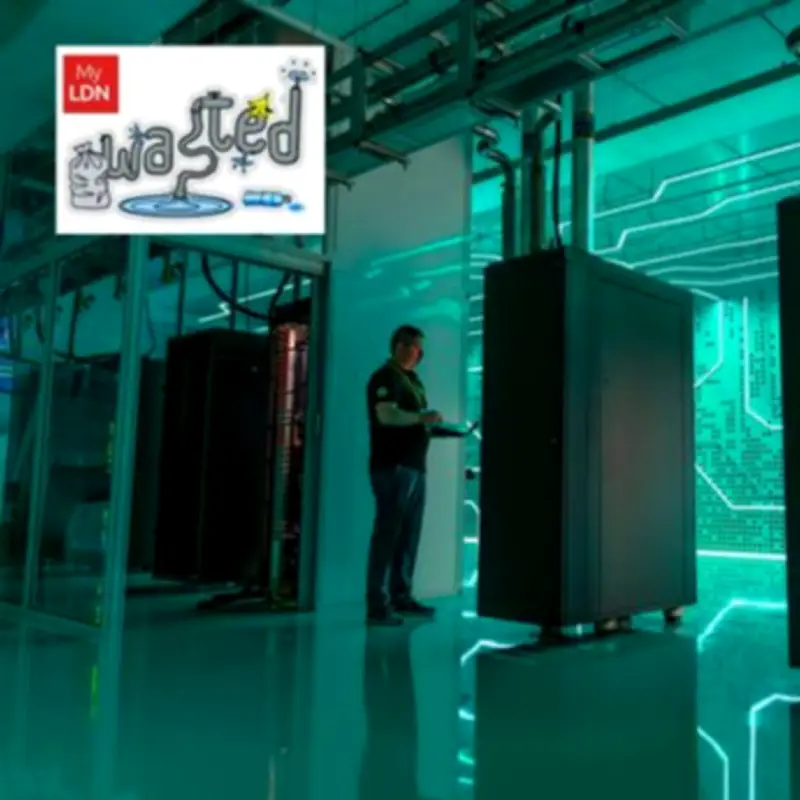
With 99 data centres already operational in London and more than two dozen in the pipeline, the debate over whether these facilities help or hinder the capital is far from settled. These secure, warehouse-like buildings house critical IT infrastructure—computing, storage, and networking systems—and are seen as vital for London's economy and public services. However, environmental groups have raised serious concerns about their energy consumption, which threatens City Hall's environmental targets and impacts housing and water usage.
Housing Projects Stalled by Grid Capacity
A report from the London Assembly Planning and Regeneration Committee last year revealed that several housing projects in west London had been delayed because data centres consumed all available electrical grid capacity. Campaigners warn this issue could worsen, as most new data centres in the pipeline are planned for London.
London's Unique Data Centre Hub Status
Oliver Hayes, Head of Policy and Campaigns at Global Action Plan, told the Local Democracy Reporting Service (LDRS) that London is a “unique” case due to its high concentration of data centres. This clustering stems from the desire to be close to the UK's financial hub and a “snowball” effect from existing centres. “Historically, data centres have been key to financial trading—and being close to trade makes a massive difference. Big fibre optic cables run through West London, and tapping into them has been a priority,” Hayes said.

He added that the recent AI boom has driven demand for larger, more energy-intensive data centres. “With the proliferation of LLMs like ChatGPT, compute requirements have skyrocketed. The data centres being built now are far bigger and require more energy.”
Environmental Damage
Hayes highlighted key pressures: power requirements, associated emissions, water for cooling, and air pollution. “For Londoners, housing developments can't be completed because data centres hoover up grid capacity. This speaks to the clash between economic and environmental goals.” He noted that developers are rushing to build, often turning to gas-powered on-site generation rather than plugging into the grid, which worsens emissions and air quality. Water demands also increase for both cooling and gas turbines.
Hayes said the issue has “crept up” on local authorities, who face opaque planning applications. Cash-strapped boroughs may see data centres as a quick economic fix, swayed by promises of business rates and economic benefits.
Tech Sector Defends Data Centres
TechUK, a trade association, argues that UK data centres are greener than those abroad due to the grid's reliance on zero-carbon sources. Sophie Greaves, Associate Director for Digital Infrastructure at TechUK, stated: “Data centres are essential infrastructure for our economy and public services like the NHS. Over half of the data centres we surveyed do not use water at all, and more water is lost through leakage than used by data centres.”
She emphasised that data centres run on electricity and can be anchor tenants for renewable energy. “Blocking construction in London doesn't cut global demand—it exports investment, jobs, and emissions to countries with dirtier grids. The real question is whether we can connect these projects to the grid fast enough.”
City Hall's Response
On June 10, the Mayor of London, Sir Sadiq Khan, vowed to make London a global hub for ‘green’ data centres by promoting renewable energy and waste heat reuse. City Hall will include a dedicated data centre policy in the forthcoming London Plan and bring together boroughs, energy providers, and developers. Measures like the OPEN heat network at Old Oak and Park Royal, which uses waste heat from data centres for low-carbon heating, are already being demonstrated.
Deputy Mayor for the Environment Mete Coban said: “We live in a massively changing economy where AI is moving fast. We want to see the benefits of data centre growth in London but will ensure environmental safeguards are in place.”