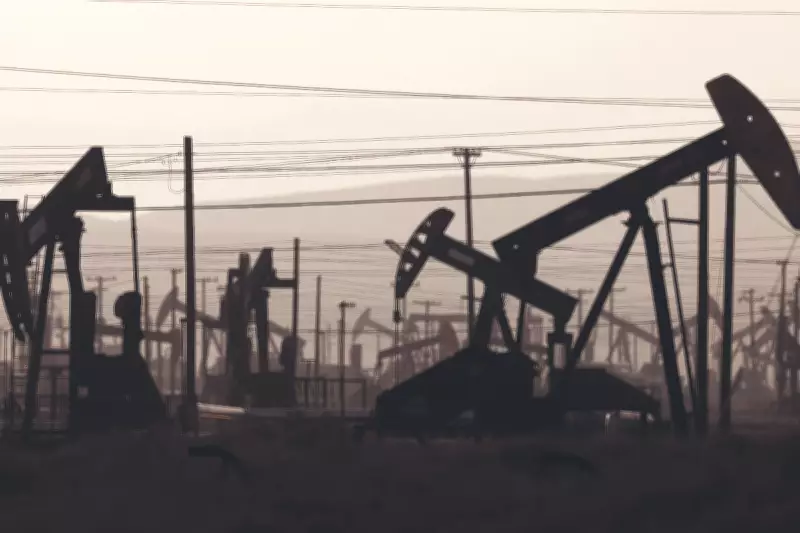
Iran War Drives Oil Prices to 2022 Highs with Fastest One-Day Spike in Six Years
The price of oil has surged past the $100 per barrel threshold for the first time since the energy crisis of 2022, as the ongoing war in Iran triggers severe disruptions to global supply chains. Analysts are warning that the economic fallout from this conflict could potentially surpass the impact of Russia's invasion of Ukraine, creating a new wave of instability for world markets.
Historic Price Surge and Production Cuts
Brent crude, the international benchmark for oil, experienced a dramatic increase of over 25 percent, reaching highs of $118 per barrel as trading commenced in Asia this week. This represents the commodity's most significant one-day gain in six years, highlighting the intense market reaction to geopolitical tensions.
The sharp price escalation follows continued attacks on critical oil infrastructure in the Middle East, leading several nations to implement production cuts. Notably, traffic through the strategically vital Strait of Hormuz has nearly come to a complete standstill. This crucial waterway typically facilitates the flow of approximately one-fifth of the world's total oil supply.

Kuwait's state oil company announced over the weekend that it was reducing output, while the United Arab Emirates' state-run oil firm indicated it was "managing" some production, suggesting further potential reductions. These developments have exacerbated supply concerns and contributed to the price volatility.
Global Supply Shock and Economic Warnings
Kathleen Brooks, research director at XTB, revealed that Iraq is now producing only 1.3 million barrels per day, a stark decline from the 4.3 million barrels produced prior to the US and Israel strikes on Iran. This reduction equates to roughly three percent of global oil supply being lost in a single event.
"Shockingly, this is worse than the oil supply situation after Russia attacked Ukraine," Brooks noted, underscoring the severity of the current crisis.
Wall Street giant Goldman Sachs has forecast that oil prices could breach the $150 mark by the end of the year if the Middle East conflict remains unresolved. Analysts at the bank have issued stark warnings, suggesting that the impact of the US and Israel's war with Iran could have consequences seventeen times worse than the peak of April 2022, when world economies grappled with an energy crisis following Russia's invasion of Ukraine.
Strategic Waterway Blockade and International Response
Goldman Sachs initially anticipated that oil flows through the Strait of Hormuz would fall to 15 percent of normal levels. However, the blockade enforced by Iran has resulted in only ten percent of typical oil cargoes successfully navigating the waterway.
In a recent analytical note, Goldman Sachs stated: "Based on these new data, developments and the size of the shock, we now think that oil prices would likely exceed $100 next week if no signs of solutions emerge by then."
In response to the price surge, former US President Donald Trump commented via Truth Social, calling it "a very small price to pay for USA, and world." He asserted that oil price increases "will drop rapidly when the destruction of the Iran nuclear threat is over."
Meanwhile, the Financial Times has reported that G7 finance ministers are scheduled to discuss a possible coordinated release of petroleum from reserves during an emergency meeting today. This initiative, coordinated by the International Energy Agency, aims to address the surging oil prices amid the Middle East conflict.
The ministers, along with International Energy Agency executive director Faith Birol, are expected to hold a conference call at 8:30 AM New York time to explore strategies for mitigating the economic impact of the Iran war. This international response highlights the growing concern over the potential for prolonged market disruption and broader economic consequences.