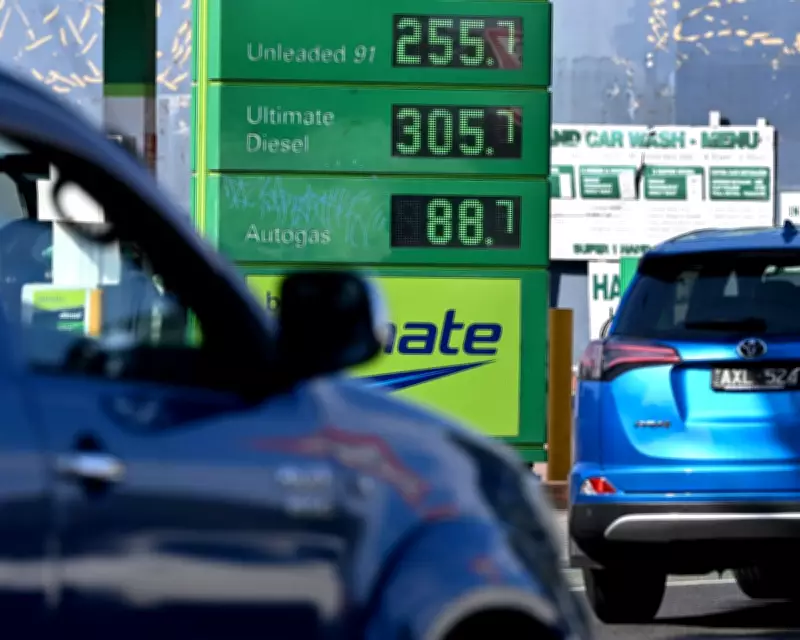
Australian drivers are making a dramatic shift toward electric vehicles and hybrids as skyrocketing fuel prices make traditional petrol and diesel cars increasingly unaffordable. With unleaded petrol reaching $2.50 per litre and diesel prices pushing toward $3 per litre nationwide, consumers are rapidly changing their automotive preferences in what industry experts describe as a fundamental market transformation.
The Fuel Price Tipping Point
The current surge in Australian fuel prices stems from global energy market disruptions following international conflicts, particularly the US-Israel war on Iran that has created uncertainty in oil markets. This geopolitical tension has raised concerns about potential fuel rationing and long-term price instability, prompting Australian motorists to reconsider their vehicle choices with unprecedented urgency.
"It makes no sense to buy a petrol or diesel car at the moment," says Will Hamer, an asset finance specialist at Loan Market. "If you are in that cycle of buying a vehicle, which could be once every five to seven years, it would be crazy not to explore electric options."

From Skepticism to Adoption
Matt Hurlston, a self-described car enthusiast from Melbourne's south-east, represents this dramatic shift in consumer behavior. Despite his long-held passion for combustion engines, Hurlston recently purchased a Tesla after witnessing his son struggle with diesel fuel costs.
"Petrol was already expensive when I was considering a purchase, and then as fuel prices kept going higher, it was an easy decision," Hurlston explains. "I had to change my way of thinking and accept it's a different experience; teaching an old dog new tricks. It is cheaper to run, more convenient to run, with the added bonus of no vehicle emissions."
Market Transformation in Real Time
Industry data reveals the scale of this transition. According to the Electric Vehicle Council, Australia had more than 454,000 battery electric and plug-in hybrid electric vehicles on the road by the end of 2025, with EVs now capturing approximately 13% of new vehicle purchases nationwide.
Car dealerships across the country report sharp increases in EV and hybrid sales, while brokerage firms are experiencing significant spikes in loan applications for electric vehicles. Auction houses are witnessing unprecedented demand, with Pickles auction house on track to record one of its biggest ever months for EV sales, showing a 20% increase over the previous month.
Demographic Shifts and Economic Calculations
Brendon Green, general manager of automotive solutions at Pickles, notes that buyers aged 31 to 40 are the most active EV purchasers, suggesting that young families are prioritizing fuel cost reduction in their household budgets. "Rising petrol prices are likely part of that equation, as they tend to sharpen consumer focus on running costs and make EVs a more compelling option," Green observes.
The economic case for electric vehicles has strengthened considerably. With a typical petrol car consuming approximately 1,150 litres of fuel annually when traveling 15,000 kilometers, Australia's current EV fleet could be saving the nation more than 500 million litres of petrol each year. This represents a significant reduction in the country's reliance on imported fuel.
Broader Market Context
James Voortman, chief executive of the Australian Automotive Dealer Association, emphasizes that this transition didn't occur overnight. "This oil shock shouldn't be looked at in isolation," Voortman says. "People were ready to buy EVs." He references the previous jump in oil prices sparked by the Russian invasion of Ukraine as having prepared Australian motorists to switch to electric vehicles as soon as they saw another significant fuel price spike.
The current oil price escalation reflects concerns that the United States lacks a clear exit strategy that can guarantee stable resumption of oil trade through crucial shipping routes like the Strait of Hormuz. This uncertainty has pushed oil prices toward levels not seen since 2022, creating sustained pressure on Australian fuel prices.

Policy Support and Future Implications
Government policies have also contributed to the EV adoption surge. Eligible electric vehicles remain exempt from fringe-benefits tax, providing additional financial incentive for both individual consumers and fleet purchasers. This tax advantage has helped accelerate sales in recent years and continues to support market growth.
Industry analysts project that replacing one million petrol cars with electric vehicles could cut Australia's reliance on foreign fuel by one billion litres annually. This potential reduction represents both an economic opportunity and a strategic energy security improvement for the nation.
The Human Element of Transition
Despite the rapid shift toward electric vehicles, some Australians maintain connections to traditional automotive culture. Matt Hurlston, while embracing his new Tesla as a daily "workhorse," hasn't completely abandoned combustion engines. "I've got a classic Holden sitting in my garage, so I will still have the opportunity to go pay a lot for petrol," the 49-year-old acknowledges.
This blend of practical adoption and nostalgic preservation illustrates the complex emotional landscape of Australia's automotive transition. As fuel prices continue to challenge household budgets and global energy markets remain volatile, the trend toward electric vehicles appears poised to accelerate further, reshaping Australian roads, energy consumption patterns, and automotive culture for years to come.