Dublin Fuel Protests Spotlight Europe's Oil Dependency and Green Energy Challenges
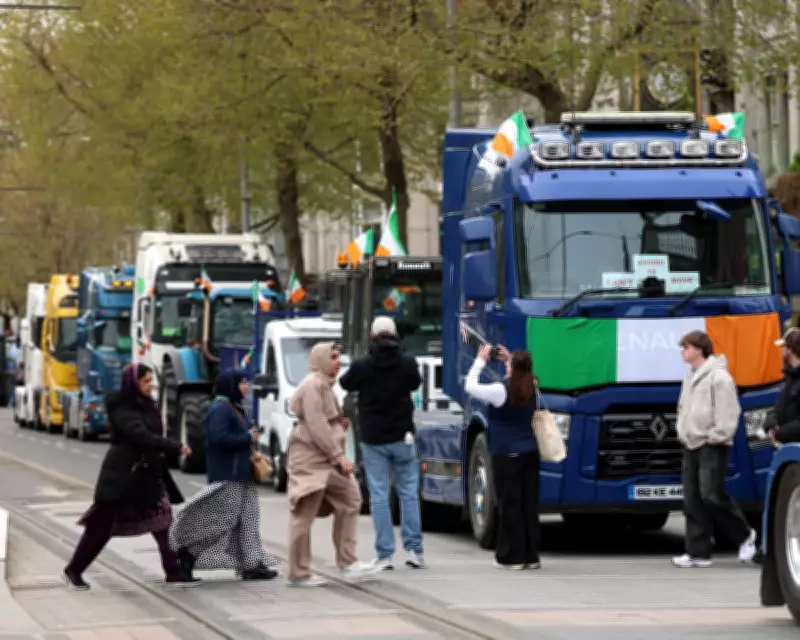
In a dramatic display of public discontent, vehicles blockaded O'Connell Street in Dublin, bringing traffic to a standstill as protesters rallied against soaring fuel prices. This grassroots mobilization, driven by truckers and farmers, underscores the severe financial strain on households and businesses grappling with escalating energy costs. The protests, which escalated to blockades at ports, fuel depots, and Ireland's only refinery, reveal a broader crisis: Europe's deep-seated addiction to imported oil and the political tensions it fuels.
The Geopolitical Spark and Green Energy Acceleration
The International Energy Agency has labeled the disruption in the Strait of Hormuz, amid conflicts involving Iran, as the "biggest energy crisis in history." Paradoxically, this turmoil is accelerating Europe's green revolution, with electric vehicle sales surging by 51% in March across the continent. However, this shift is fraught with challenges. While consumers flock to EV showrooms, governments face a groundswell of anger over petrol and gas prices, risking a reversal of clean energy transitions. Leaders must balance fuel-related cost pressures, a faltering global economy, and climate goals—a precarious tightrope that could prolong collective suffering if mishandled.
Ireland's Standoff and Policy Reversals
Ireland's fuel protests, reminiscent of Europe's Gilets Jaunes in France or recent tractor protests in Germany and Italy, culminated in a tense six-day standoff. Protesters, claiming severe financial distress, directed their fury not at geopolitical actors like Donald Trump or energy companies, but at fuel taxes. The government's response was a €505 million rescue package, cutting excise duties on diesel and petrol, offering handouts to hauliers and agricultural contractors, and delaying a planned carbon tax increase by six months. Hannah Daly, a professor of sustainable energy at University College Cork, criticized this as a "ransom" to the fossil fuel system, arguing it artificially shields fuel-dependent groups while perpetuating oil addiction and vulnerability to future shocks.

Europe's Broader Energy Dilemma
Similar frustrations over fuel prices are echoing across Europe, with experts warning that larger economies like Germany and Poland might opt for blanket fuel subsidies over targeted income supports for vulnerable groups. Campaigners lament Germany's reluctance to implement measures like autobahn speed limits to curb petrol demand. In response, the European Commission has outlined plans to provide relief through tax cuts favoring electricity over oil and gas, alongside targets to electrify all road transport. Despite EV registration surges, 96% of the EU transport fleet still runs on petrol or diesel, highlighting the scale of the transition needed. Ireland, with its high reliance on road transport, had only one electrified heavy goods vehicle registered by April this year, starkly contrasting with Norway, where EVs account for 32% of passenger cars.
Lessons from the Crisis and Paths Forward
The protests have opened a Pandora's box of climate-sceptic narratives, yet they may also mark a turning point toward cleaner energy. Public sympathy for the protests highlighted the alarming price of fossil fuel vulnerability, perhaps more effectively than any climate protest. Countries like Spain and Denmark, which invested early in domestic renewables, now enjoy lower and more stable electricity prices. Nordic nations, such as Sweden, reduced energy shock exposure after the 1973 oil crisis through bold solutions like home insulation and extensive public transport. Daly emphasizes that Europe's climate policies and geopolitical pressures are now aligned, offering real and affordable alternatives through the EU's Green Deal, though barriers remain. "It's too late to say I told you so," she notes, "but if we had gone faster we wouldn't be facing this pain." This crisis could be Europe's last fossil fuel shock—but only if the right lessons are learned and decisive action is taken to accelerate the green transition.