Cornwall's Lithium Revolution: From Historic Mines to Green Energy Future
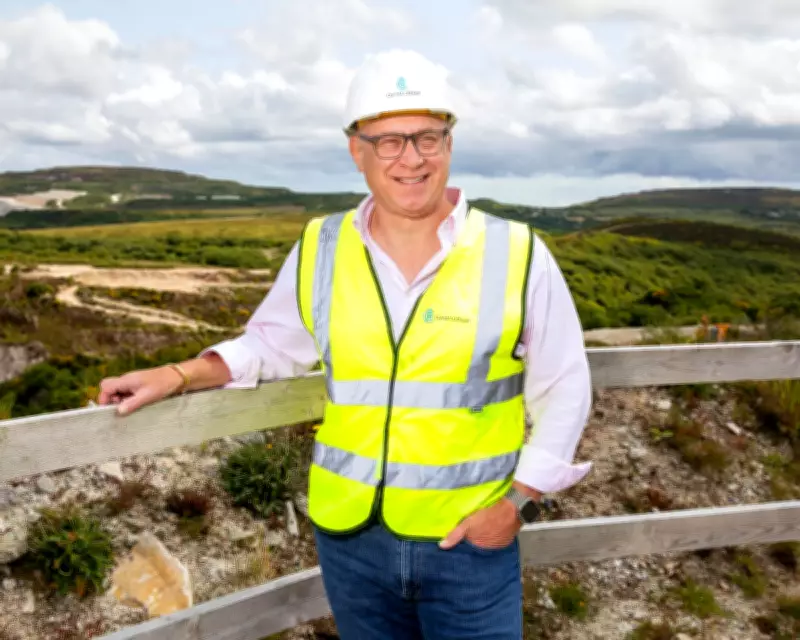
In the scarred landscape of Cornwall, where holidaymakers rarely venture, lies what could become one of Europe's most significant mineral resources. At Trelavour, a former china clay pit near St Austell, Jeremy Wrathall stands at the edge of a vast chasm that represents both Cornwall's industrial past and its potential green energy future.
As founder and chief executive of Cornish Lithium, Wrathall envisions transforming this abandoned quarry into a source of "white gold" - lithium - that could power the UK's transition to renewable energy while bringing year-round employment to one of Britain's most deprived regions.
Geological Treasure Beneath Cornwall's Surface
The story begins approximately 275-280 million years ago with a continental collision that melted the Earth's crust, forming the granite that underlies Cornwall. Frances Wall, professor of applied mineralogy at the University of Exeter's Camborne School of Mines, explains that within this granite lie micas containing lithium - a mineral that Victorian miners noted in groundwater but had little use for at the time.
Today, lithium's importance cannot be overstated. Its high electrochemical potential makes it ideal for rechargeable batteries powering everything from smartphones and laptops to electric vehicles and large-scale energy storage systems. While most global lithium production occurs in Australia, South America's lithium triangle, and China, Cornwall hosts what Wall describes as "probably the largest lithium deposit in Europe."
Two Approaches to Sustainable Extraction
Cornish Lithium, alongside British Lithium, is pioneering two distinct extraction methods in Cornwall. At Trelavour, the company employs hard rock extraction, where lithium-bearing granite is quarried, crushed, and processed. Wrathall emphasises that using an existing quarry minimises environmental impact compared to developing pristine areas.
"You can see the damage is already done here," Wrathall notes. "This isn't farmland - it's a dangerous, fenced-off area that we'll rehabilitate at the project's conclusion."
Twenty miles away, near St Day and Gwennap, the company explores geothermal extraction. Here, hot brine naturally circulating through fractures in rock 1,700 metres underground contains dissolved lithium. The proposed method involves pumping water from one borehole, extracting lithium, and returning it through another - potentially the least impactful extraction method while providing geothermal heat for local communities.
Economic Renaissance for Cornwall
For Peter Morse, general manager of Cornish Lithium's hard-rock project and a local from Roche village, this represents a homecoming. "Cousin Jacks" - Cornish miners who historically worked abroad - are returning as lithium promises to reverse decades of economic decline.
Morse recalls St Dennis village once boasting three pubs and multiple shops, now reduced to one of each. St Austell, he observes, has lost its former bustle. Lithium mining could change this, with Cornish Lithium planning to triple its current workforce of just over 100 employees.
Noah Law, Labour MP for St Austell and Newquay, acknowledges mining's central role in Cornwall's heritage while emphasising modern challenges: "Part of the challenge is sharing the prosperity. I've levelled with the industry to say we're really invested in this if it ensures my constituents share the spoils."
Environmental Considerations and Community Support
Unlike controversial lithium projects in Portugal and Serbia, Cornish Lithium faces relatively little local opposition. Charmian Larke of the Cornwall Climate Action Network suggests this stems from the area's existing industrial character and economic needs.
Wall explains that Cornwall's geology differs significantly from South American brine evaporation ponds. The granite quarrying process, while involving drilling and transportation, produces relatively benign waste compared to sulphide mining's acid drainage issues.
Wrathall commits to sustainable practices, including electric crushers and vehicles, while exploring valuable byproducts like silica for cement, sulphate of potash for fertiliser, and gypsum for plasterboard.
The Road to Commercial Production
Both extraction methods remain in demonstration phases. At Trelavour's processing plant - housed in a former china clay facility - crushed granite undergoes physical and chemical separation to produce lithium hydroxide. Meanwhile, at Cross Lanes farm, planning permission has been granted for Britain's first commercial geothermal lithium production facility.
Wrathall anticipates commercial production beginning in 2028 or 2029, potentially supplying 50,000 tonnes of lithium annually for over twenty years - about half of the UK's projected needs by 2030. Even then, Britain will continue importing lithium, maintaining some reliance on Chinese processing.
As global demand for critical minerals intensifies, Cornwall's lithium deposits position the region at the forefront of Britain's green industrial revolution, potentially transforming both the landscape and local fortunes through sustainable mineral extraction.