Argentina's Nuclear Ambitions Spark Fears of Energy Colonialism in Patagonia
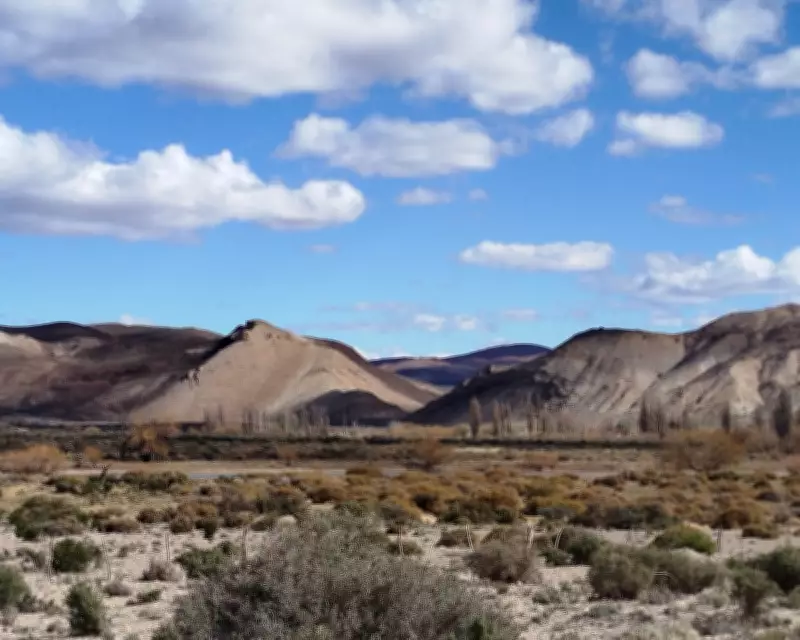
The remote Patagonian steppe surrounding Cerro Cóndor, a sparsely populated Indigenous Mapuche hamlet, has become the focal point of a contentious national debate. This arid region, where uranium was extracted during the 1970s, now finds itself at the heart of President Javier Milei's ambitious nuclear strategy. The administration is actively pursuing the reopening of proven uranium deposits, particularly at the Cerro Solo site adjacent to historical mines, raising significant concerns among local communities and experts alike.
Historical Legacy and Contemporary Concerns
Sergio Pichiñán, a resident of Cerro Cóndor, gestures towards the scarred landscape where previous mining operations left lasting damage. "That's where they dug for uranium before, and when the miners left, they left the mountain destroyed, the houses abandoned, and nobody ever studied the water," he explains, voicing widespread apprehension about potential health impacts, including cancer and skin diseases within his community. "If they want to open this back up, we're all pretty worried around here." This sentiment echoes across the region, where memories of environmental degradation remain vivid.
The National Atomic Energy Commission (CNEA) originally operated these mines decades ago, but production declined through the 1980s before complete closure in the 1990s. Since Argentina ceased domestic uranium extraction in 1997 with the shutdown of its Mendoza mine, the country has relied entirely on imports to fuel its nuclear power stations. Milei's push to restart mining is framed as a strategic move towards energy independence, yet many observers question its true motivations and potential consequences.

Strategic Realignment and Sovereignty Questions
Adriana Serquis, a nuclear physicist who served as CNEA president until 2024 and now holds a congressional seat, offers a critical perspective. "The plan doesn't seem oriented toward supplying our own plants, but rather exporting uranium directly to the US," she states. "It would appear the objective is to satisfy others' needs while destroying our own capabilities." This assessment gains credibility from recent agreements, including one between state-run Dioxitek and US-based Nano Nuclear Energy to supply uranium hexafluoride—a form not used in Argentina's domestic reactors.
Diego Hurtado, former president of Argentina's nuclear regulatory authority and ex-vice-president of CNEA, reinforces this concern. "Argentina doesn't have extra uranium," he asserts. "Exporting uranium isn't an Argentine nuclear plan; it's banana republic-style mining: 'I'll sell you raw materials so you can use them to generate employment and industrial capacity in your country instead of here.'" The strategic shift aligns with Milei's declaration of Argentina as an "unconditional ally of the US," exemplified by the country joining the US First programme for small modular reactor technology.
Technological Shifts and Domestic Capacity
Argentina's nuclear programme, celebrating 75 years of non-military development, faces significant restructuring under the new administration. The country has invested over £560 million in developing its own small modular reactor, Carem, which international assessments rank among the world's most advanced projects. However, Milei's government has effectively mothballed this nearly two-thirds complete initiative, instead prioritising a nascent alternative with minimal development progress.
"Not only have they stopped investing in the project, but all the engineering and research teams are being dismantled," Serquis reveals, questioning the administration's ambitious timeline for deploying new reactors. This approach forms part of broader austerity measures affecting public research institutions and environmental agencies, which critics describe as catastrophic for Argentina's scientific and technological infrastructure.

Privatisation Pressures and Economic Realities
The administration's plan to partially privatise Nucleoeléctrica, the state-owned nuclear energy utility, has sparked further controversy. Despite the company operating at a budget surplus—posting 17.2 billion pesos (£8.6 million) in the first quarter of 2025—the government aims to sell a 44% stake to private investors, potentially transferring decision-making control. Demian Reidel, Milei's nuclear lead appointed to head the utility, defends the move as necessary to attract investment, but faces scrutiny over procurement practices.
Isidro Baschar, a former member of Nucleoeléctrica's directorate, warns against applying market logic to nuclear energy. "Nuclear energy combines critical infrastructure, extremely long-term investments, highly specialised licensing and international commitments regarding security and non-proliferation," he explains. "None of that can be sustained through market logic alone." Opposition parties have proposed legislation to protect the company from privatisation, though they lack sufficient support to override presidential vetoes.
Environmental and Social Resistance
Patagonia's history of grassroots opposition to extractive industries presents a formidable challenge to Milei's plans. Chubut province, where Cerro Cóndor is located, has demonstrated particularly strong resistance, with an 81% referendum rejection of open-pit gold mining in 2003 leading to provincial prohibition. In 2021, attempts to legalise mining in the central steppe prompted massive protests, highway blockades, and even government building fires, forcing lawmakers to withdraw proposals.
The anti-nuclear movement traces back to the 1980s, when plans for a radioactive waste dump near Gastre mobilised widespread opposition. Today, numerous Patagonian municipalities maintain ordinances banning nuclear materials, reflecting enduring public scepticism. Orlando Carriqueo, spokesperson for the Mapuche-Tehuelche parliament of Río Negro, articulates a common fear: "We're being turned into an energy colony."
Legacy Issues and Future Uncertainties
Near the abandoned mine sites, tens of thousands of tonnes of uranium tailings from the 1970s remain inadequately secured behind basic fencing, with CNEA reports indicating no radiation monitoring at the location. The proximity to the Río Chubut, which supplies drinking water to coastal towns, amplifies environmental concerns. Pichiñán reflects on broken promises from previous mining ventures, questioning where promised wealth and employment materialised, and expressing determination to protect future generations from similar disappointments.
As Argentina navigates this complex intersection of energy policy, environmental protection, and national sovereignty, the Patagonian steppe stands as both a resource opportunity and a symbol of resistance. With the CNEA declining to comment on these developments, the debate continues to intensify, highlighting fundamental questions about development priorities, international alliances, and the rights of Indigenous communities in shaping their territorial futures.