Albanese's Asian Diplomacy Yields Early Fuel Gains Amid Persistent Supply Vulnerabilities
Prime Minister Anthony Albanese's whirlwind diplomatic tour through key Asian nations has begun producing tangible results for Australia's strained fuel supplies, though significant challenges remain on the horizon for the nation's energy security framework.
Diplomatic Maneuvers Amid Domestic Crisis
The Australian leader's hastily arranged visits to Singapore and Malaysia, followed by an emergency return to survey damage at the Viva Energy refinery in Geelong, demonstrated a government actively responding to mounting fuel concerns. While the number of petrol stations experiencing shortages has gradually decreased in recent days, and government officials express confidence about secured imports through at least June, underlying vulnerabilities persist.
The timing of the Geelong refinery fire proved particularly problematic, with Energy Minister Chris Bowen acknowledging the incident occurred during "really bad timing" for national fuel supplies. Although damage assessments proved less severe than initial fears, Albanese confirmed the facility would experience a "slight slowdown" in production output.

Securing Additional Resources Through Strategic Partnerships
The diplomatic efforts have yielded concrete results, including the announcement of 100 million liters of fuel from South Korea and Brunei just one day after Albanese's visit to the latter nation. This represents the first shipment secured under newly activated strategic reserve powers supported by Export Finance Australia.
"This is the first of many expected shipments secured under the government's new strategic reserve powers with the support of Export Finance Australia," Albanese stated regarding the 570,000 barrels of diesel purchased by Viva Energy.
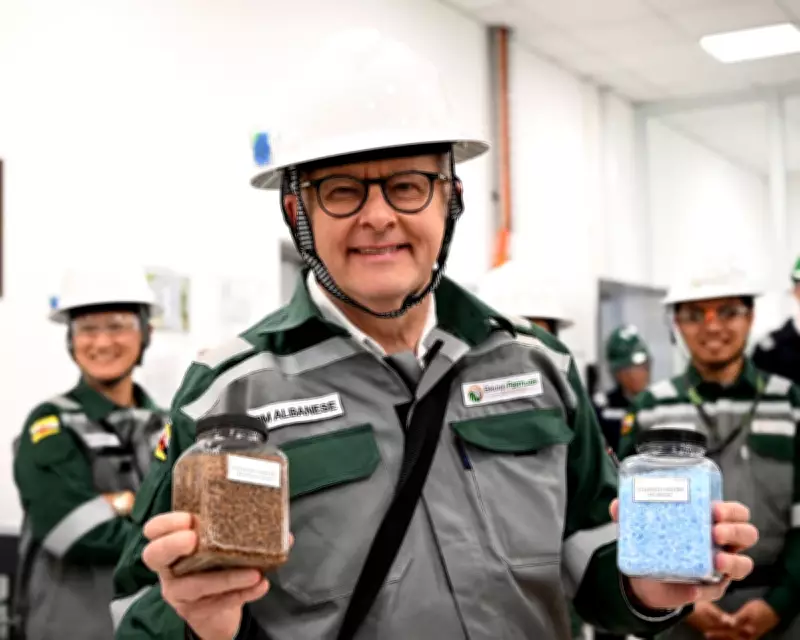
Visual media coverage showing the prime minister in protective work gear inspecting refineries in Singapore and fertilizer plants in Brunei complemented headlines about his rapid return from overseas engagements to address domestic emergencies.
Persistent Challenges Despite Diplomatic Gains
While every additional shipment provides relief, the 100 million liters secured represents barely more than a single day of normal Australian consumption. Furthermore, the Viva refinery's capacity to process this fuel remains potentially constrained by the Geelong incident, though company CEO Scott Wyatt maintains the incident won't affect Victorian supply and that additional costs won't be passed to consumers.
The refinery contributes approximately 10% of Australia's total fuel needs but supplies half of Victoria's requirements. Albanese indicated the plant would maintain 80% of diesel production, 80% of aviation fuel output, and 60% of petrol production despite the slowdown.
Government Response and Opposition Criticism
Albanese and Bowen faced initial criticism for what opponents characterized as a slow response to emerging fuel concerns, with some critics subsequently ridiculing what they viewed as an overcorrection through televised national addresses. However, weeks of diplomatic engagement have begun producing results.
Opposition energy spokesperson Angus Taylor has struggled to articulate coherent criticism beyond vague concerns about transparency, while Bowen maintains regular press conferences providing updates on petrol station outages, fuel reserve levels, and contracted orders.
The energy minister confirmed to Nine newspapers that fuel supplies are secured for "all of May" with "orders made for June," while the government has expanded arrangements to include BP among companies that can utilize Export Finance Australia support for fuel purchases.
Budget Focus on National Resilience
With next month's federal budget approaching, Albanese revealed that "resilience" would constitute a major theme, particularly regarding reducing vulnerability to international events. While expectations don't include boosting Australia's 30-day fuel reserves to 90 days, the government appears focused on strengthening systemic safeguards.

The Viva refinery incident underscores that resilience in critical national systems cannot be assumed, particularly given Australia's limited domestic refining capacity. Even minor disruptions to one of the nation's two remaining facilities create significant vulnerabilities in an already strained supply chain.
Global factors continue to complicate the situation, with fragile ceasefires in the Middle East and ongoing tensions affecting key shipping routes like the Strait of Hormuz maintaining pressure on international oil, fuel, and fertilizer supplies.
As the government works to project calm and avoid escalating emergency fuel plan stages, the back-to-back overseas trips during a domestic crisis suggest underlying concerns about potential deterioration. The diplomatic engagements have produced early gains, but the fundamental challenge of building sustainable energy security remains a work in progress for the Australian government.