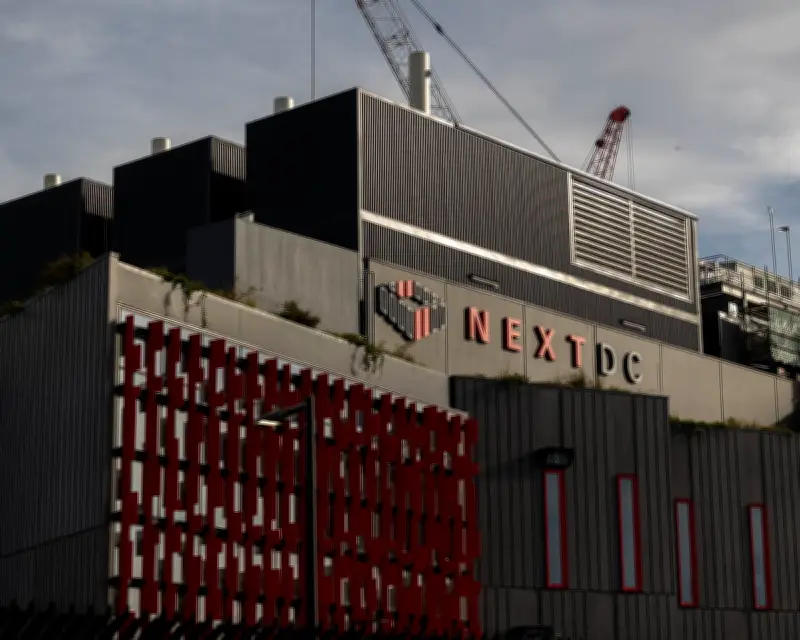
A NSW government inquiry has heard that the rapid growth of AI datacentres in Australia is raising concerns for the transport and logistics industries, with Transport for NSW and the Reserve Bank warning that the sector could take scarce land from logistics firms and housing developments, pushing up prices and overheating the economy.
Transport for NSW warns of land shortage
Transport for NSW told the state parliament inquiry on datacentres that there was already significant pressure on the availability of industrial land and infrastructure. The agency said in a submission that freight and logistics companies depended on industrial land near markets and transport. "The shortage of land is causing major freight and logistics operators to leave Sydney. They are relocating their main centres to Brisbane or Melbourne where suitable land is available and less expensive," it said.
Transport for NSW acknowledged that the industrial land vacancy rate had improved nationally and in Sydney in recent years, but it was still "well behind international rates and below the ideal market level." The agency warned that fragmentation of freight activities due to competing land uses could result in increased costs for business and higher prices for consumers, and said government needed coordinated policy to manage land use strategically.

Industry response from Data Centres Australia
The peak body for the datacentre sector, Data Centres Australia, said the vacancy rate was now close to 4%, citing CBRE research released on Tuesday. Its chief executive, Belinda Dennett, said supply was also responding, with "strong new development and continued logistics investment in western Sydney." She added, "The answer is to release and service more land and plan it well, putting the right uses on the right land, so freight keeps the transport-connected sites it depends on while datacentres deliver the investment, jobs and infrastructure they bring, and continue to invest in energy and water infrastructure that supports the broader ecosystem." Dennett agreed Sydney needed a coordinated approach to industrial land and it was not a contest between the two sectors.
Supply chain concerns
Transport for NSW's position was supported by the Australasian Supply Chain and Logistics Association (ASCLA). Its chief executive, Steven Ballerini, said it reflected what the group was hearing. "We're not opposed to datacentres as they're critical infrastructure for the digital economy. But they are now competing directly with freight and logistics for the same well-located industrial land, and that's a competition with real consequences," he said. "Unlike a datacentre, a distribution centre has to sit close to the population it serves; you can't simply move it to the urban fringe without adding cost, distance and emissions to the supply chain."
RBA warns of inflationary pressure
The Reserve Bank board has also warned that rising investment in datacentres could add to inflation and has already put upward pressure on interest rates worldwide. Datacentre spending makes up a growing share of Australia's investment in machinery and equipment, which was the single largest contributor to economic growth in early 2026. Commercial and industrial building approval values hit a record high in May because of new datacentre projects, the Australian Bureau of Statistics reported on Wednesday.
The strength of business investment caught the RBA board by surprise, according to minutes from its June meeting released on Tuesday. The board discussed the risk that the buildout could make skills shortages worse – construction costs were already high and workers in short supply before datacentre builds began hiring.
Economist warns of rate hikes
Pat Bustamante, a senior economist at Westpac, said the RBA would raise rates to cut spending elsewhere if datacentre spending competed for land and resources and pushed up prices. "The RBA essentially will have to make room for this expansion because this expansion isn't really interest [rate] sensitive," he said. Bustamante said home building would come under the most pressure if costs or rates rose further.

Community groups call for halt
Community groups are also increasingly challenging the growth of datacentres. Three communities in NSW, Victoria and Western Australia have allied to call on state and federal governments to halt approval of new datacentre developments until stronger protections for communities, cultural heritage and the environment are considered. One of them, the Lane Cove Responsible Planning Group, has highlighted that five datacentres are planned for the northern Sydney suburb, taking up 40% of its industrial land. "[Datacentres] take up space that could be used for other community infrastructure, green spaces and housing," the alliance said. "And they contribute to greenhouse gas emissions and climate change."
Federal MP calls for 'pump the brakes'
Federal Labor backbencher Ed Husic also raised concerns about datacentres taking up land that might otherwise be used for housing. "There's been a bit of a frenzy going on with datacentre builds … Land gets snapped up that should have been set aside for houses, and we've already got 90,000 workers short in construction," he told Sky News on Tuesday. "So if we are having a situation where datacentres are now taking up land for homes, we've got to pump the brakes on this."
The assistant minister for the digital economy, Andrew Charlton, said the government's top priority was building new homes. "States and councils need to prioritise housing in their local planning decisions," he said. "The collective task of policymakers is to ensure investment in datacentres work in the interests of Australians, not the other way around."
Industry opposes moratorium
Dennett said communities deserved a genuine say in what got built around them but a moratorium was the wrong tool. "Datacentres in Australia are already assessed through rigorous, independent planning that requires environmental assessment, community consultation, cultural heritage protection and binding conditions of approval, and they can only be built on industrial and employment land," she said. "A blanket pause would freeze the whole industry to legislate safeguards that for the most part already exist, while sending the investment, the jobs and the local infrastructure these projects bring to other countries."