
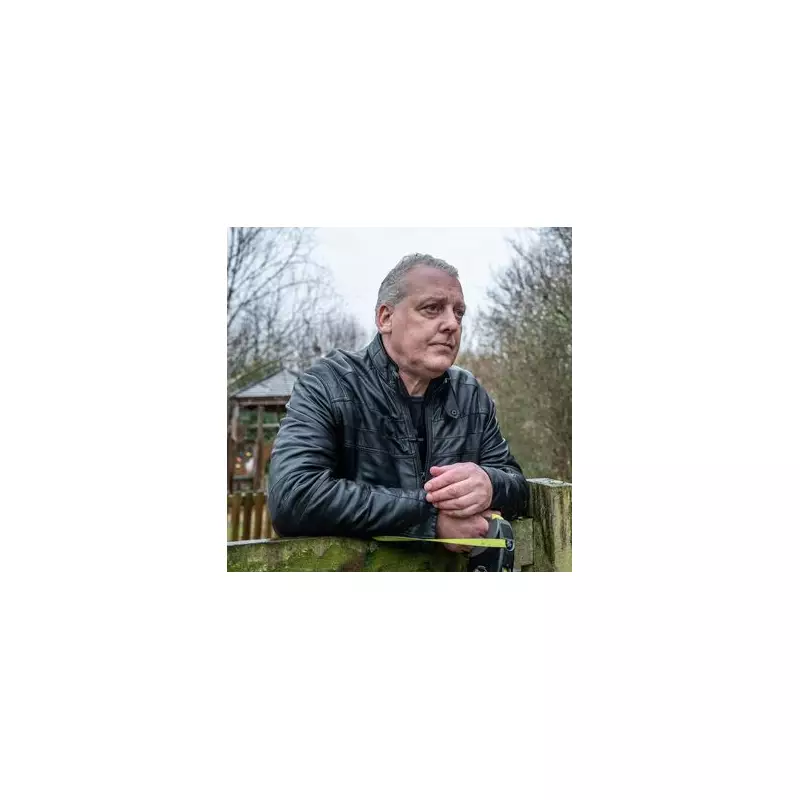
A man who served 22 years behind bars for murder has said he would rather return to prison than face the near-impossible task of finding a job and a home on the outside.
A Life Sentence Beyond the Walls
Iain Macpherson, now 54 and from Harrow, London, was handed two life sentences with a minimum term of 12 years in February 1992. His crimes included murder, committed under the controversial joint enterprise law. After being moved between an estimated 22 different prisons, he was finally released in October 2014 at the age of 41.
Despite gaining qualifications in prison, including GCSEs, A-Levels, and certificates in personal training and IT, Macpherson's attempts to build a life have been met with relentless rejection. He spent three years applying for work in home refurbishment and fitness through eight different Job Centres, but was repeatedly told his conviction made him unemployable.
The Vicious Cycle of Stigma and Debt
Macpherson's situation highlights a critical failure in the rehabilitation system. After a stint in a reintegration hostel in Ealing, he moved in with a girlfriend in Bedford. When that relationship ended, he was forced to sofa-surf at his mother's Hertfordshire flat.
His efforts to become self-employed as a personal trainer were thwarted by prohibitive costs. He was quoted an astonishing £9,800 per year to insure his partner's £2,000 Kia Picanto, a price directly attributed to his criminal record. Without transport, he found securing clients impossible.
Now suffering from anxiety and back problems, Macpherson claims he cannot work. He has been deemed "voluntarily homeless" by the council, leaving him to rely on Universal Credit and PIP payments. His current existence involves drifting between friends' sofas and accruing debt to pay for hotel rooms, recently taking a £1,000 loan for temporary accommodation.
"It's Impossible Out Here"
In a desperate plea, Macpherson has even asked his probation officer to recall him to prison, a request that was denied. He misses the basic security incarceration provided. "Prison is horrible, and the food is disgusting, but at least I'd have a roof over my head," he stated.
He describes the lifelong burden of his conviction: "As soon as the local community find out about it nobody wants you there any more. People would rather cross the road than speak to me." He argues that while he understands the stigma, the system offers no viable path forward for someone in his position, making a law-abiding life unsustainable.
Macpherson's case raises urgent questions about the support available for long-term ex-offenders and whether a life sentence truly ends at the prison gate, or if it becomes a perpetual state of social and economic exile.




