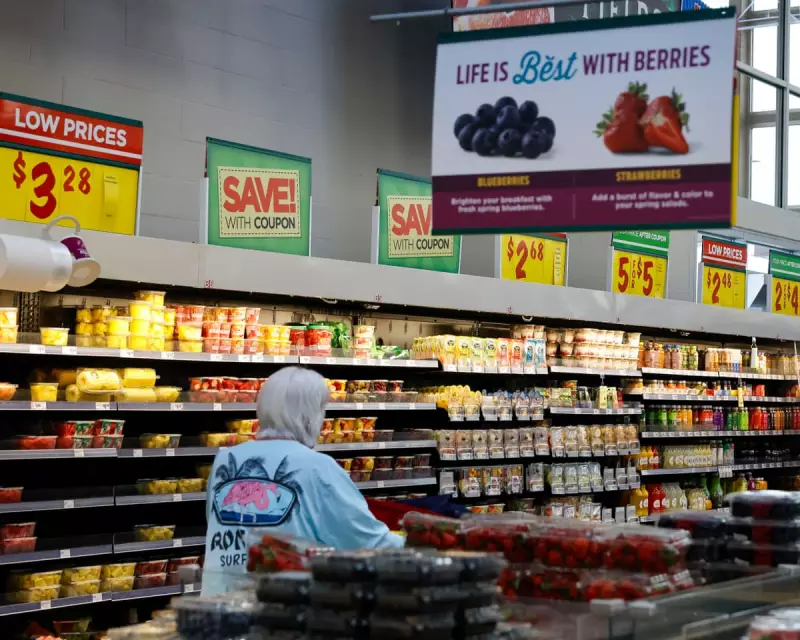
Contrary to claims made by former President Donald Trump, supermarket prices in the United States have continued their upward trend. This persistent inflation comes despite Trump's assertions that his aggressive tariff policy would not burden American consumers. The economic fallout, however, has been less severe and more delayed than many experts initially predicted.
The Disconnect Between Fear and Reality
When Donald Trump returned to the White House in January 2025, a wave of apprehension swept through the economic community. The widespread fear was that his proposed sweeping tariffs would act as a severe supply shock, driving up costs for both consumer goods and business inputs. The anticipated result was a surge in inflation, a drop in real incomes, and a rise in unemployment, with the Federal Reserve largely powerless to intervene.
Trump proceeded to implement tariffs at a historically high level, shattering international agreements and the Republican party's traditional stance on free trade. The average effective tariff on US imports skyrocketed from 2% to 18% in 2025, according to the Yale Budget Lab, marking the highest level since the 1930s. Given the scale of the policy shift and the uncertainty it created, significant economic damage seemed inevitable.
Four Reasons for the Delayed Impact
Yet, the data tells a different story for 2025. The Consumer Price Index (CPI) inflation rate for the year ending in November stood at 2.7%, identical to the rate at the end of 2024. Unemployment saw only a modest increase from 4.1% to 4.6% over the same period. Several key factors have limited or postponed the tariffs' most severe consequences.
Firstly, US economic data has been compromised. A government shutdown from October 1st to November 12th disrupted the Bureau of Labor Statistics' data collection, particularly for October, potentially skewing inflation measurements downward.
Secondly, many of the highest tariffs have not been fully implemented. Trump has repeatedly postponed or rolled back certain duties, including some affecting grocery prices in mid-November. He also granted major exemptions, such as for goods from Mexico and Canada under the US-Mexico-Canada Agreement, preventing the devastation of the integrated North American auto industry.
Thirdly, companies engaged in widespread 'front-loading' of imports immediately after Trump's November 2024 election victory. By stockpiling goods like Swiss gold and Irish weight-loss drugs before tariffs hit, importers saved an estimated $6.5bn. Retailers have been slow to raise prices as they work through these pre-tariff inventories.
Finally, and most crucially, importers have absorbed a substantial portion of the cost increase themselves. Research using real-time retail data indicates that while prices for tariff-affected goods have risen by about 5.4% at retail—adding roughly 0.7 percentage points to overall CPI—this represents only a fraction of the potential passthrough. US companies, facing uncertainty over how long the tariffs will last, have been shielding consumers and retaining workers, much as they do when the dollar weakens.
The Looming Threat of 2026
This does not mean the initial economic warnings were incorrect. Analysts argue the adverse effects have merely been deferred and are likely to manifest with full force in 2026. Companies cannot and will not allow tariffs to erode their profit margins indefinitely. If the high tariffs remain in place, the US can expect further price increases and downward pressure on real incomes next year.
The situation remains fluid, with the potential for policy reversals or legal challenges. However, the current evidence clearly contradicts President Trump's claim that foreign exporters are bearing the cost of the duties. The financial burden is currently being shouldered by American businesses, with the bill for consumers potentially coming due in the near future.