
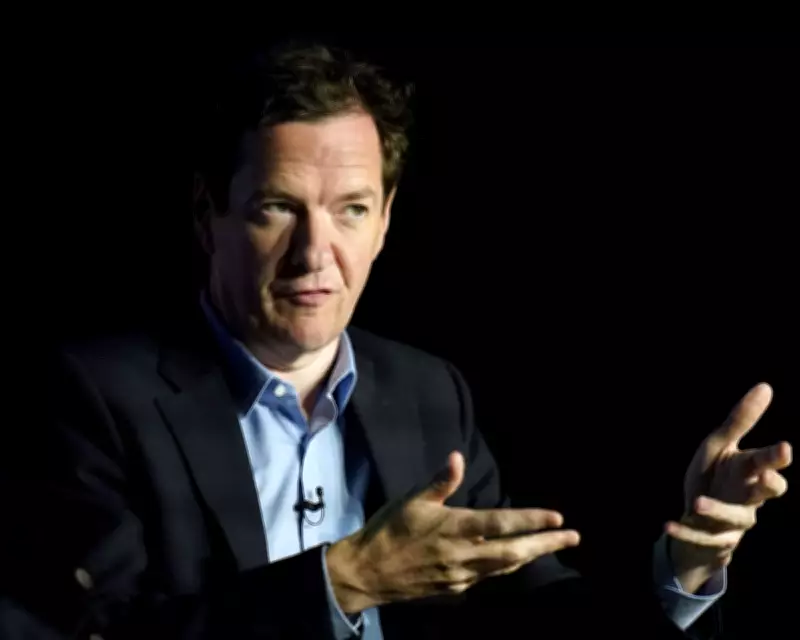
Former Chancellor Issues Stark Warning on AI Adoption at Global Summit
George Osborne, the former UK Chancellor of the Exchequer, has delivered a stark warning to nations hesitant to embrace artificial intelligence, stating they risk becoming "weaker and poorer" in the global economy. Speaking at the AI Impact Summit in Delhi, Osborne emphasized that countries without robust AI rollouts face being "left behind" as workforces seek opportunities elsewhere.
Two Months Into OpenAI Role, Osborne Advocates for Technological Embrace
Now two months into his position as head of OpenAI's "for countries" program at the $500 billion San Francisco-based company, Osborne framed the global AI landscape as a choice between American and Chinese technological systems. "Don't be left behind," he told assembled leaders, highlighting how both superpowers have developed the most powerful AI systems currently available.
Osborne described the dilemma facing nations outside these two technological powerhouses: "A lot of countries who aren't the United States of America and who aren't the People's Republic of China essentially face two kind of slightly contradictory feelings at the same time. The first is a Fomo: are we missing out on this huge technological revolution?"
Workforce Mobility and National Sovereignty Concerns
The former chancellor specifically warned about workforce implications, suggesting that without domestic AI opportunities, skilled workers might become "less willing to stay put" and would seek "AI-enabled fortunes elsewhere." He connected this directly to national sovereignty concerns, stating that reliance on foreign AI systems creates dependency while failure to adopt creates economic vulnerability.
"There's another kind of sovereignty, which is, don't be left behind, because then you will be a weaker nation, a poorer nation, a nation whose workforce will be less willing to stay put," Osborne elaborated during his summit address.
Global South Focus and Safety Standards Debate
The fourth intergovernmental AI summit, hosted by Indian Prime Minister Narendra Modi following previous editions in the UK, Korea, and France, specifically focuses on harnessing AI for the benefit of Global South nations. Key discussion points include:
- Incorporating more regional languages into AI systems
- Applying AI technology to improve agricultural productivity
- Enhancing public health through AI applications
- Developing improved safety standards for advanced AI systems
Safety standards emerged as a particularly contentious issue, with some experts expressing concern that current measures fall short of addressing potential catastrophic risks posed by the most advanced AI systems. This concern persists despite White House opposition to what it views as excessive regulatory "red tape."
US-China Dominance Versus Local Alternatives
While Osborne presented a binary choice between American and Chinese AI systems, other summit participants challenged this perspective. Mark Surman, head of Mozilla, argued that "the idea that countries other than China and the US won't be able to build big things – and we hear that a lot – is actually a false premise" that primarily benefits companies within those two nations.
African representatives presented particularly compelling counterarguments. Kevin Degila, overseeing AI and data at Benin's government digital agency, stated: "For us, it's not a US or China thing. We are Africans and our job is to collaborate with each other to build our own AI." He noted that Benin, with its 64 languages spoken among 15 million people, is developing AI systems that fuse American and Chinese technologies with local language datasets.
Degila emphasized the practical limitations of existing systems: "Anthropic and OpenAI don't reach the farmers," highlighting the need for locally relevant AI solutions.
Political Leadership and Regulatory Tensions
The summit also featured remarks from Rishi Sunak, former UK prime minister and current advisor to Anthropic (an OpenAI rival) and Microsoft. Sunak urged political leaders to treat AI as an immediate priority rather than a future concern: "One of my concerns is that I think some political leaders think that AI is going to be tomorrow's issue, where I think they need to recognise that it's an 'action this day' issue."
Meanwhile, White House senior AI adviser Sriram Krishnan emphasized the Trump administration's pursuit of AI supremacy, telling attendees: "We want to make sure the world uses our AI model." He also criticized the European Union's regulatory approach, stating that "the EU AI Act is not really very conducive to an entrepreneur who wants to build innovative technology" and vowing to continue speaking against such regulations.
Sovereignty and Partnership Models
Rwanda's Minister of ICT and Innovation, Paula Ingabire, presented an alternative approach, explaining that her country seeks partnerships with AI companies "that are going to be progressively less necessary" to avoid becoming "locked into very dependent partnerships." This reflects a broader Global South sentiment favoring technological sovereignty and gradual independence from foreign AI providers.
The Delhi summit has thus revealed a complex global AI landscape where:
- Major powers advocate for their technological dominance
- Developing nations seek balanced approaches combining global technologies with local development
- Workforce mobility concerns drive national AI adoption strategies
- Regulatory approaches vary significantly between regions
- The tension between rapid adoption and careful governance continues unresolved
As nations navigate these challenges, Osborne's warning about the economic consequences of AI hesitation resonates alongside calls for more diverse, locally responsive approaches to artificial intelligence development and deployment.




