Tuesday 12 May 2026 5:21 am | Updated: Monday 11 May 2026 11:43 am
When does fish, chips and mushy peas become an unaffordable luxury?
By Helen Thomas, CEO & Founder of Blonde Money
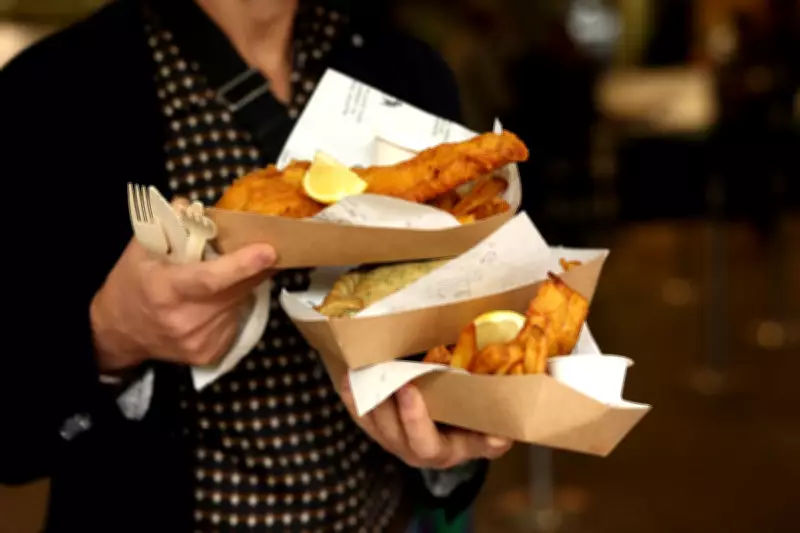
As Ryan, the owner of Harrison’s Fish and Chip shop, said to me on Friday night, “stock markets only ever go up.” As an enterprising young millennial, he has always had a number of side hustle investments and has been upbeat about their performance when I stop by. But as the owner of a small hospitality business, he also comments on the rising price of everything, from cooking oil to business rates. He has had to raise his prices in response. Fortunately for his customers, there has been no compromise on quality or shrinkflation of portion sizes. However, the apparently indefatigable stock market is increasingly at odds with his business outlook. At what point does fish, chips and mushy peas become one luxury too far for a constantly squeezed consumer?
This trend is already having a political impact. The think tank More in Common regularly conducts focus groups, and last year one attendee made a comment that “encapsulates why people feel so frustrated… it’s not always the big things, it’s as simple as not being able to afford to get fish and chips as an occasional treat.” The electorate is making their feelings clear, voting with their feet for more extreme parties of the right and left, hoping that rolling the dice might yield better results than sticking with traditional parties.
Changing consumer habits
While politics becomes more volatile, economics continues its relentless march. When prices rise so high and budgets get so tight, consumers adjust their habits permanently. This is looming in the energy markets as the closure of the Strait of Hormuz will not be resolved any time soon, regardless of political decisions. The CEO of Saudi Aramco has warned: “Reopening routes is not the same as normalizing a market that has been deprived of about one billion barrels of oil” and “if trade and shipping remain curtailed by more than a few weeks from today, we anticipate the supply disruption to persist, and the market to normalize only in 2027.” This suggests that oil prices have further to rise. At some point, what economists call demand destruction will kick in. People will stop driving or flying, switching to public transport or working from home. In a pure economic model, if demand collapses after a supply shortage, the market eventually finds a clearing price and reaches a new equilibrium.
But politics eventually catches up with economics. The mathematics may be clean, but the human consequences are not. In April 2021, the Sri Lankan government announced an immediate ban on synthetic fertilizers and pesticides; the ensuing collapse in rice and tea production contributed to inflation, rising debt, fuel shortages, protests, and ultimately the removal of the government itself. Now, with key fertilizer components stranded on tankers in the Gulf, several Asian nations face an analogous overnight shortage just as the crucial planting season begins. David Miliband, President of the International Rescue Committee, warned only six weeks ago of “a ticking food security timebomb,” adding that “the window to avert a massive global hunger crisis is rapidly closing.”
It is not only the price of food that may rise, but the possibility that vulnerable nations cannot access food at all. That is what makes the closure of the Strait of Hormuz so pernicious. Financial markets may swing from negative oil prices in April 2020 to a probable record high six years later. But behind the price action lies a more serious reality: shortages of essential goods that no amount of money can reliably procure.
And that is where the optimism of the stock market begins to collide with the pessimism of everyday life. Investors can convince themselves that higher energy prices are temporary, that central banks will intervene, or that markets will eventually clear. But voters and consumers experience economics in far more tangible ways. They experience it when they fill up the car, when they book a flight, and when a Friday-night fish and chips supper quietly shifts from affordable comfort to unaffordable luxury. History suggests that once ordinary people begin adjusting their expectations downward, politics rarely remains stable for long.
Helen Thomas is founder and CEO of Blonde Money.