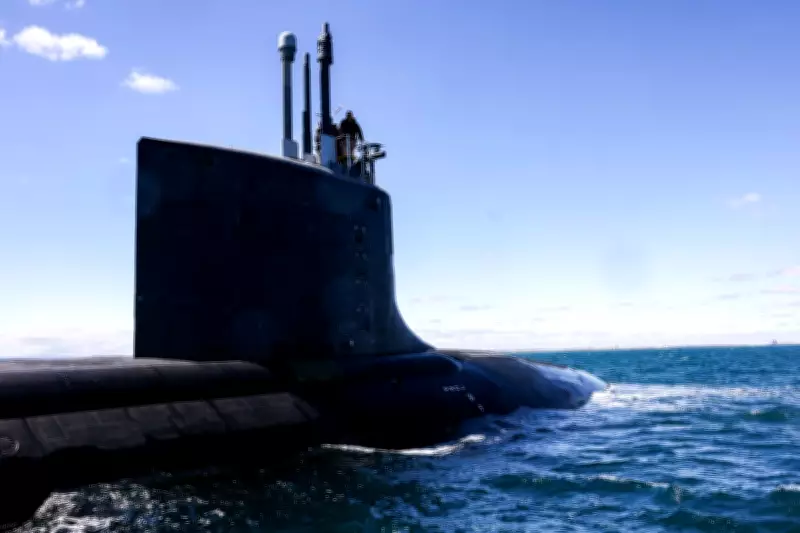
The US Navy has admitted it would take until 2032 before it was building two Virginia-class boats a year – still below the rate needed to supply Australia. This revelation is the strongest signal yet that America's promised Virginia-class submarines are increasingly unlikely to materialize under Australian command.
As Australia's Aukus spending blows out further, US submarine building falls years further behind. The deal will cost Australia $368 billion, but the US is not building enough submarines for its own fleet, let alone for Australia.
Costs Balloon and Timelines Slip
Australia's budget, released Tuesday, allocated an extra $400 million towards the Aukus agreement over the next three years. The Australian Submarine Agency's total resourcing is now $2.13 billion to the middle of 2029. Additionally, Australia has sent $2.76 billion to the US and $863 million to the UK to boost their flagging submarine-building industrial bases. However, these amounts remain a fraction of the total cost, which is conservatively estimated at $368 billion to 2055.
US Shipbuilding Challenges
Submarine building in the US has slowed dramatically over decades. It now takes US boatbuilders 10 years to build an attack submarine, compared to six years twenty years ago. For the past 15 years, the US Navy has ordered Virginia-class submarines at a rate of two a year, but shipyards have never met that build rate. Since 2022, production has been limited to about 1.1 to 1.2 boats per year, resulting in a growing backlog. As a result, the US Navy has only 49 of the 66 submarines it needs.
Shipyards must build Virginia-class submarines at a rate of two per year to meet US needs, and lift that to 2.33 boats per year to supply submarines to Australia. The Navy initially forecast reaching the two-per-year rate by 2026, then pushed it to 2028, and now to 2032.
Congressional and Navy Perspectives
Giving evidence before the House appropriations committee, Chief of Naval Operations Adm Daryl Caudle said: "I would say we're going to be up on step with that [production rate] around 2032 based on the things we've done … we should be up to two-per-year in the early 2030s." He expressed confidence in Aukus progress, noting recent visits to Perth and integration efforts at Pearl Harbor. However, even reaching two per year would still be insufficient for Aukus, which requires 2.33 boats annually to sell even one to Australia.
The US legislation governing Aukus states that the president can only transfer a submarine to Australia if losing that submarine "will not degrade the United States undersea capabilities." The US Navy's 30-year shipbuilding plan does not account for building any additional submarines for Aukus, mentioning the program only once as a footnote.
Structural Challenges in Shipbuilding
A report issued last month, Challenges Facing the Navy's and Coast Guard's Shipbuilding Programs and the Shipbuilding Industrial Base, paints a dire picture. Workforce challenges are the greatest brake on production rates, with nearly all major shipyards struggling to hire and retain workers. Up to 70% of suppliers have no competitors, so a single supplier's difficulties could disrupt construction.
The US Congressional Research Service has openly considered "alternative divisions of labor" under which no Virginia-class submarines are ever transferred to Australian control. A report issued in January argued that in a conflict with China, submarines under Australian command could not be ordered into operation, whereas US-commanded vessels could be immediately deployed.
Acting Secretary of the Navy Hung Cao told a House subcommittee that the submarines, under US or Australian command, are essentially interchangeable. "The enemy will not know if it's an American submarine out there or an Australian submarine because it's going to all be the same … let them guess what's out there."
The Aukus deal remains a cornerstone of Australia's defense strategy, but mounting evidence suggests significant hurdles remain before nuclear-powered submarines become a reality under Australian command.