
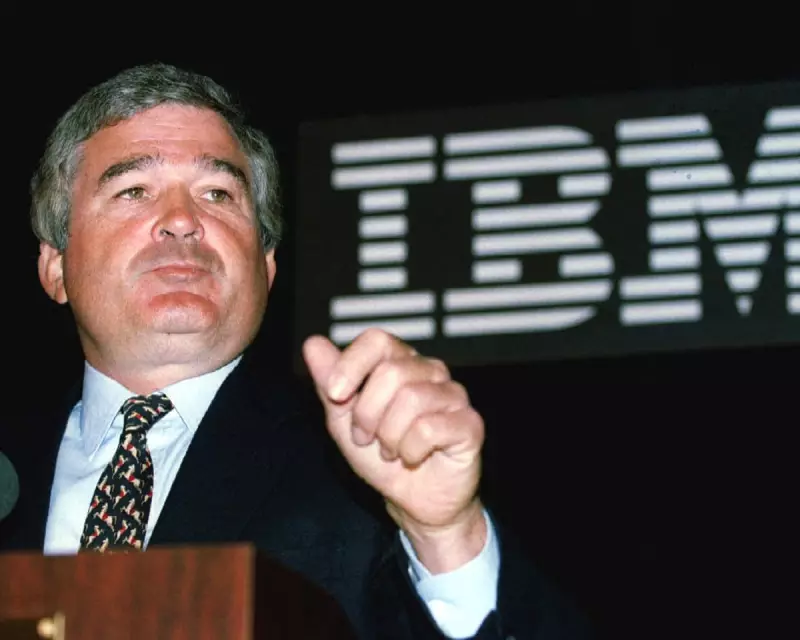
The technology world is mourning the loss of a legendary corporate leader. Louis Gerstner, the former chair and chief executive of IBM, has died at the age of 83. The company announced his passing on Sunday, paying tribute to the man widely credited with one of the most remarkable corporate rescues in business history.
The Outsider Who Saved a Tech Icon
Gerstner took the helm at IBM in 1993, arriving at a moment of profound crisis. The company, once the undisputed king of the technology sector with its dominant mainframe computers, was struggling for relevance and facing massive losses. The rise of the personal computer, powered by Intel processors and Microsoft's Windows operating system, had dramatically shifted the landscape. Competitors like Microsoft and Sun Microsystems were surging ahead, while IBM's plan to split itself into separate 'Baby Blue' companies focused on specific products like processors or software was gaining traction.
As the first outsider ever to run the venerable firm, Gerstner made a fateful and counterintuitive decision: he abandoned the breakup plan entirely. In an email to staff announcing Gerstner's death, IBM's current chair and CEO, Arvind Krishna, highlighted the critical importance of this move. "Lou understood that clients didn't want fragmented technology, they wanted integrated solutions," Krishna wrote, crediting this insight with being key to IBM's survival.
A Relentless Focus on Clients and Execution
Gerstner's approach was famously pragmatic. At an early press conference, he startled the media by declaring that "the last thing IBM needs right now is a vision." His immediate priority was a brutal focus on restoring profitability and, above all, serving customers better. This meant making tough choices, including the decision to abandon IBM's OS/2 operating system, which had been developed to challenge Microsoft's dominance in PC software.
Krishna described Gerstner as a "direct" leader who valued preparation and challenged assumptions. Recalling a town hall meeting in the mid-1990s, Krishna noted Gerstner's unique intensity. "He had an ability to hold the short term and the long term in his head at the same time," Krishna told staff. "He pushed hard on delivery, but he was equally focused on innovation, doing work that clients would remember, not just consume."
A Lasting Legacy of Integration
Gerstner's tenure, which lasted until 2002, successfully steered IBM away from the brink. By rejecting the fragmentation of the company's vast capabilities, he repositioned Big Blue as a provider of comprehensive, integrated technology solutions – a strategy that defined its path for decades. Before joining IBM, Gerstner had served as president of American Express and CEO of RJR Nabisco. After leaving IBM, he took on the role of chairman at the global investment firm Carlyle Group.
His legacy is that of a leader who arrived when, as Krishna stated, "the company's future was genuinely uncertain" and reshaped it not by looking backward, but by "focusing relentlessly on what our clients would need next." In an industry obsessed with the next disruptive vision, Louis Gerstner proved that sometimes, salvation lies in execution, customer focus, and the courage to keep a giant whole.




