
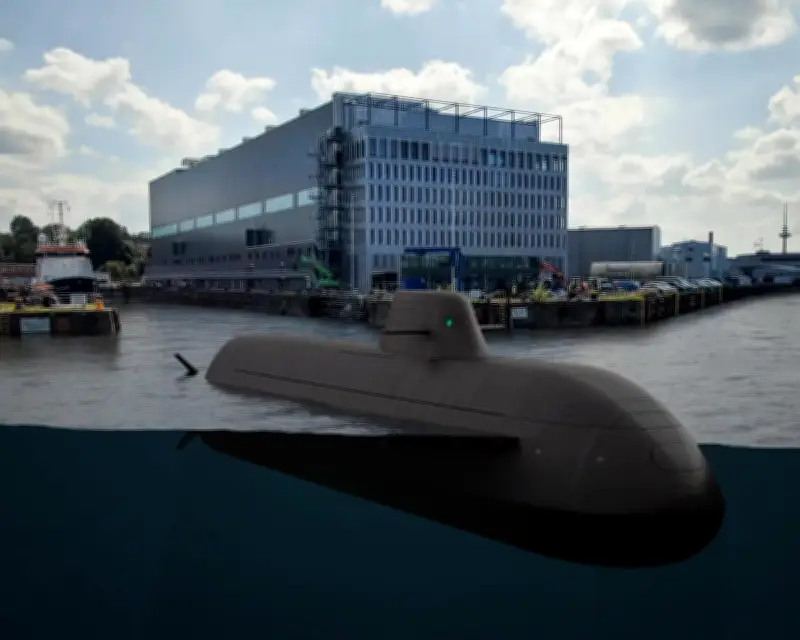
Canada Chooses German Submarine Builder for Historic Contract
Canada has selected ThyssenKrupp Marine Systems (TKMS) to build 12 cutting-edge diesel-electric submarines, marking one of the country's largest-ever defence contracts. Prime Minister Mark Carney announced the winner on Monday, ending a competitive bidding war with South Korea's Hanwha Ocean. The deal will replace Canada's aging fleet of secondhand submarines and deepen its ties with Nato ahead of a crucial alliance summit.
TKMS Beats Out South Korean Rival
For months, both TKMS and Hanwha Ocean vied for the lucrative contract, promising advanced technology and economic benefits. Canada previously indicated that both firms' offerings—the TKMS 212CD model and Hanwha's KSS-III Batch-II—satisfied military requirements. TKMS is the largest manufacturer of non-nuclear submarines and a key Nato supplier. The order for 12 submarines is the first time Canada has bought brand-new vessels, replacing four Victoria-class subs purchased secondhand from Britain in 1998, three of which are currently undergoing maintenance.
Strategic Importance for Arctic Operations
The new submarines will bolster Canada's presence in the Arctic, including the Northwest Passage. TKMS vessels feature modern stealth technology for contested areas, enabling lengthy surveillance missions with minimal detection. Hanwha's submarines were substantially larger, offering greater weapons capability and deep-ocean patrols, but the German design was selected. The submarine order itself is estimated at over US$12bn (£9bn), with maintenance over roughly 50 years potentially pushing the total bill beyond US$70bn.
Negotiations and Economic Spillovers
Canada's federal government and TKMS will now enter negotiations to finalise the contract, a process that could take years. Carney visited TKMS's facility in Kiel, Germany, last year, while senior officials from both countries promoted broader economic benefits. German officials emphasised Nato compatibility, and TKMS reportedly hopes to expand the contract to include investments in rare earths, mining, artificial intelligence, and battery production. South Korea, not a Nato member, highlighted that Hanwha would use Canadian steel from Algoma's plant in Sault Ste Marie, Ontario, for armoured vehicles. Hanwha also ran a major ad campaign featuring Canadian journalist Peter Mansbridge.
Defence Spending and Reduced US Reliance
Carney's Liberal party has committed to increasing defence spending to 5% of GDP by 2035, recently hitting the Nato target of 2%. Canada is also open to larger purchases from European contractors to lessen reliance on the US. It has already committed to 18 Lockheed Martin F-35 jets for interoperability with NORAD, but political tensions have pushed Ottawa to consider other vendors. Canada is weighing the purchase of 72 Saab-made Gripen war planes, which Saab says would create up to 12,600 jobs in Canada if combined with six GlobalEye surveillance aircraft already agreed upon. Nato Secretary General Mark Rutte told reporters that alliance members are about to announce billions in new contracts, calling it the "crucial kit we need to deter and defend."




