Trump Signs Executive Order to Fast-Track LA Wildfire Reconstruction
President Donald Trump has signed an executive order designed to accelerate the reconstruction of thousands of homes devastated by the January 2025 Los Angeles-area wildfires. The order, announced on Tuesday and formally signed on Friday, seeks to eliminate bureaucratic hurdles that have slowed rebuilding efforts in affected communities like Altadena, Palisades, Malibu, and Pasadena.
Order Targets Permit Requirements and Bureaucratic Delays
The White House stated that the executive order aims to allow homeowners to rebuild without facing what it describes as "unnecessary, duplicative, or obstructive" permitting requirements. It directs the Federal Emergency Management Agency (FEMA) and the Small Business Administration (SBA) to develop regulations that would preempt state and local permitting rules.
Under the proposed framework, builders would be permitted to "self-certify" that they have complied with essential health, safety, and building standards. Additionally, federal agencies are instructed to expedite waivers, permits, and approvals, potentially bypassing environmental, historic preservation, and natural resource laws that might otherwise delay reconstruction projects.
California Officials Dismiss Order as Political Theatre
The order has been met with sharp criticism from California political leaders who question both its practicality and its motives. Governor Gavin Newsom responded dismissively on social media, suggesting that "an executive order to rebuild Mars would do just as useful" and urging the Trump administration to instead approve California's $33.9 billion disaster aid request.
Los Angeles Mayor Karen Bass echoed these sentiments, labelling Trump's move a "political stunt" and calling for more substantive assistance. Bass argued that the administration should focus on compelling insurance companies to pay claims promptly, extending mortgage forbearance periods, and creating special no-interest loan programs for fire survivors.
Slow Recovery Progress One Year After Devastating Fires
The January 2025 wildfires resulted in tragic consequences, claiming 31 lives and destroying approximately 13,000 residential properties across multiple communities. The Palisades and Eaton fires, the largest of the blazes, burned for over three weeks, with cleanup operations taking approximately seven months to complete.
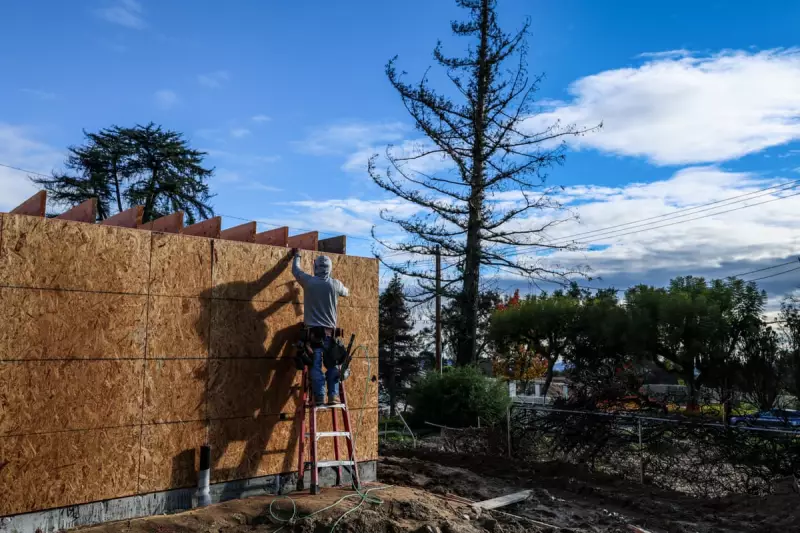
One year following the disaster, reconstruction progress remains painfully slow. According to Associated Press findings, fewer than a dozen homes have been fully rebuilt. Current data shows construction underway for at least 511 homes in the Eaton fire area and 370 in the Palisades region.
Los Angeles County records indicate that about 2,600 rebuild permits had been issued by 5 January, representing approximately 41% of applications received. However, for the majority of destroyed properties, applications have not yet been submitted to authorities.
Financial Barriers Outweigh Permitting Concerns for Survivors
While permitting assistance is welcomed by some, survivors and advocacy groups emphasize that financial obstacles represent the primary challenge to reconstruction. Joy Chen, executive director of the Eaton Fire Survivor's Network, stated clearly: "The number one barrier to Eaton and Palisades fire survivors right now is money."
Many survivors face significant gaps between insurance payouts and actual construction costs, with nearly one-third citing rebuild costs and insurance settlements as their main obstacles in a December survey conducted by the Department of Angels nonprofit. Only 21% identified permitting delays as their primary concern.
Audit of Federal Disaster Funding Ordered
The executive order also mandates an audit of California's use of Hazard Mitigation Grant Program (HMGP) funding, which typically supports rebuilding with greater resilience following major disasters. Homeland Security Secretary Kristi Noem and FEMA Acting Administrator Karen Evans have been directed to complete this audit within 60 days.
Following the audit, they must determine whether future conditions should be attached to such funding or if "recoupment or recovery actions" should be pursued. This directive comes amid broader concerns about reduced federal funding for climate mitigation, with Trump not having approved a single HMGP funding request from any state since February.
The disparity in rebuilding progress has become increasingly evident, with Dr Thomas Chandler of Columbia University's National Center for Disaster Preparedness observing that "it is predominantly the wealthy who are rebuilding." Those with greater resources and established networks, particularly developers, have been able to initiate reconstruction much more quickly than ordinary homeowners struggling with financial constraints.