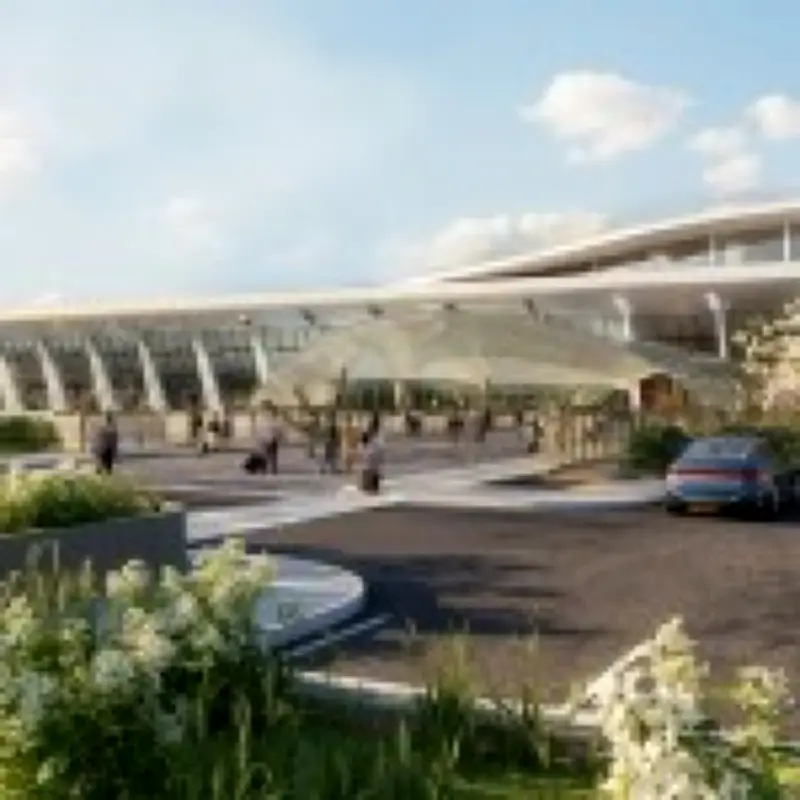
President Donald Trump has unveiled a $10 billion (£10,000,000,000) plan to transform Dulles International Airport near Washington DC, a project that will conceal most of the original mid-century-modern terminal designed by renowned architect Eero Saarinen. The renderings, released by the US Department of Transportation (DOT) last week, show a large sloping structure attached to the iconic curved-roof building, which has been a classic of airport architecture since it opened in 1962.
Design and Scope of the Expansion
The conceptual designs, prepared by United Airlines rather than a formally named architecture firm, feature sloping extensions on either side of Saarinen's terminal, stretching outward to accommodate new facilities. The plans also include a massive car park that Trump described as 'the largest garage in the world'. The DOT confirmed that the project would add 5 million square feet (464,515 square metres) of space to the airport, along with new tunnels to replace the current automated trains that transport passengers between concourses.
The announcement follows a government request for information issued late last year, which attracted proposals from more than 30 architecture practices, including Zaha Hadid Architects and Adjaye Associates. Trump said he selected the designs 'after an extensive review', but no architecture firm has been officially named as the project's designer; instead, United Airlines assembled the renderings.

Reactions and Justification
United Airlines CEO Scott Kirby praised the administration's support, stating: 'We thank the Trump Administration and the Department of Transportation for their support as we move this transformative project forward and make Dulles a showcase for the nation's capital, setting a new standard for airports across the country.'
US Transportation Secretary Sean P. Duffy defended the designs, insisting that the old terminal building would be preserved despite the encroachment. 'President Trump's work to make D.C. safe and beautiful has already reshaped our nation's capital for the better,' he said. 'But to truly achieve this vision, we need to invest in an international gateway that is worthy of the greatest country on earth. By partnering with United Airlines and MWAA, we will create thousands of jobs and build a world-class airport filled with stunning architecture, efficient security screenings, hundreds of new flights, and improved mobility – all while preserving Dulles' iconic primary terminal. Say goodbye to those stale concourses, endless walkways, and those absurd mobile lounges, and say hello to a state-of-the-art facility that will inspire millions of flyers for generations to come.'
Background and Criticism
The project has drawn criticism from preservationists and architecture enthusiasts who view Saarinen's terminal as one of the most significant works of 20th-century airport architecture. The building, known for its sweeping curved roof suspended over concrete columns, is a recognisable landmark in the Washington region. In December, Trump described Dulles as 'incorrectly designed' and a 'terrible airport', signalling his intent to overhaul the facility.
The DOT said the work would be carried out over the next 'several years', with funding for the renovation programme increased by as much as $13 billion (£10 billion). The project aims to modernise the airport's infrastructure, including security screenings and passenger mobility, while adding hundreds of new flights.
While the renderings show the new structure towering over Saarinen's original, officials maintain that the terminal's facade will remain visible, albeit partially obscured. Critics argue that the scale of the new construction will diminish the architectural heritage of the original design, which has been praised for its elegance and innovation.
The announcement has sparked debate about the balance between modernisation and preservation, with some questioning whether the massive investment could have been used to upgrade the existing terminal without hiding it. Others point to the potential economic benefits, including job creation and enhanced capacity for one of the nation's busiest airports.

As the project moves forward, further details on the design and construction timeline are expected, along with formal selection of an architecture firm. For now, the renderings offer a glimpse of a future Dulles that promises to be radically different from the airport that has served the capital for over six decades.