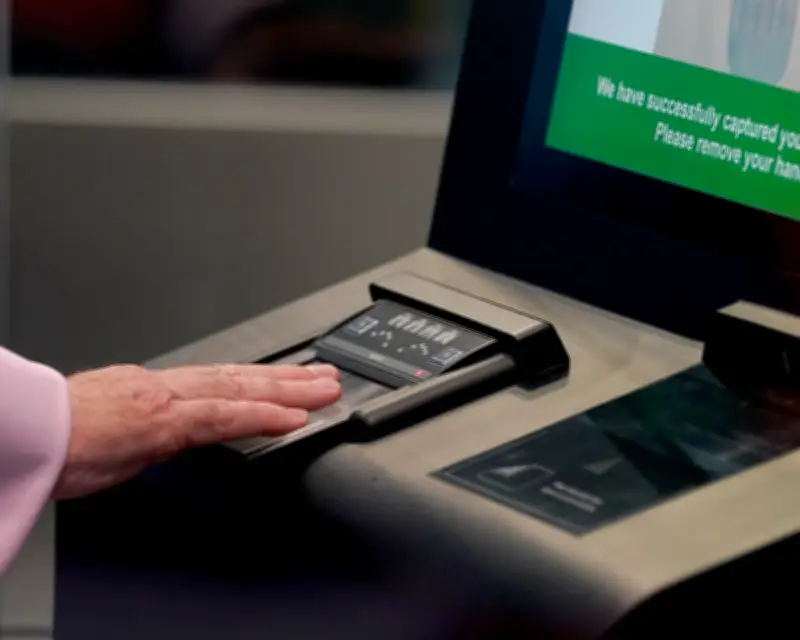
Ryanair has warned of potential 'queue chaos' this summer at EU airports because of new fingerprint checks, as the European Commission invited the air industry to an urgent meeting next Tuesday to discuss concerns over the new entry and exit system (EES).
Ryanair calls for suspension of system
The airline, Europe's largest, said passengers going on well-deserved breaks this summer should not be used as 'guinea pigs' for a 'half-baked' system. Ryanair has already urged suspension until September in the 'most exposed countries', claiming the current infrastructure is 'not ready to manage the high passenger volumes expected' from mid July.
It listed seven airports already 'experiencing major disruptions' with 'further congestion expected' as the holiday season gets busier: Tenerife South, Palma, Alicante and Málaga in Spain, Milan Bergamo in Italy, Krakow in Poland and Paris Beauvais in France.

Industry calls for delay
Airlines for Europe and Airports Council International have asked the commission to suspend the new border controls 'at least throughout July and August' but potentially for a full year until next summer. They are concerned that airports are not ready to cope with the influx of passengers over the peak summer season, that staff are being subjected to abuse as queues build for fingerprinting and that the whole travel industry will be hit hard.
Neal McMahon, Ryanair's chief operating officer, said: 'It is clear that the entry/exit system (EES) is still not ready for peak summer volumes. Passengers and families should not be used as guinea pigs for a half-baked passport control system that risks creating long queues, missed flights and unnecessary stress at airports this summer.'
Background of the EES
The EES has been in the pipeline for 10 years and was conceived to give countries in the Schengen travel area greater visibility of who is coming in and leaving the EU. The only two countries in the EU not participating are Ireland and Cyprus. Its introduction was delayed multiple times but finally implemented last October with options for member states to opt out while the technology and logistics were tested.
Under the EES, non-EU passengers have to register fingerprints and facial images the first time they enter the Schengen zone and thereafter have their fingerprint or facial images verified as they travel through border security on entering and exiting.
EU response and data
The EU has said airports can suspend EES checks at any time in July and August if queues build up. Officials said they would also deploy support border staff if necessary, as happened recently at Lisbon airport after a request for help. They said checks were taking an average of 70 seconds and that most airports were not experiencing major issues. The EU has so far recorded more than 100m entries and exits of the estimated 200m to 300m border crossings a year, with some countries including France, Italy and Greece not implementing the system either fully or partly.
An EU spokesperson said the impact was limited at most airports. 'In view of the coming summer period, we have called for another urgent meeting with member states and representatives of the industry to take place as soon as possible in the next days,' they said.
Industry letter and Berlin airport concerns
In a letter to the European Commission president, Ursula von der Leyen, on Wednesday, the air travel industry said it had worked closely with Brussels for 'years' on the system but now that it was live, it was evident that it was 'creating several operational consequences'. It called for 'immediate intervention before the situation deteriorates further' with 'border authorities, airports and airlines under unsustainable pressure' already.
The boss of Berlin airport, Aletta von Massenbach, said on Thursday that non-EU citizens were facing queues of up to two hours and that the situation is 'not bearable over the summer.' It is understood that Airlines for Europe, the Airports Council International and the International Air Transport Association will be urging the European Commission to push back full implementation until summer 2027.