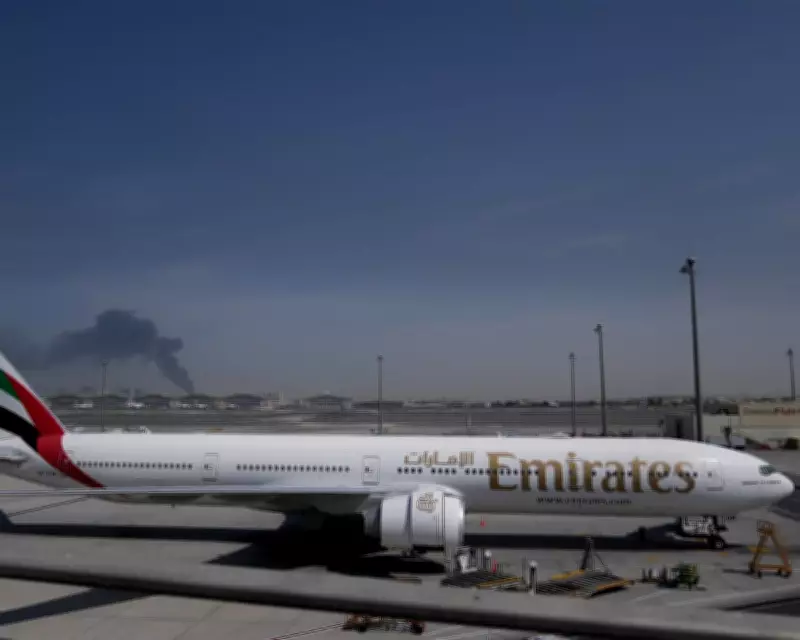
Global Aviation in Crisis as Middle East Conflict Escalates
The global aviation industry is facing its most severe disruption since the COVID-19 pandemic, with hundreds of flights cancelled and key Middle Eastern airports remaining closed for a third consecutive day. The escalating conflict between the US-Israel coalition and Iran has created unprecedented travel chaos, stranding hundreds of thousands of passengers worldwide.
Major Airports Shut Down Across Gulf Region
Dubai International Airport, the world's busiest international hub, along with Abu Dhabi's main airport and Doha's Hamad International Airport, have all suspended operations. These closures represent the first simultaneous shutdown of all three major Gulf transit hubs in modern aviation history. Early Monday morning saw 1,239 flights already cancelled, adding to the 2,800 cancellations on Saturday and 3,156 on Sunday.
Emirates Airlines, based in Dubai, has suspended all planned services until 3pm UAE time on Monday. Etihad Airways from Abu Dhabi and Qatar Airways from Doha have implemented similar suspensions, collectively cancelling hundreds of flights. The disruption extends far beyond Middle Eastern carriers, with Air India cancelling flights from Delhi, Mumbai and Amritsar to major European and North American destinations.
Airspace Restrictions Create Global Ripple Effects
The airspace over Iran, Iraq, Kuwait, Israel, Bahrain, the United Arab Emirates and Qatar remains virtually empty according to flight tracking data. The conflict's expansion into Lebanon, with Israeli airstrikes on Beirut's southern suburbs following Hezbollah rocket attacks, has further complicated regional airspace management.
Aviation analyst Henry Harteveldt warned travelers: "There's no way to sugarcoat this situation. Passengers should prepare for significant delays or cancellations for the next several days as these military actions continue to evolve."
Financial Markets React to Prolonged Disruption
Airline stocks worldwide have come under intense pressure as investors assess the conflict's impact. Japan Airlines shares tumbled 5.6%, Singapore Airlines dropped 4.5%, Qantas fell 5.4% and Cathay Pacific slipped 2.9%. The situation is further complicated by soaring oil prices, with Brent crude jumping 13% to reach $80 per barrel, potentially climbing to $100 according to market analysts.
Aviation adviser Bertrand Grabowski noted: "The primary impact for all airlines will come through dramatically increased oil prices, which will inevitably drive operational costs upward across the industry."
Operational Challenges Mount for Airlines
The prolonged closure of Middle Eastern airspace presents unprecedented operational challenges. Flight crews and pilots are now scattered across global destinations, complicating efforts to resume normal operations whenever airspace reopens. The Gulf region serves as a critical intersection for both passenger travel and air cargo, meaning the disruption extends to global trade lanes.
Ian Petchenik, communications director at Flightradar24, highlighted the compounding challenges: "Middle East airspace closures are forcing airlines into increasingly narrow corridors. The simultaneous conflict between Pakistan and Afghanistan adds another layer of risk to already constrained flight paths."
Alternative Travel Options Emerge for Wealthy Passengers
As commercial aviation grinds to a halt in the region, private jet services have seen unprecedented demand. Ameerh Naran, CEO of private jet brokerage Vimana Private, revealed that Saudi Arabia has become "the only real option for people seeking to exit the region immediately," with private jet flights from Riyadh to Europe costing up to $350,000.
The current aviation crisis represents the most significant disruption to global air travel since pandemic-related restrictions paralyzed the industry in 2020. With no immediate resolution to the military conflict in sight, airlines and passengers face continued uncertainty and disruption across international travel networks.