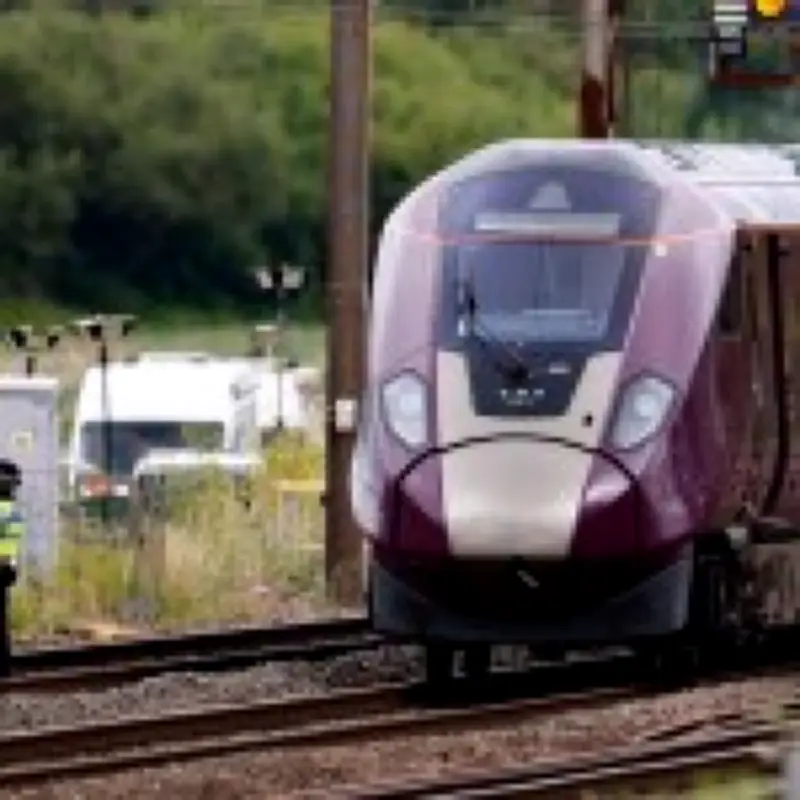
Investigators are examining whether a faulty signal caused a deadly train collision in Bedford on Friday, which killed one driver and injured nearly 100 passengers. The crash occurred just after 5pm when two East Midlands Railway (EMR) services collided on the same line, with one train smashing into the back of the other.
Driver killed and dozens seriously injured
The East of England Ambulance Service confirmed one person died, 11 suffered 'very serious' injuries, and 22 were seriously injured. A further 56 people sustained minor injuries and were treated at the scene or in hospital. The driver of the stopped train from Nottingham had been reporting a fault to staff on the phone when the other train hit it.
Dave Calfe, general secretary of the train drivers' union Aslef, said: 'Our thoughts tonight are with the family and friends of the driver who died in the crash near Bedford today and with the passengers who were injured in the accident. We want to thank the emergency services who responded so quickly to help those on board, and are still at the scene.'
Possible automatic warning system failure
Investigators are looking into whether a second error may have contributed – the second train may have failed to trigger its automatic warning system, which is normally activated if a train passes a yellow or red signal without braking. When triggered, an alarm sounds in the driver's cab. If ignored, the train protection warning system applies the brakes. It is unclear if this malfunctioned.
Rail journalist Tony Miles described the crash as a 'relatively slow speed collision'. Most carriages of the two southbound trains remained on the tracks, but at least one derailed. Online train trackers show the rolling stock involved were a class 360 and a class 810, with the front of the former hitting the rear of the latter. EMR began rolling out class 810s in December last year, while class 360s are at least 20 years old.
Passenger describes chaos and injuries
Passenger Pete Knapp, 40, described the scene: 'There was a moment of being flung into the chair in front, and then I saw smoke. People were crying, screaming, and people were so scared and confused. I got up, and I saw a lot of people who were unable to speak, had broken legs, and then I managed to get out of the train, and because I'm quite thin, I was able to squeeze out through the gap in the doors.'
Dr Knapp said he saw people with 'life-threatening, major injuries, minor injuries' as well as 'people with bandages, people who couldn't see straight'. He added: 'I've got blood all over my trousers and my back hurts like hell, but I'm all right.' He said he had not felt the train slow down before the crash, but other passengers told him they had.
Prime Minister and Network Rail respond
Prime Minister Sir Keir Starmer described the crash as 'hugely concerning' and said he is 'grateful to the emergency services for their swift response to this tragic incident'. A spokesperson for Network Rail said: 'We are supporting the efforts of emergency services on scene and our thoughts are with everyone involved.'