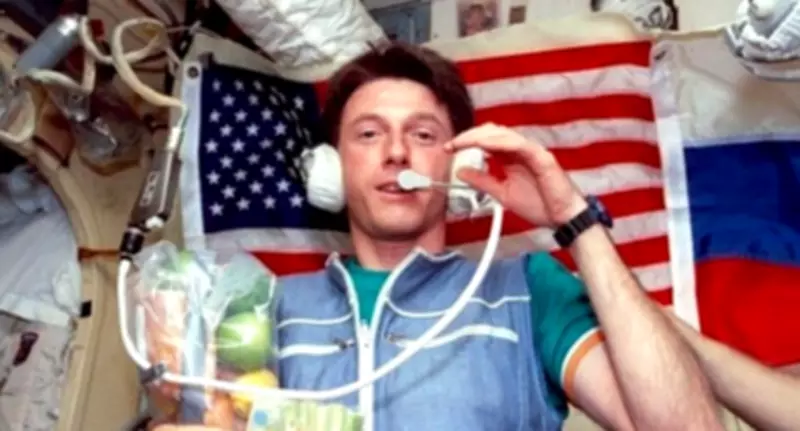
Astronaut Michael Foale Exposes the Overlooked Perils of Space Exploration
In an exclusive interview with the Inspirational Leadership Speakers Agency, Michael Foale, a veteran of six space missions and over 374 days in orbit, shares profound insights into the realities of long-duration spaceflight. His career, spanning shuttle missions, spacewalks, and commanding expeditions on both Mir and the International Space Station, provides a unique perspective on the hidden dangers that evade public attention.
The Transition from Short Missions to Extended Stays
Foale began his spaceflight journey with three short missions, each lasting about ten days. He describes these as "military attack scenarios" where meticulous training and ground support ensured flawless execution. However, his experience shifted dramatically during his fourth mission, which involved a long-duration stay on the aging Russian Mir space station.
This mission was part of a geopolitical initiative by President Clinton to support the Russian space program, aimed at preventing nuclear proliferation. Foale arrived at Mir during a period of decay and political instability, which set the stage for a critical incident.

A Catastrophic Collision and Its Lessons
Shortly after his arrival, a cargo ship collided with Mir, causing a leak, loss of power, and rendering three modules unusable. Foale and his Russian crewmates, who did not speak English, were forced to recover the station under dire circumstances. This event highlighted the unpredictability of long-duration missions, where astronauts must rely on general skills rather than specific training for unforeseen challenges.
Foale emphasizes that living in space for extended periods requires adaptability, as astronauts cannot anticipate weekly repairs or system failures. His subsequent mission as commander of Expedition 8 on the International Space Station, launched via a Russian Soyuz rocket after the Columbia shuttle disaster, further underscored this reality. Alongside Russian cosmonaut Alexander Kaleri, Foale spent six months focusing primarily on maintenance, with experiments occupying only 20% of their time.
Psychological and Operational Challenges
The psychological toll of long-duration spaceflight became apparent through issues like fatigue and communication breakdowns. Foale recounts instances where ground teams were unavailable on weekends, forcing him to solve problems independently, sometimes leading to conflicts upon their return. He likens missions to the International Space Station or future journeys to Mars to "going in a motor home that keeps breaking down," requiring resilience, optimism, and strong crew cohesion.
The Misunderstood Risk: Normalization of Deviance
When asked about the most misunderstood risk in spaceflight, Foale points to normalization of deviance, rather than catastrophic explosions. He explains that risk often accumulates slowly through small deviations from established procedures, forming an "accident chain." This drift occurs when humans and machines gradually stray from verified operations, increasing the likelihood of failure.
The Mir collision serves as a prime example. Russian mission managers, aiming to save money, discontinued the use of a radar system designed for safe cargo ship docking. Instead, crew members were tasked with manually estimating distances using graph paper and TV screens, a method that proved inadequate under time pressure. This decision, a deviation from the original design, led to the catastrophic event.
Foale stresses that such risks are pervasive in aging systems like Mir, where improper integration of new components and cost-cutting measures can compromise safety. He argues that maintaining original operational standards is crucial to preventing accidents, even if the immediate threat seems minimal.

Key Takeaways for Future Space Exploration
Foale's experiences reveal that long-duration spaceflight demands not only technical expertise but also psychological fortitude and strict adherence to protocols. The hidden danger of normalization of deviance poses a significant threat to missions, emphasizing the need for continuous vigilance and integration of safety measures. As space agencies plan for journeys to the Moon and Mars, these insights will be vital in mitigating risks and ensuring crew safety.
This interview, conducted by Tabish Ali, offers a rare glimpse into the complexities of space exploration beyond the glamour of launch and landing, highlighting the enduring challenges astronauts face in the void.