Artemis II Crew Returns Safely After Historic Moon Mission
The Artemis II astronauts have made a triumphant return to Earth, completing their groundbreaking 10-day journey around the moon with what NASA officials are calling a 'perfect splashdown' in the Pacific Ocean. The four-member crew, consisting of Commander Reid Wiseman, Pilot Victor Glover, Mission Specialist Christina Koch, and Jeremy Hansen, landed safely off the coast of California in the early hours of April 11, 2026.
Historic Lunar Voyage and Safe Return
This mission represents a significant milestone in space exploration, as the crew traveled farther from Earth than any humans in history. Their return journey aboard the minivan-sized Orion capsule was a tense affair, with the spacecraft hurtling through the atmosphere at speeds exceeding 23,000 miles per hour before deploying its parachute system for a controlled descent.
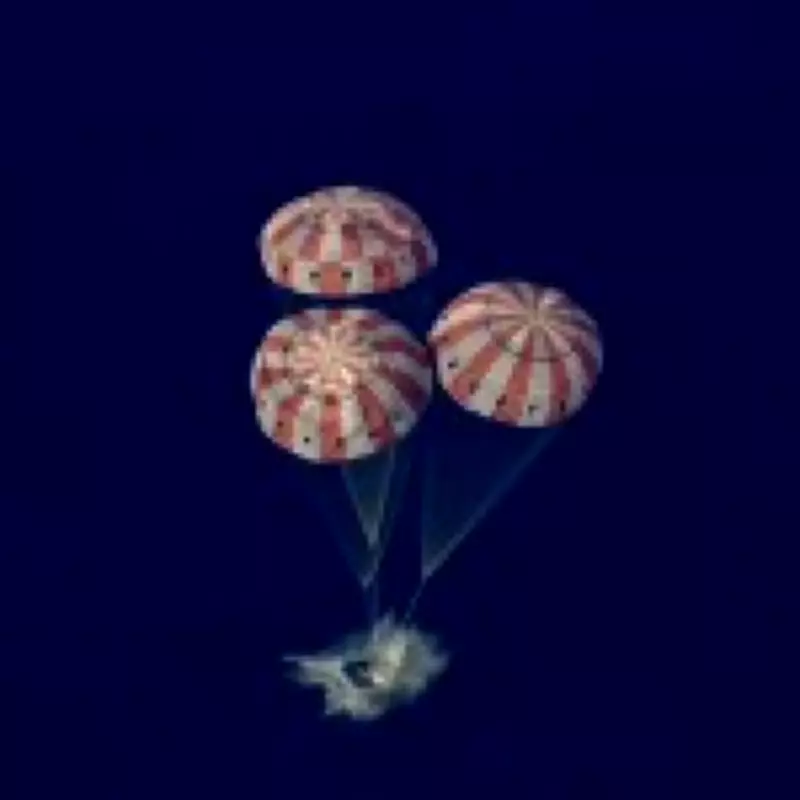
The most critical phase of the landing occurred during atmospheric re-entry, when the Orion capsule encountered temperatures so extreme that the surrounding air transformed into fiery plasma, temporarily disrupting radio communications. Despite these challenges, the spacecraft's 11 parachutes successfully slowed its descent from 300 mph to just 20 mph before the capsule made contact with the ocean surface.

Recovery Operations and Celebrations
Immediately following the splashdown, U.S. military helicopters and recovery teams were dispatched to retrieve the astronauts. The crew was transferred from their inflatable raft to the nearby warship USS John P Martha, where they underwent mandatory medical evaluations after their grueling two-week mission.
NASA's mission control erupted in cheers as confirmation of the successful landing came through. 'These were the ambassadors from humanity to the stars that we sent out there right now, and I can't imagine a better crew,' stated NASA administrator Jared Isaacman, praising the astronauts' performance throughout the mission.
Mission Objectives and Technical Aspects
While Artemis II was not designed for a lunar landing, the crew conducted valuable scientific observations from the far side of the moon, including documenting a total solar eclipse. The mission proceeded smoothly overall, though NASA did report some minor technical issues aboard the spacecraft, most notably with the Orion capsule's waste management system.
The successful completion of Artemis II represents a crucial step forward in NASA's broader lunar exploration program, demonstrating the Orion spacecraft's capabilities and paving the way for future missions that will eventually return humans to the lunar surface.