Aqueduct Racetrack, the last thoroughbred racetrack within New York City limits, held its final races on Sunday, closing after 132 years of operation. The New York Racing Association (NYRA) is consolidating downstate racing at the newly rebuilt Belmont Park in Elmont, which is set to reopen in September after a $455 million redevelopment.
The closure marks the end of an era for a venue that had been a fixture of city life since the Gilded Age. The track opened on September 27, 1894, drawing about 700 spectators and eight bookmakers for an unsanctioned six-race card. Over the years, it hosted legendary horses like Man o' War, Secretariat, and Seabiscuit, and served as a venue for the Belmont Stakes during the 1960s while Belmont Park was under reconstruction.
A community institution
For generations of horseplayers, trainers, jockeys, and fans, Aqueduct was more than a racetrack. It was a communal space where people from all walks of life gathered. Former jockey Richard Migliore, the track's all-time leading rider with 2,238 victories, told the Guardian: "Aqueduct has always been New York City's racetrack. It's part of the boroughs. It's in Queens." He noted that unlike Belmont Park or Saratoga, Aqueduct never felt removed from the city, and its patrons were known for their candor and expertise.

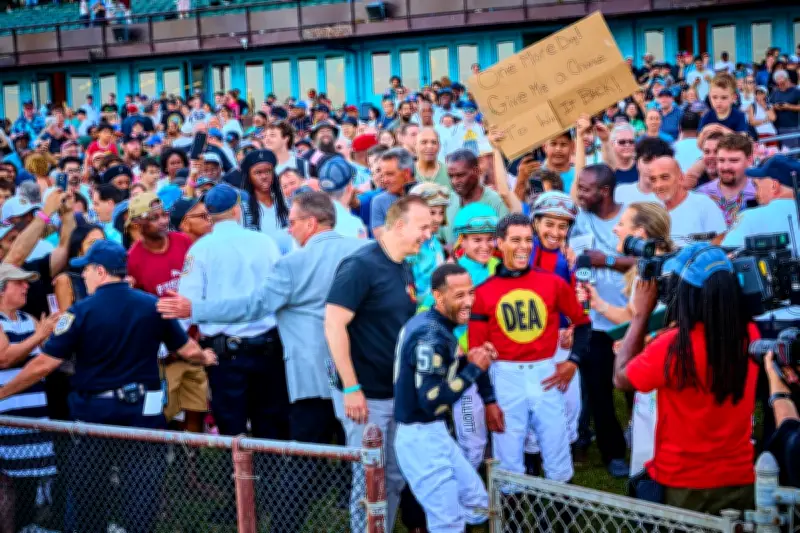
On its final day, 6,866 people attended, giving the weathered grandstand a glimpse of its former self. The crowd included longtime patrons, curious first-timers, and lapsed fans returning for a last look. Retired track announcer Tom Durkin returned to call the final race, and a four-piece band greeted attendees at the gates.
Economic and social impact
The closure reflects the economic realities of a sport reshaped by off-track and online wagering. According to NYRA, the move to consolidate at Belmont Park was long expected. The redevelopment of the Aqueduct site, which covers roughly 100 acres, is part of New York Governor Kathy Hochul's plan to address the housing crisis. "The Aqueduct site represents a significant opportunity," Hochul said in a statement, "and through this community-driven process, we will ensure its future reflects the immediate priorities of Queens residents while expanding housing, economic opportunity and public amenities for all New Yorkers."
For many regulars, the loss is deeply personal. Stanley Wint, a 69-year-old Canarsie resident who had been coming to Aqueduct for more than 30 years, said: "I'm going to miss this place. Just the atmosphere and the people, the down-to-earth people." He noted that the track was a place where people from diverse backgrounds came together, including retirees, Caribbean immigrants, and airport workers.
Final races and farewell
The final day of racing featured nine races, with the last race at 5:50 p.m. The 8-1 shot Assume Nothing, ridden by Jaime Rodriguez, won the final race, a $100,000 starter allowance over 1⅛ miles on dirt, paying $18.42 to win. After the race, jockeys lingered by the paddock, posing for photos and embracing fans. Kendrick Carmouche, a fan favorite with more than 1,000 wins at Aqueduct, hopped the rail to join the crowd.
Robert Bourget, a 75-year-old retired horseman who had attended Aqueduct for 62 years, expressed sadness at the closure. "It's sad to think," he said. "It's just like everything else in America. They can ruin something people don't even realize they have."
Aqueduct's closure leaves New York City without a racetrack for the first time since 1821, when the Union Course opened in what is now Woodhaven, Queens.