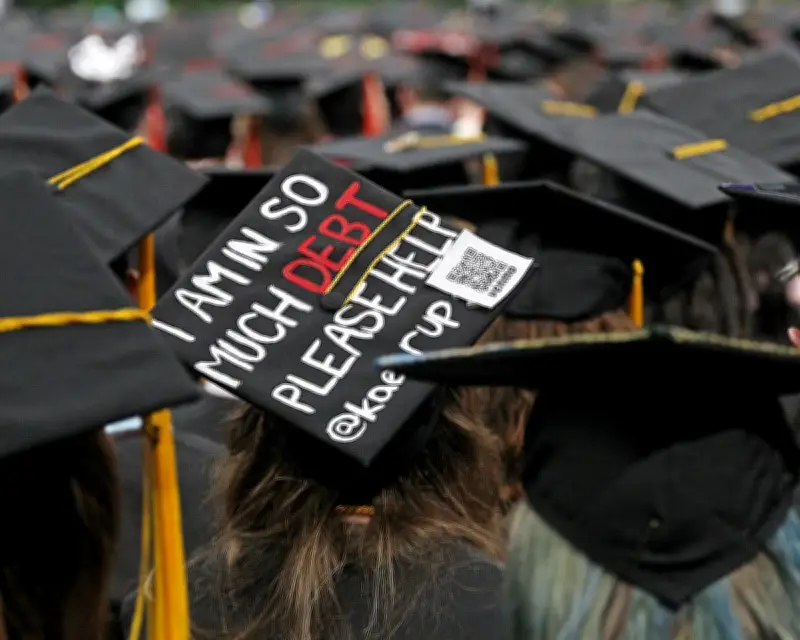
The American student loan repayment system is set to undergo a significant overhaul next month, changing the way millions of borrowers pay off their debt. The series of changes, which take effect 1 July, are a result of the Trump administration’s One Big Beautiful Bill Act signed last summer and a recent court ruling that ended the Biden-era Save repayment plan. Borrowers will face stricter payment timelines and less forgiveness, the latest in a series of massive changes to the student loan system in just a few years.
What is Changing?
More than 7 million Americans are enrolled in the Save plan, an income-based repayment plan launched in 2023 by the Biden administration. The program aimed to drastically reduce undergraduate loans, eliminate monthly payments for some, and offer early forgiveness for borrowers with low balances. After a federal appeals court ruling in March, the Save plan will be officially dismantled on 1 July. The ruling followed challenges by Republican attorneys general, putting monthly repayments on hold for years. On 1 July, monthly repayments will resume, and Save borrowers must soon apply for a different payment plan.
What Repayment Options Will Borrowers Have?
Once the Save plan ends, borrowers have 90 days to choose a different repayment plan. Those with loans issued before 1 July 2026, who do not plan to take out more loans, will retain access to several existing income-driven and fixed-income plans. Compared to Biden-era plans, these require faster repayment and include fewer forgiveness options. Borrowers can use income-based repayment (IBR), pay as you earn (PAYE), or income contingent repayment (ICR), which offer loan forgiveness after 20 to 25 years. However, PAYE and ICR will be dismantled by summer 2028. Borrowers who do not apply for another program will be automatically enrolled in a fixed-income plan, typically not eligible for forgiveness, with higher monthly payments designed to pay off loans within 10 years. Two other fixed plans offer lower or gradually increasing payments over a longer period.
Why Is This Happening Now?
The Department of Education says the overhaul simplifies the system. Under-Secretary of Education Nicholas Kent stated, “For years, borrowers have been caught in a confusing cycle of uncertainty, but the Trump administration’s policy is simple: if you take out a loan, you must pay it back.” This marks a U-turn from the Biden administration, which attempted to cancel $430 billion in student debt before the Supreme Court blocked it in 2023. Experts say the new plans are less forgiving, making college more prohibitive for future generations. Natalia Abrams of the Student Debt Crisis Center said, “We have an affordability crisis, and having more expensive repayment plans just affects the money people have in their pockets.” William Elliott of the University of Michigan’s Center on Assets, Education and Inclusion noted that student debt has shaped a generation, affecting wealth-building and the perceived value of education.
Are There New Options for Borrowers?
Borrowers planning to take out new loans after 1 July will have access to two new repayment plans: the repayment assistance plan (RAP) and the tiered standard plan. Under RAP, monthly payments are based on adjusted gross income (AGI) rather than discretionary income. If AGI exceeds $10,000, payments range from 1% to 10% of that amount; below that, the monthly payment is $10. Loans are forgiven after 30 years. The tiered standard plan is a fixed-payment plan with terms of 10 to 25 years, depending on the initial balance, and payments of at least $50 per month. Some borrowers may be automatically enrolled if they enter repayment without choosing another eligible plan.
How Are Students Reacting?
Recent graduates are bracing for the overhaul, many unsure about future loans. Ryan Coryea, a 21-year-old senior at the University of California, San Diego, plans to move back to Texas after graduation due to unaffordable student debt payments combined with rising housing and food costs. Though considering a law or master’s degree, the new plans may make it prohibitive. “It’s really making us reconsider how we’re going to pay for grad school, and also if we’re going to go at all,” she said. Cassie Urbenz, who graduated with a master’s from the University of Florida, will soon start paying off $20,000 in undergraduate loans. With a job as a union organizer, she will make monthly payments just over $200. “It’s really disappointing that I’m going to be having a lot of extra pressure to pay it off early,” she said. “It’s going to delay my own accumulation of wealth.”