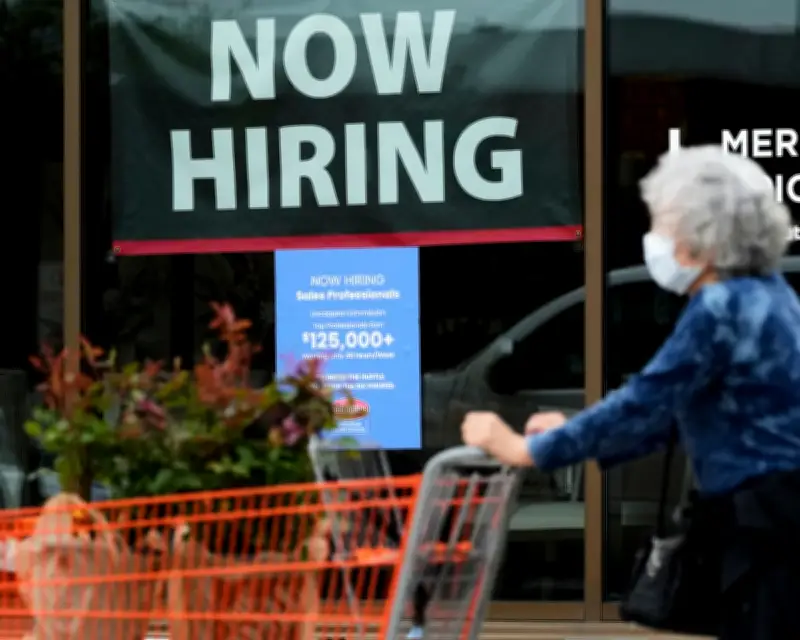
US employers added just 57,000 new jobs in June, roughly half the number economists had forecast, as the Bureau of Labor Statistics also revised down its figures for the previous two months by a combined 74,000. The unemployment rate edged down to 4.2%, but the number of unemployed people changed little, with 720,000 individuals leaving the labor force.
Revisions and labor force trends
The bureau revised May's unexpectedly high figure from 172,000 new jobs to 129,000, and April's from 179,000 to 148,000. Despite these downward adjustments, the three-month average of job gains stands at about 111,000, indicating a relatively strong market compared to the sluggish growth seen last fall and winter.
Private sector and industry breakdown
Private employers added 98,000 jobs in June, according to ADP payroll data, with pay rising 4.4% year-over-year for job-stayers. Workers in finance saw the highest annual pay increase at 5%. The healthcare industry, a key driver of recent gains, added 22,000 jobs in June, a slower pace than its average monthly gain of 38,000. The hospitality and leisure sector unexpectedly declined by 61,000, reflecting weaker seasonal hiring despite the World Cup matches hosted across the US.
Low hire, low fire mode
Data from the Bureau of Labor Statistics earlier this week showed that job openings, hires, and voluntary separations changed little in May, suggesting the economy remains in a “low hire, low fire” mode. “The pace of hiring is telling a story of both supply and demand. We know it’s taking people longer to find work, but there also are signs of labor supply constraints in certain industries,” said Dr Nela Richardson, ADP’s chief economist. “For now, the overall effect is a slowdown in job creation.”
Federal Reserve implications
The latest jobs numbers make it more likely the Federal Reserve will continue focusing on inflation at its late July meeting. New Fed chair Kevin Warsh emphasized “price stability” in his first press conference and reiterated the 2% inflation target. However, he told a conference of central bankers this week that “inflation risks have come down.” Since February, the war in the Middle East has pushed inflation to a three-year high of 4.2% in May. Despite a fragile peace deal between the US and Iran, fuel prices remain elevated, and it is unclear whether June inflation figures, due later this month, will reflect recent negotiations. In their June meeting, Fed officials projected that most members believe at least one rate hike will occur before year-end. The central bank has held rates steady since December.