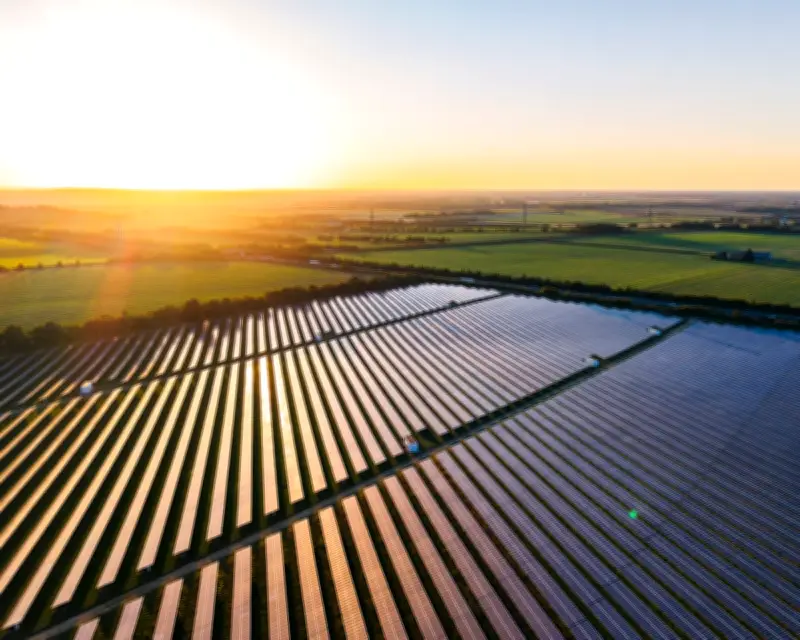
A reader from Middlesbrough has posed a question that has become a popular internet meme: why are solar farms built on green spaces when they could be placed over the vast expanses of car parks? The query, submitted to the Guardian's Notes and Queries series, highlights a growing debate about the most efficient and environmentally friendly way to generate solar power.
The logic behind solar car parks
The idea is straightforward: instead of covering agricultural land or natural habitats with solar panels, why not utilise the already-developed, sun-exposed surfaces of car parks? Solar canopies over parking lots can generate electricity while providing shade for vehicles, reducing the urban heat island effect, and protecting cars from weather. According to a 2021 study by the U.S. Department of Energy, covering the nation's large-format retail parking lots could generate enough electricity to power nearly 10% of the country's needs.
Challenges and counterarguments
However, the practical implementation faces hurdles. Car parks are often owned by multiple private entities, requiring complex coordination and investment. The cost of installing elevated structures is higher than ground-mounted systems. Additionally, the orientation and shading from nearby buildings can reduce efficiency. Some experts argue that greenfield solar farms are cheaper and quicker to deploy, which is crucial for meeting climate targets.
Environmental and planning considerations
In the UK, planning policy has traditionally favoured brownfield sites, but the rapid expansion of solar farms has led to conflicts over land use. The Campaign to Protect Rural England has raised concerns about the loss of farmland. Conversely, solar car parks can integrate with existing infrastructure and avoid these conflicts. A spokesperson for Solar Energy UK noted, “Car parks represent a huge untapped resource for solar generation, and we are seeing increasing interest from retailers and local authorities.”
Reader responses and future outlook
The Notes and Queries series invites readers to submit answers and new questions. The selection of responses will be published next Sunday. This debate reflects a broader discussion on how to balance renewable energy expansion with environmental preservation and practical constraints.