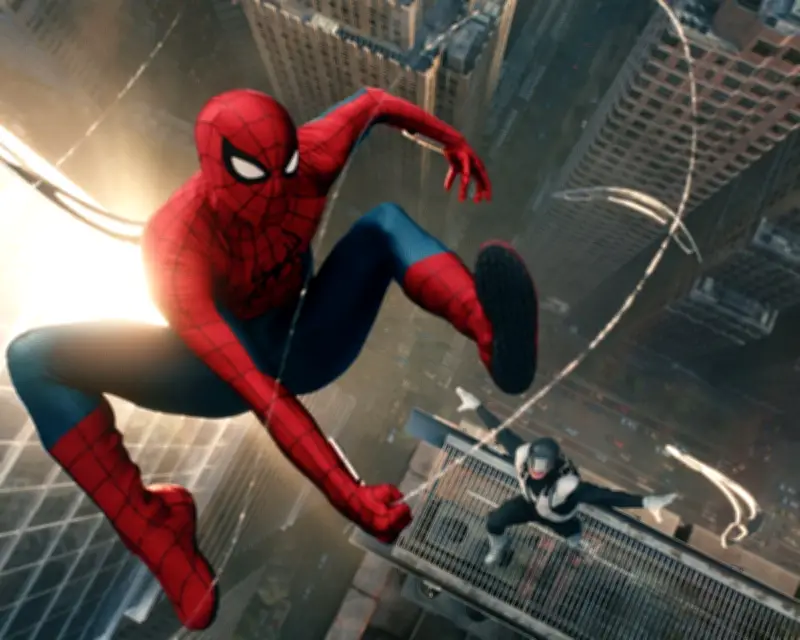
Marvel's upcoming Spider-Man: Brand New Day faces a new challenge: scientific reality. According to a press release from Glasgow's Kelvinside Academy, the iconic superhero's origin story and abilities are biologically and physically implausible, potentially undermining audience suspension of disbelief.
Radioactive spider bite: infertility instead of superpowers
Biology teacher Ian Nicholson explained that being bitten by a radioactive spider would not grant superhuman strength or agility. Spiders are too small to transfer significant radioactive material. However, if the spider were large and radioactive enough to bite Peter Parker directly on a testicle, there would be a marginally increased risk of infertility. Nicholson cited a real-life example: “I actually know somebody who was bitten by a radioactive cat,” which had undergone iodine isotope treatment for hyperthyroidism. The result? “She was treated amazingly by the NHS,” not superpowers.
Web-swinging: a recipe for severe injury
Physics teacher Ben Fitzgerald noted that Spider-Man's web-swinging would be dangerous due to poorly maintained buildings: “If you’ve attached it to paintwork or old brickwork, there’s every chance the wall comes away before the web does.” Even if the anchor holds, the physics of swinging would cause catastrophic injuries. Tension forces at the bottom of a swing reach roughly four times body weight, enough to dislocate shoulders, tear rotator cuffs, rupture biceps tendons, damage the brachial plexus, and tear ligaments in the elbow and wrist. Sudden direction changes could cause whiplash, spinal compression, rib injury, organ bruising, retinal injury, concussion, and vascular damage. If the web wraps around the wrist, it could de-glove all skin from the hand.
Implications for Marvel's upcoming films
Marvel is banking on Spider-Man: Brand New Day and Avengers: Doomsday to revive the MCU after recent commercial disappointments like DC's Supergirl. The scientific debunking may challenge viewer immersion. The article suggests, with tongue in cheek, that Marvel should recut scenes to depict Peter Parker with extensive organ damage, a dislocated torso, and one swollen gonad to maintain realism. Similarly, the Hulk's gamma radiation exposure would cause nausea, vomiting, diarrhoea, weakness, confusion, headaches, and dizziness, leading to multi-system failure and death—not increased size and strength. For verisimilitude, Doomsday would need to show Reed Richards succumbing to connective tissue failure, Johnny Storm dying from airway burns, and Victor Von Doom suffering from infected pressure sores from his mask.