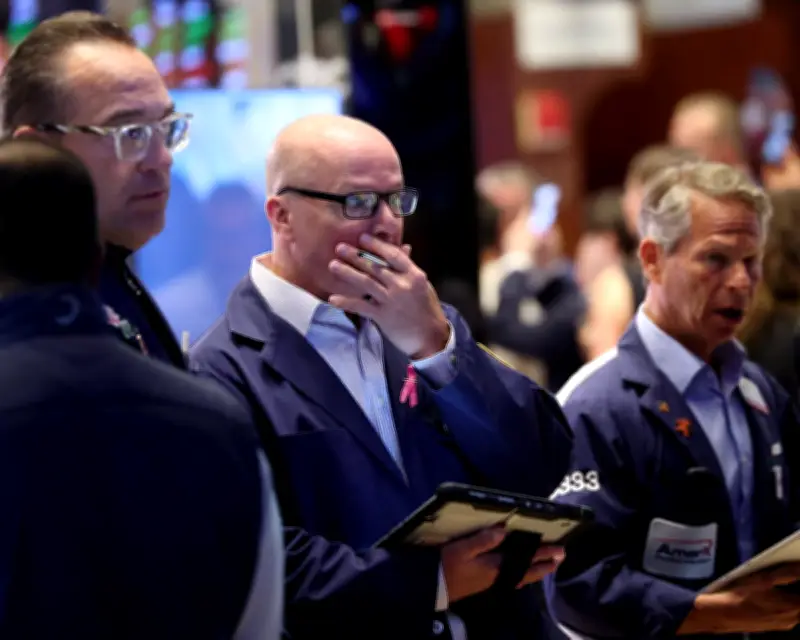
After a global stock selloff driven by declines in Alphabet, Samsung, and SK Hynix, the artificial intelligence industry is facing a financial stress test. However, the AI bubble has not yet popped, according to analysts.
AI Stocks Dip But Gains Remain
The downturn began on June 22 when Alphabet experienced its worst trading day in over a year following the departure of several high-profile leaders from Deepmind, Google's elite AI research unit. The following day, shares of South Korean chipmakers Samsung and SK Hynix dropped by double digits, triggering a trading halt on the Kospi index. Investors expressed concerns over the companies' $500 billion spending plans and signs of weakening demand for high-bandwidth memory products from other AI players.
Despite the recent dip, the chip sector has seen substantial gains this year. According to Graeme Wearden of the Guardian, the Kospi index is up 125% this year, its strongest first half since at least 1990. Samsung's share price has jumped 183% year-to-date, while SK Hynix has surged 310%. Google's stock is also up 20% year-to-date.
SpaceX and Musk Feel the Heat
SpaceX, which owns Elon Musk's xAI, suffered major losses despite not being involved in the chip selloff. The company's stock price dropped by double digits less than two weeks after its market debut. Investors reacted negatively to SpaceX's announcement that it sought to raise $20 billion in a bond sale, even after raising over $85 billion through its IPO. As a result, Musk lost his status as the world's first trillionaire, and OpenAI is likely to delay its stock market debut until next year, according to the New York Times.
Broader Economic Impact
The market moves have fundamental consequences for everyday investors. US retirement accounts tied to the Nasdaq exchange, which is heavily weighted toward tech stocks, have been affected. Additionally, the actions of chipmakers influence the cost of consumer electronics. Apple recently blamed its price hikes on the rising cost of computer memory, as Samsung and SK Hynix prioritize sales to AI buyers due to higher profit margins.
Guardian economics writer Philip Inman noted, "Every couple of decades, investors will ask themselves how long can the stock market keep climbing." He added that professional investors are "in that dangerous situation of being hardened to anything that gets in the way of pumping more cash into stock markets."
Recovery Signs Amid Panic
There are signs of potential recovery. US chipmaker Micron reported stellar quarterly earnings, with year-over-year revenue quadrupling and its stock up 300% this year. This performance shattered Wall Street's expectations.
California's Billionaire Tax Proposal
Governor Gavin Newsom of California, a likely 2028 presidential candidate, has proposed a federal minimum tax on individuals with net worth above $100 million. This comes after he opposed a state ballot initiative, the California Billionaire Tax Act, which would levy a one-time 5% tax on residents worth over $1 billion. The initiative has gained popularity among voters but is opposed by much of Silicon Valley. Some tech billionaires, including Google co-founders Sergey Brin and Larry Page, have threatened to leave California or have already moved out of state.
Newsom's counterproposal aligns with a leftward shift in the political landscape, following the success of progressive candidates in New York, Seattle, and Washington, DC. As Guardian's David Smith asked, "Will the Mamdani effect make 2028 the year of the leftwing president?" It remains to be seen whether Newsom's proposal is a genuine attempt to address wealth inequality or a strategic move to avoid taxing California's wealthiest residents.