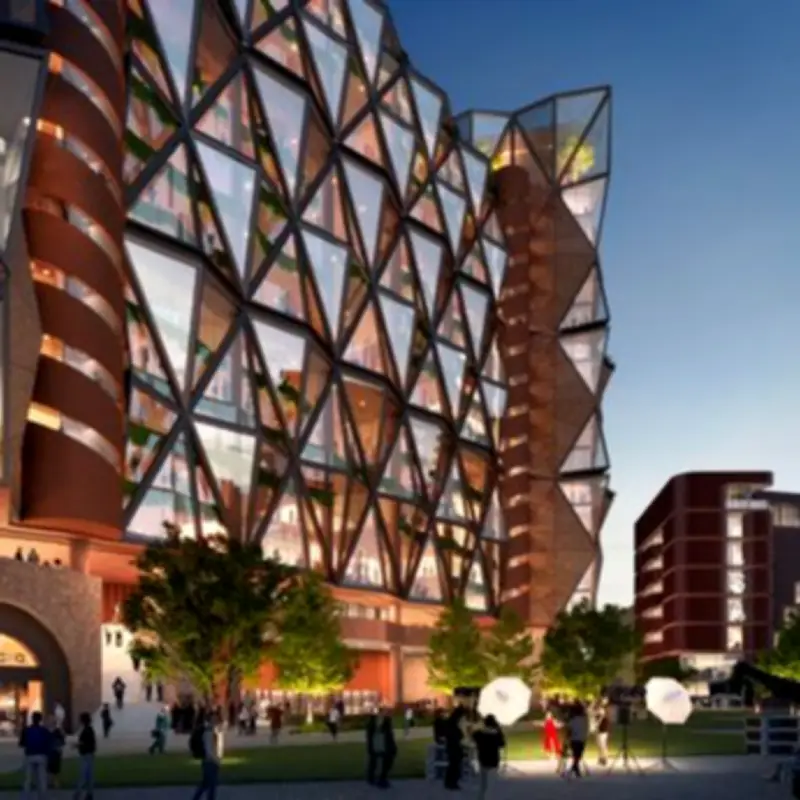
A £1 billion regeneration project to transform an industrial site in North London into a landmark film and television studio complex has been approved, despite fierce opposition over environmental and safety concerns.
Narrow Approval by Camden Council
On Monday, June 15, Camden Council's Labour-led administration voted by a slim 6-to-5 majority to greenlight the Camden Film Quarter. The project will see 11 sound stages, educational facilities, and hundreds of new homes built on brownfield land in Kentish Town, nearly a decade after the area was earmarked for redevelopment.
The close vote reflects shifting political dynamics on the council, as Labour's majority was reduced to 30 seats in May, with Greens and Liberal Democrats gaining ground. The number of opposition councillors on the planning committee has doubled, eroding Labour's control over planning decisions.
Developer Promises and Community Benefits
Developer Yoo Capital, known for the Olympia Exhibition Centre and Sky Garden projects, has pledged a world-class film and TV studio that will deliver both commercial and public benefits. The scheme includes 485 new homes, 243 of which are classified as affordable, along with new cycle lanes, pedestrian routes, public parks, and on-site education for over 500 students at the National Film and Television School and the London Screen Academy. The developer estimates it will create 1,365 construction and operations jobs.
Planning officers noted that such a level of housing provision is very rare for any development.
Opposition and Environmental Concerns
Despite these promises, 441 residents and local groups opposed the project, citing concerns over the scale of the complex—which will reach up to 159 metres tall—the loss of trees and open spaces, and the impact on local schools and infrastructure.
Alice Brown, a Green Party candidate for the upcoming Regent's Park by-election, described the scheme as disastrous and extreme due to greenhouse gas emissions and diesel lorries involved in construction, including digging obscenely large basements. She accused planners of being under political pressure to approve a damaging scheme.
Liberal Democrat Councillor Tim Simon echoed fears about the substantial upfront CO2 impact of construction. Councillor Lorna Jane Russell, Leader of the Opposition, called the building a monstrosity that would overshadow protected views and opposed placing flats directly above a waste facility.
Fire Safety and Other Risks
Objectors also raised fire safety risks, pointing to a recent recycling centre fire in Bermondsey on June 8 and the frequency of lithium-ion battery fires in waste streams. Residents from the Kentish Town Neighbourhood Forum argued that construction lorries passing near primary schools posed a danger to children.
The Queen's Crescent Neighbourhood Forum claimed it was almost certain the development would change use, as Yoo Capital had stated they intend to sell the film studios when built. Camden Film Quarter denied this, with Yoo Capital publicly positioning the project as a long-term opportunity for global capital investment, designed as a purpose-built, urban city-centre film and TV production campus.
Defense and Mitigation Measures
Defending the scheme, Yoo Capital's Lloyd Lee said the Film Quarter would bring together community and industry. The project's Camden-based architect, Trevor Morris, acknowledged scepticism but deemed it a once-in-a-lifetime opportunity for meaningful regeneration, with the structure remaining firmly rooted in its local context.
To address fire safety concerns, the project's fire consultant said they would consider including automatic checking machines to detect batteries in waste compactors. Officers added that further regulators would need to sign off on the building's design safety.
Officers admitted the environmental impact would be significant and that greenhouse gas emissions exceeded council benchmarks. However, they argued that the development's energy efficiency would reduce carbon emissions by 63%, and that benchmarks were not targets the council needed to meet.
Future Operations
The production facilities will be run by Oxygen Studios, which also operates Longcross, Arborfield, and Fairbanks Studios.