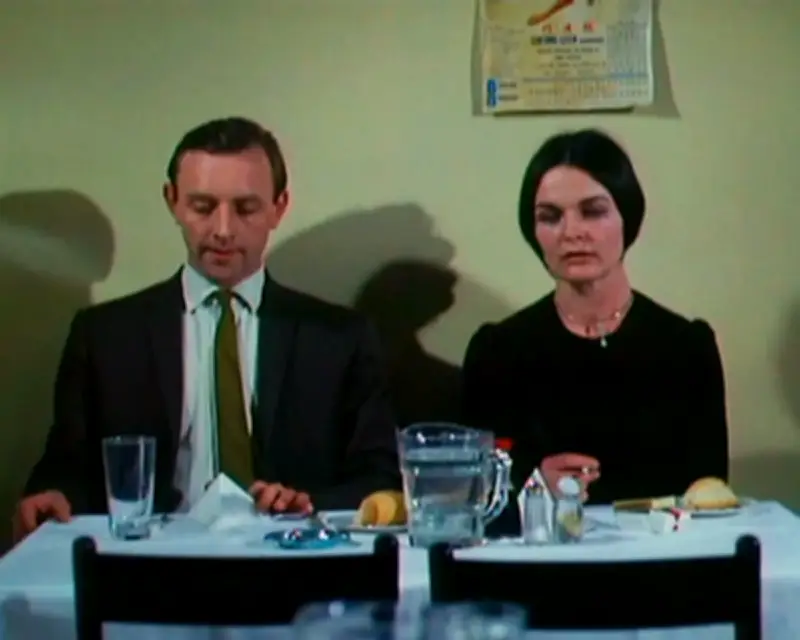
Mike Leigh has praised Contemporary Films, the British distributor that introduced UK audiences to the work of Ingmar Bergman, Satyajit Ray, Andrzej Wajda and Yasujiro Ozu, as the BFI launches a season celebrating the company's 75-year history. The season, titled Contemporary 75, runs at BFI Southbank in London from 3 September to 11 October, opening with a screening of Leigh's debut feature Bleak Moments (1971), followed by a conversation with the director.
Leigh's debut and Contemporary's gamble
Leigh, now a Palme d'Or and Golden Lion winner, described it as "a great honour" that Contemporary picked up Bleak Moments, a film based on his own stage play about a woman living an isolated life with a sister with a learning disability and a boring job. The film was financed by Albert Finney, then at the height of his 1960s acting success. "We were fresh on the block and innocent," Leigh said, "and you take everything for granted in some way. But actually, when you think about it, they were pretty remarkable and they embraced this thing."
Leigh acknowledged the company's wider cultural impact, noting that before coming to London he had only seen English-language films. "I grew up in Manchester," he said, "and I saw movies all the time, but I never saw a film that wasn't in English. I saw only Hollywood and British movies. So when I came to London, world cinema suddenly presented itself. I have recollections of seeing Russian films, Italian neorealism, you name it. It was all going on, and Contemporary was very much at the centre of that."

Charles Cooper: from political activism to arthouse distribution
Contemporary Films was founded in 1951 by Charles Cooper, an East End Jew, the son of a butcher from Ukraine, and a committed communist who saw cinema as a means to build awareness. Before the second world war, Cooper brought Soviet films to the UK via Kino, the film section of the Workers' Theatre Movement, then spent the war in New York running a film section for the International Workers Order. Deported from the US in 1950, he began supplying films to film societies, of which there were an estimated 200 across Britain at the time.
Cooper's daughters from his first marriage, Adi and Sue Cooper, recalled his dedication. Adi, now a board member of Social Work England, said: "Charles was in the right place at the right time in terms of capturing a market for the sort of films he was interested in, which branched out from political ones into what you would now call, I guess, arthouse cinema. He was prepared to take a risk on people who were unheard of here at the time, some of whom went on to have a much wider appeal."
Sue, a founder member of 1970s punk act Poison Girls, added: "There wasn't much separation between work and home with Charles. He really was passionate about film and politics, and he was very motivated to expose people's thinking to different cultures. He was basically an internationalist and a humanist." She and Adi shared memories of screenings in the basement of their Wembley home, where the room was "crammed full of people," and of working at the company's Frith Street office during school holidays, pasting press cuttings into scrapbooks for seven and sixpence for three hours' work.
The Academy connection and the company's later years
A key factor in Contemporary's success was Cooper's relationship with George Hoellering, the Hungarian émigré who ran the Academy cinema on London's Oxford Street, which served as the flagship venue for such films throughout the 1950s and 60s. "They were joined at the hip," said Pete Lawley, Contemporary's current managing director. "They were the gold standard of the time."
Hoellering died in 1984, by which time Cooper had acquired his own cinemas: the Paris Pullman and Phoenix in London, and another Phoenix in Oxford. As Cooper's health declined in the late 1980s, he passed control to his second wife, Kitty Furstenberg, who later sold the company to their friend Eric Liknaitzky, who died in 2023. Although Contemporary acquired key indies of the late 80s and early 90s, including Patricia Rozema's I've Heard the Mermaids Singing, Jane Campion's Sweetie and Hal Hartley's The Unbelievable Truth, the shift to home entertainment formats in the 1990s passed the company by, and it stuck to occasional re-releases of archive classics.

Lawley, who joined in 2023, said Contemporary has kept going by licensing clips from its catalogue and is now working on plans for the future. "It's very important to me," he said. "I really want to keep it going. It can't be about the money, let's put it that way. It may be small, but there's something worthwhile to build upon." The Contemporary 75 season at BFI Southbank begins on 3 September with Bleak Moments and a conversation with Mike Leigh.