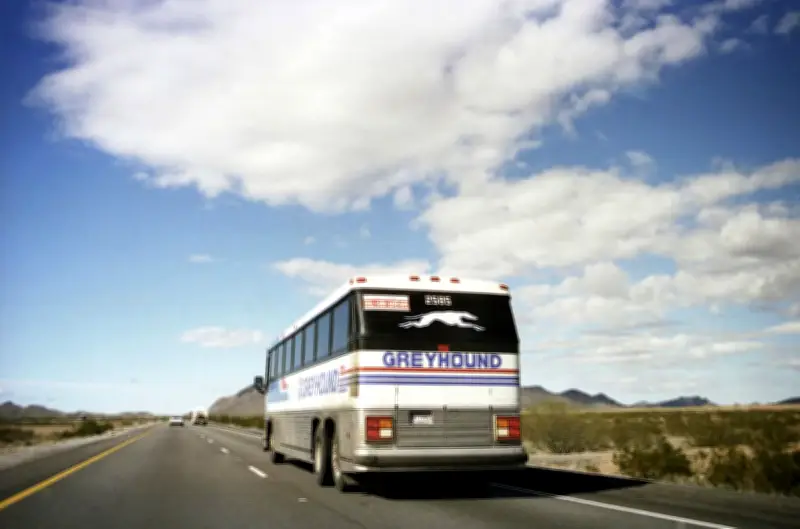
Greyhound bus travel is experiencing a resurgence following the shutdown of Spirit Airlines, but the experience remains far from luxurious. According to a Wall Street Journal report, search activity for Greyhound rose 20% from the previous year after Spirit closed, and routes overlapping with former Spirit flights saw a 30% increase in passengers. Researchers predict bus ridership could grow 4% this year, outpacing airline industry forecasts.
The current state of Greyhound
For most Americans, riding a Greyhound bus means abandoning expectations of basic dignity. Passengers endure delays, often waiting at dilapidated stations or on the side of the road. Onboard toilets rarely work and usually smell. Miles Taylor, a 26-year-old bus enthusiast who runs a YouTube channel documenting his trips, describes the experience as "grueling." He has taken two cross-country Greyhound trips, including a 104-hour Boston to Seattle route. "You're not treated very well. Everyone is yelling at you the entire time," he said.
Greyhound began in 1914 as a seven-passenger car service for Minnesota miners. It was once romanticized in films like Frank Capra's 1934 comedy It Happened One Night and became a symbol of the civil rights movement when activists rode buses to protest segregation. However, as air travel became cheaper, Greyhound service declined, leading to two bankruptcies in the early 2000s. Now owned by German brand Flix, which operates in over 40 countries, Greyhound is viewed as a cheap but unreliable travel option.
Economic drivers of the bus boom
Kate Thompson, vice-president at travel search platform Wanderu, attributes the ridership increase to economic factors. "The price of flights has increased year-to-date roughly 27%, whereas bus and train tickets have only increased around 4%," she said. "People are going to gravitate toward the average bus ticket price of $53 versus a $500 plane ticket." Additionally, data from the Department of Transportation shows the number of licensed 16-year-olds has dropped 27% since 2000, reducing car dependency.
Thompson noted that making buses "cool" comes down to comfort. "You need to be as comfortable as you would be on a flight," she said. Some bus lines offer "white glove" service with onboard attendants and complimentary amenities, but Greyhound is not one of them. Fred Ferguson, president of the American Bus Association, highlighted a "new trend" in coach design called two-and-one, where one side has two seats and the other has one, giving solo travelers more space. "That's been a hugely popular change," Ferguson said.
Efforts to improve the bus experience
Greyhound has retired many older vehicles in the past two years, cutting the average age of its fleet in half. Kai Boysan, CEO of Flix North America, wrote in a statement that the company has "invested significantly in modernizing the bus travel experience," adding "hundreds" of new buses with amenities like free wifi, power outlets, real-time trip tracking, and spacious seating. However, online reviews suggest these changes are slow to take effect. Greyhound holds a 1.3 out of five-star rating on both Trip Advisor and Yelp. One user commented, "Our bus broke down on the highway in nearly 90°F heat, and we were left sitting inside with little to no ventilation for hours." Another wrote of being "left in the middle of nowhere" while traveling from Virginia to Michigan.
High-profile incidents have also tarnished Greyhound's image. In 2001, a man slashed a driver's throat, commandeered a bus, and killed seven people. In 2008, a man with schizophrenia attacked and beheaded a passenger on a Canadian route. More recently, a worker at New York's Port Authority was stabbed after an argument. These incidents are rare but contribute to public perception.
Luxury bus experiments and grassroots efforts
Some companies have attempted luxury bus services, but they often fail. Napaway ran a "first class luxury and sleeper coach" between Washington DC and Nashville, but the route is now "paused indefinitely." The Jet offered complimentary hot towel service, espresso martinis, and amenity kits from Kiehl's and Maison Margiela, but it also ceased operations. Taylor doubts the luxury model works in the US: "Folks who have the option to take something luxury just won't take a bus."
Most riders want simple improvements. Taylor sees bus advocacy as a progressive issue, aligning with Zohran Mamdani's campaign promise to make New York City buses fast and free. Cities are also investing in stations: Chicago's city council is considering purchasing and restoring its Greyhound station, and Philadelphia's Parking Authority spent $4 million renovating its terminal, which reopened in May.
Unexpected camaraderie
Despite the hardships, Taylor notes a unique camaraderie among Greyhound passengers, born from shared misery. He recalls a man in Baltimore who, during a major delay, joked that Taylor should steal a bus and drive it to their destination. "People just come up with their own jokes," Taylor said. "Even if you're never going to see the other people on the bus again, you just develop a kinship with each other over your mutual misery."