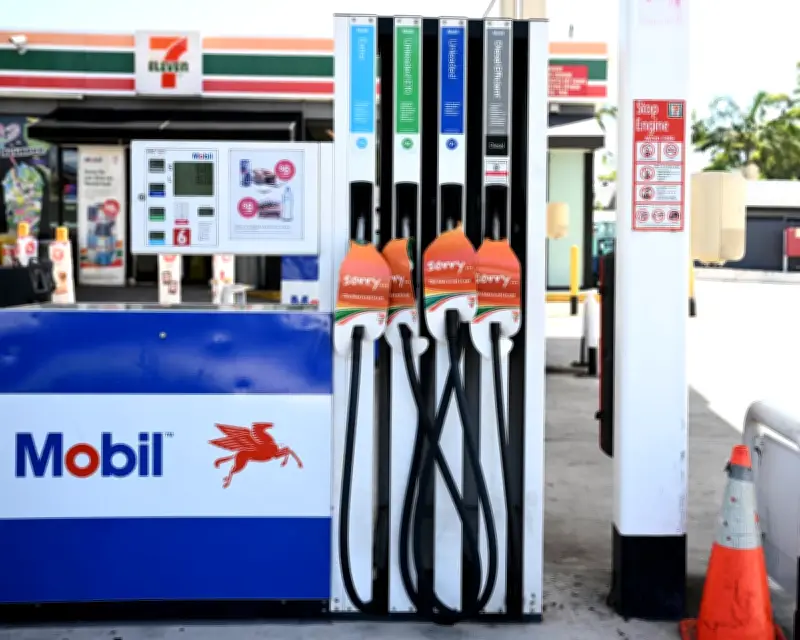
Almost three-quarters of Australian businesses reported that higher fuel prices had a negative impact on their business in May and June this year, according to a survey by the Australian Bureau of Statistics (ABS). The survey, reintroduced in response to the fuel crisis, showed that 47% of businesses absorbed rising costs in May and 44% in June, while 12% passed on higher prices in May, rising to 15% in June. Economist Nicki Hutley notes this is not great news for inflation but could have been worse.
Workforce reductions and investment delays
The survey also revealed that 9% of businesses reduced their workforce in May directly due to higher fuel prices, with 8% doing so in June. The accommodation and food services sector was hit hardest, with 28% cutting staff in May and 33% in June. Additionally, 15% of businesses delayed or cancelled investment plans in June. Hutley points out that the recent fall in global oil prices is welcome but the damage has been significant.
Government support and expectations
Hutley argues that while governments are under pressure to provide support during the "polycrisis" of geopolitical uncertainty, inflation, climate change, and inequality, citizens must have realistic expectations. She cites a small business owner's response to the New South Wales budget, who welcomed toll caps and registration changes but lamented they wouldn't make a huge difference. Hutley emphasizes that governments cannot solve all problems and that the entrepreneurial spirit in Australia needs revival.
Economic security and productivity
The concept of economic security, which involves producing goods domestically to avoid supply chain vulnerabilities, has gained urgency. However, Hutley notes that research from the e61 Institute shows a large productivity gap between Australian and US firms operating in Australia, particularly in manufacturing and information sectors. The gap is attributed to US firms investing more in intellectual property and employing it more successfully. Hutley concludes that while governments have a role in crises and helping the needy, businesses must also take responsibility for improving their performance.