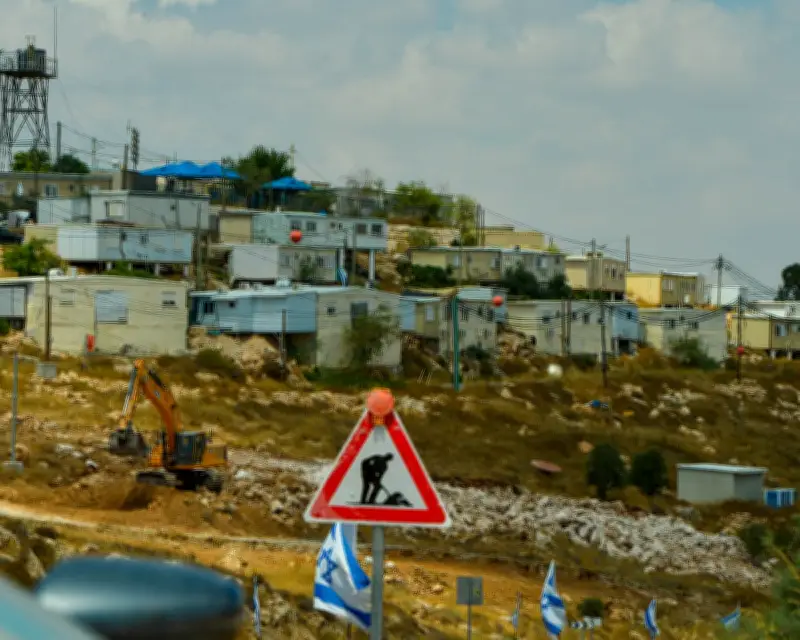
EU foreign ministers meeting in Brussels on Monday will discuss a possible ban on imports from illegal Israeli settlements, but a decision is not expected for months amid persistent divisions and legal debates. The EU has been accused of dragging its feet over upholding international law, as the bloc considers options to address trade with occupied territories.
Options for Trade Measures
The European Commission has presented three options in a leaked paper seen by the Guardian. These include a part or total ban on imports from settlements, high tariffs that make trade economically unviable, or an import licensing system. The paper, written in cautious bureaucratic language, notes that the options "can have a substantive impact on the EU-Israel relationship, also in view of the upcoming election," underscoring the commission's awareness of Israel's general election later this year.
Israelis are due to go to the polls by 27 October, the first electoral test for Prime Minister Benjamin Netanyahu since the 7 October 2023 terror attacks by Hamas. Under the EU-Israel agreement, goods from the occupied Palestinian territories—the Golan Heights, Gaza, and the West Bank, including East Jerusalem—are not entitled to preferential trade terms that apply to Israel.
International Legal Obligations
At least 10 European member states, including Belgium, the Netherlands, and Spain, argue that the EU has an obligation to end trade with occupied territories. This follows a 2024 ruling from the International Court of Justice (ICJ) that called on Israel to end its occupation "as rapidly as possible." The ruling found multiple breaches of international law by Israel, including activities that amounted to apartheid. It stated that states must "take steps to prevent trade or investment relations that assist in the maintenance of the illegal situation created by Israel in the occupied Palestinian territory."
More than 100 legal scholars have backed this call, writing to the European Commission's most senior trade and foreign policy officials this month, affirming the EU's "international legal obligation." Ignacio García Bercero, a former senior trade official at the commission who signed the letter, said: "The only way to ensure compliance with the opinion of the ICJ is a ban on trade with the illegal settlements. Any other option will not be effective in view of Israeli policy to compensate settlement producers from tariffs paid on their exports to the EU."
Evidence of Mislabelling
A recent investigation by NGO Global Echo found that Israeli exporters benefit from illegal tax breaks for products cultivated in settlements, while Israeli tax authorities permit misleading labels. One in six shipments that the NGO investigated contained agricultural products that had originated in settlements in occupied Palestinian territory and the Syrian Golan Heights, at least 42% of which had been mislabelled as Israeli-grown.
Political and Procedural Hurdles
The EU is not expected to act anytime soon, amid an ongoing dispute about whether a ban on trade with illegal settlements can be implemented via a qualified majority vote or requires unanimity. After Monday's meeting, EU foreign ministers will not gather in a decision-making format until October. The maximalist outcome from Monday, sources suggested, could be a call from a simple majority of member states to demand a legal proposal on ending illegal settlement trade.
Alberto Alemanno, a law professor at the HEC Paris business school, said: "Each month of delay doesn't just postpone compliance, it deepens the EU's own legal liability for sustaining trade with an unlawful occupation." One senior EU diplomat said it had been "a tough battle" to get the options paper, adding that there had not been "joyful cooperation" from the commission, which is responsible for drafting EU laws.
Claudio Francavilla, an associate director at Human Rights Watch, said: "It is astonishing a ban is still presented as an 'option', when it's the only measure that complies with international law."