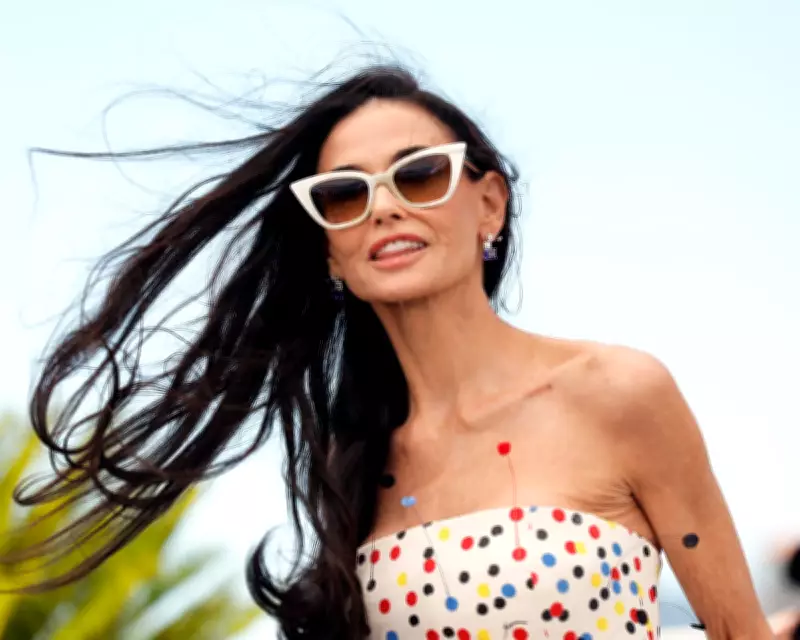
Demi Moore has stated that the film industry cannot resist the rise of artificial intelligence, emphasizing that attempting to oppose it would be a futile struggle. Speaking as a member of the Cannes film festival jury during a press conference on Tuesday, Moore addressed how AI is impacting the industry and whether stronger regulations are necessary.
Moore's Perspective on AI
“I always feel that against-ness breeds against-ness,” Moore said. “AI is here. And so to fight it is to fight something that is a battle that we will lose. So to find ways in which we can work with it I think is a more valuable path to take.” She added, “Are we doing enough to protect ourselves? I don’t know the answer to that. And so my inclination would be to say probably not.”
Moore, who last attended Cannes with the body horror film The Substance, acknowledged that there are “beautiful aspects to being able to utilise” AI but insisted it can never replace the human experience or touch. “The truth is there really isn’t anything to fear because what it can never replace is what true art comes from, which is not the physical, it comes from the soul,” she explained. “It comes from the spirit of each and every one of us sitting here, to each and every one of us who creates every day. And that they can never recreate through something that is technical.”
Politics and Art at Cannes
During the same conference, other jury members, including president Park Chan-wook, discussed the intersection of cinema and politics. Park, a renowned South Korean film-maker, stated, “I don’t think politics and art should be divided. It’s a strange concept to think they’re in conflict with each other. Just because a work of art has a political statement, it should not be considered an enemy of art. At the same time, just because a film is not making a political statement, that film should not be ignored. Even if we are to make a brilliant political statement, if it is not expressed artfully enough it would just be propaganda.”
When asked if speaking freely about politics could harm a film’s promotion, Moore replied, “I would hope not. Part of art is about expression, so if we start censoring ourselves then we shut down the core of our creativity, which is where we can discover truth and answers.”
Paul Laverty, a UK screenwriter known for his collaborations with director Ken Loach, criticized Hollywood for “blacklisting” actors who have voiced support for the people of Gaza, naming Susan Sarandon, Javier Bardem, and Mark Ruffalo as examples.