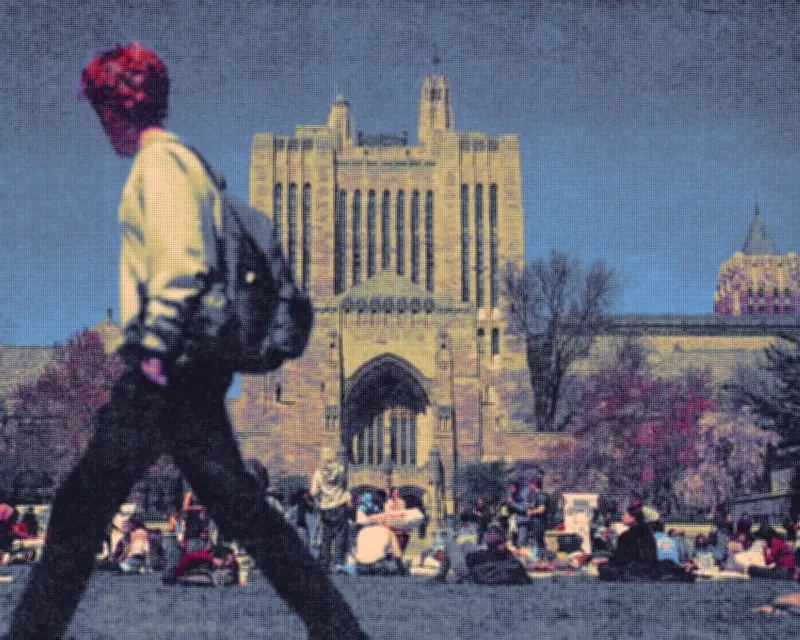
Conservative funding behind campus civility initiatives
A growing industry of campus dialogue initiatives, estimated to be worth $200 million a year, is facing scrutiny over its funding sources and motives. A new analysis by the research consortium Uncivil found that 20 out of 23 foundations most active in funding pluralism and depolarization efforts also support conservative policy networks or pro-Israel organizations. Major donors include foundations linked to the Koch brothers, the Manhattan Institute, the Federalist Society, and the Heritage Foundation.
Critics argue that these initiatives, while presented as politically neutral, serve as a backdoor for conservatives to push universities to the right. The analysis also found that 70% of civil centers and discourse initiatives launched across more than 100 campuses have been accused of suppressing pro-Palestine activism.
Origins and growth of the civility industry
The focus on civility marks a shift from past campus activism, which emphasized raising voices. The industry gained momentum after the 2017 violent protests at UC Berkeley against right-wing speaker Milo Yiannopoulos, which bolstered the notion of 'cancel culture.' Groups like BridgeUSA and the Constructive Dialogue Institute (CDI) were founded that year. The industry expanded after the 2020 racial justice protests and exploded after the 7 October 2023 Hamas attacks and subsequent pro-Palestine student protests.
Universities, facing lawsuits, federal funding cuts, and criticism over antisemitism, have eagerly embraced dialogue programming. The Trump administration redirected $60 million in federal funds toward civil discourse initiatives, explicitly linking them to student activism and the killing of far-right commentator Charlie Kirk.
Practitioners defend dialogue efforts
Practitioners argue that dialogue initiatives respond to a real breakdown in social relations and can be transformative. Nicholas Longo, a facilitator for CDI, said the focus has shifted from encouraging young people to 'raise their voices' to getting them to 'listen elo-quently and with curiosity.' He noted that conservative backing indicates 'bipartisan agreement' on the need for dialogue. 'Every social movement starts with people sitting in a circle talking to each other,' Longo said.
At James Madison University, incoming students must participate in 'civic discourse experiences' to improve 'intellectual humility,' according to director Kara Dillard. The CDI's online course 'Perspectives' has been taken by over 200,000 students and is required at Harvard, Yale, and NYU.
Critics question efficacy and motives
Many students and faculty remain skeptical. At the City University of New York, a dialogue workshop after pro-Palestinian protests avoided mentioning Israel and Gaza, leading graduate student Leila Markosian to say, 'Everyone was dancing around the central concern.' She felt the workshop aimed to 'suppress protest and suppress discord' rather than foster genuine conversation.
Dartmouth historian Bethany Moreton, who took a dialogue training, challenged facilitators who referred to campus protests as evidence of deteriorating dialogue skills. She asked them to name a 'single improvement' in US history that involved no protest, arguing that 'polarization is actually something that's perhaps necessary in a society.'
Dialogue or suppression?
Some facilitators insist dialogue is not meant to replace protests. Nancy Thomas, executive director of the Institute for Democracy and Higher Education, said she prefers the term 'discussion' as 'dialogue' has been co-opted. She added, 'I want to have conversations about authoritarianism... But what I see happening right now is the opposite'—referring to the suppression of progressive voices. The debate continues over whether civility initiatives offer genuine bridge-building or serve as a tool for conservative agendas.