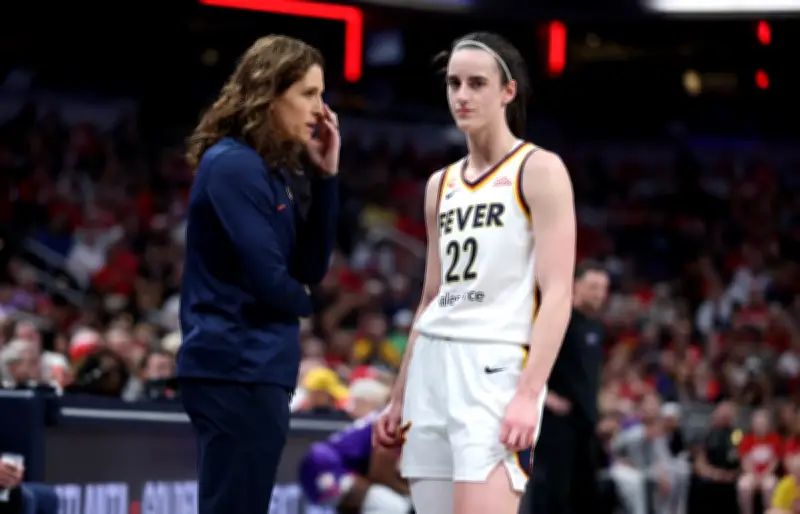
Caitlin Clark, now in her third WNBA season with the Indiana Fever, has attracted a massive audience of casual fans. However, a vocal subset of these fans has constructed a narrative that casts Clark as a victim of jealous rivals, negligent referees, and league officials who resent her popularity. This framing distorts the realities of professional basketball and does a disservice to Clark and her fellow players.
Poster Controversy Ignites Conspiracy Theories
Last week, the WNBA released a poster to commemorate its 30th anniversary, featuring 20 players. Clark's absence sparked outrage among her most ardent supporters, who claimed she was deliberately excluded. However, WinCraft, the company that produced the poster, reportedly did not have the rights to use Clark's image. Also omitted were legends like Candace Parker, Diana Taurasi, and Tamika Catchings, facts largely ignored by the conspiracy theorists.
Thomas Incident Fuels Calls for Harsher Punishment
The controversy intensified after a collision between Alyssa Thomas and Clark during a game between Indiana and Phoenix. Clark fell to the floor, and some viewers believed Thomas's fist connected with Clark's throat. Fever coach Stephanie White called it a "cheap shot." Thomas was not called for a foul during the game, and Clark left with a back injury. The league reviewed the incident and suspended Thomas for one game. Phoenix coach Nate Tibbetts criticized the decision, saying, "This was not a thorough investigation [by the WNBA] in my opinion." He added, "The people in this league know who [Thomas] is. The one thing she is not is cheap."
Clark's most extreme fans deemed the suspension insufficient. Thomas reported receiving racist abuse and death threats since the incident. On WFAN, former NFL quarterback Boomer Esiason defended Clark, saying, "She's a straight, white basketball player, and she is not being treated with any sort of respect whatsoever." He suggested Clark consider playing overseas for better treatment. Most WNBA fans dismissed Esiason's comments as uninformed.
Narrative Misses the Real Story
The persistent victim narrative overshadows the more accurate story: Clark's struggles are the ordinary growing pains of a young superstar. This vacuum allows conspiracy-minded fans to thrive. The suggestion that Clark is targeted because she is a straight white player in a league that skews Black and queer ignores the many white stars who have come before her, like Rebecca Lobo and Sabrina Ionescu. It also reinforces harmful hierarchies at a time when politics are sharpening against Black women and the LGBTQ+ community.
Suggesting Clark leave the WNBA overlooks the difficulties faced by predecessors who played overseas to earn a living. Brittney Griner's detention in Russia serves as a stark reminder. While Clark's popularity has helped raise WNBA salaries, it is only one factor among many, including the rise of leagues like Unrivaled and the advocacy of earlier players—contributions Clark has acknowledged.
Protective Impulse Undermines Clark's Growth
Clark's fans seem to want to protect her from the harsh realities of professional sports, but basketball has always involved tough defense. Michael Jordan faced relentless physical play from the Celtics and Pistons. Nancy Lieberman, a pioneer from the pre-WNBA era, recalled Pat Riley saying, "They beat the crap out of her. She tried starting two fistfights, and she didn't even cry." That resilience is part of the game.
Clark is a fine player, among the top five in scoring and assists, but she has faults: she is undersized, a limited defender, and frequently complains about calls. Instead of allowing her to meet lofty expectations, her fans attribute her growing pains to external factors. This protective impulse, reminiscent of helicopter parenting, risks turning Clark into a symbol of perpetual victimhood rather than a dominant force evolving in a league full of established stars like A'ja Wilson and newcomers like Paige Bueckers.