Axel Springer's Transatlantic Ambition: How Europe's Largest Publisher Embraces US Expansion
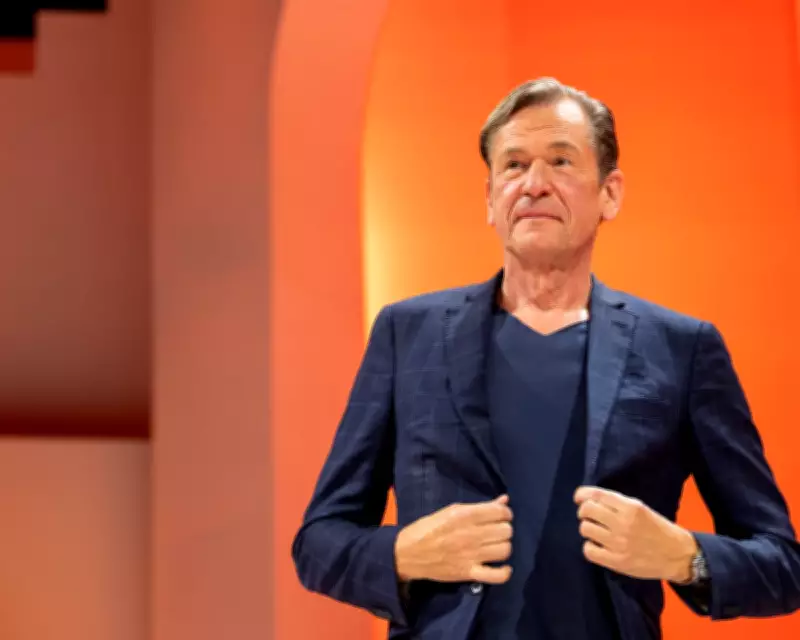
Mathias Döpfner, the chief executive of German media giant Axel Springer SE, consistently frames his company's aggressive growth strategy as fundamentally driven by a political mission: the urgent necessity to reinforce and defend Western democratic values. This vision has become the cornerstone of Axel Springer's ambitious push beyond European borders, particularly targeting the United States as a key market for expansion.
Political Vision Meets Media Strategy
In his 2023 publication Dealing with Dictators, Döpfner articulated a solution for strengthening Western democracies: nations that uphold the rule of law should prioritize alliances and trade among themselves, rather than engaging with authoritarian regimes under the false premise that economic ties might moderate their behavior. This philosophical stance makes a recent editorial decision at Axel Springer particularly striking. Last month, Welt am Sonntag, a Springer-owned German broadsheet, published a prominent opinion piece by Hungarian Prime Minister Viktor Orbán, just weeks before critical elections in Hungary. A former editor at the newspaper described the move as causing "a lot of strong irritation," highlighting a potential contradiction between stated principles and editorial actions.
Axel Springer, a dominant and often polarizing force in Germany's post-war media landscape, is now setting its sights on becoming a major transatlantic media player. The company's portfolio expanded significantly in 2021 with the acquisition of the US-European outlet Politico. More recently, it secured a landmark £575 million all-cash deal to purchase the United Kingdom's Daily Telegraph, marking a decisive step into English-language conservative media.

Editorial Controversies and Political Alignment
Döpfner, through his books, numerous interviews, and regular op-eds in Springer publications, portrays this expansion as a crusade to bolster Western ideals. However, critics argue that these lofty goals are frequently undermined by the content published in his own newspapers. Prior to the Orbán controversy, Die Welt sparked a significant scandal in 2024 by running an opinion piece from Elon Musk that urged German voters to support the far-right Alternative für Deutschland (AfD). This publication led to the resignation of the paper's opinion editor in protest. A year later, only a staff rebellion prevented the publication of an editorial from former AfD co-leader Alexander Gauland.
Döpfner has publicly stated that the AfD's policies represent "the opposite of what Axel Springer stands for." His outlets have not explicitly endorsed the far-right party outside of opinion sections, which traditionally platform diverse viewpoints. Nevertheless, as Europe exhibits growing caution towards an increasingly unpredictable United States, Axel Springer appears determined to counter this trend single-handedly. The publisher's enthusiastic embrace of American culture and its strategic disinterest in European autonomy mean it often amplifies the political disruptors favored by Silicon Valley, according to analysts.
A "Full-On Embrace" of American Ideals
"In spite of everything we've learnt about [Donald] Trump and Musk over the last year, Döpfner and his crowd are still true believers," observed Matthew Karnitschnig, former Politico chief correspondent in Europe, who now leads Brussels-based news site Euractiv. "It's a full-on embrace." Current and former Springer employees interviewed for this profile noted that Döpfner does not directly intervene in editorial matters. A company spokesperson emphasized this point, stating: "Editorial independence is sacrosanct at Axel Springer. We believe that the best way to safeguard that is through financial and economic success."

Döpfner's career began in music journalism, writing album reviews and conductor profiles for the Frankfurter Allgemeine Zeitung while completing his PhD. Former colleagues recall his early aptitude for navigating corporate hierarchies. "Some music critics care only about music, but that was not Mathias," one recalled. "There was a sense he was destined for higher things, like a nobleman without a title." After editing struggling regional papers, he ascended at Springer, editing Welt before becoming CEO in 2002. He became a major shareholder in 2020 after receiving a 15% stake from the widow of the company's founder.
Digital Transformation and Leadership Style
In the early 2010s, Döpfner made bold strategic shifts, divesting legacy print titles like Berliner Morgenpost and Hamburger Abendblatt to invest heavily in digital classifieds. This gamble paid off financially and cemented his reputation as a digital visionary within the industry and his own company. His leadership style has been described as "guru-like" by staff, with some noting how male employees often emulate his fashion choices, from three-piece suits to a more recent preference for suit jackets paired with T-shirts and white trainers—a style dubbed "Miami Vice."
Döpfner's standing survived a 2021 sexual misconduct scandal involving Bild editor Julian Reichelt, who was found to have promoted a female employee with whom he was having an affair. More recently, Döpfner's pronouncements on media's future have taken on a prophetic tone. Last summer, Axel Springer announced plans to double its value within five years by expanding media marketing platforms and pioneering "AI-based journalism." This commitment was tested when Bild had to retract an error-ridden article apparently based on an AI-generated summary. Döpfner defended the use of AI, stating, "No one here has to justify themselves for using artificial intelligence for articles, presentations, speeches, whatever. Only those who don't use it have to justify themselves." The company now acknowledges the article was a mistake and is implementing new processes for AI-assisted journalism.
Market Performance and Political Drift
Axel Springer's record in digital news is mixed. While Bild is the world's most visited German-language news portal, it consistently ranks lowest in trustworthiness surveys. A costly, three-year project to create a "multi-platform universe" with an in-house "Bild TV" channel was discontinued in 2023 after failing to gain traction. Politically, there appears to be a growing divergence between the vision promoted by Springer's leadership and mainstream German society. The company's German titles generally support the conservative policies of Chancellor Friedrich Merz and are fiercely critical of the German Greens, yet Döpfner's personal ideology leans libertarian, according to former employees.
Leaked text messages from 2023 revealed Döpfner urging Bild's editor to "do more for the FDP," a small pro-business party that failed to enter parliament in the last federal elections. His podcast series, "MD Meets," launched last autumn, has featured predominantly tech CEOs, with Viktor Orbán being the only European politician interviewed so far.
Shifting Allegiances: From Europe to the US
Despite owning Politico Europe, a key English-language source for Brussels reporting, Axel Springer's enthusiasm for the European project seems to be waning. "They don't think that much about Europe, other than it's this big bureaucratic apparatus that needs to be lobbied," said Karnitschnig. Conversely, Döpfner's passion for America has intensified, even as the US under President Trump has erected trade barriers and criticized NATO allies. In a significant symbolic move last June, Axel Springer removed the commitment to a "united Europe" from its core corporate values, replacing it with advocacy for "an alliance between the United States of America and Europe."
In a December 2025 op-ed published in both Politico and Welt, Döpfner argued that Trump desires "a strong Europe, a reliable and effective partner," cautioning Europeans against responding to provocative rhetoric with "hauteur." He reiterated this message in another Politico article this week, accusing European leaders of "alienating" their primary ally by criticizing Trump's foreign policy. "The romantic view of the Anglosphere runs deep inside Axel Springer," a company insider noted. "And Mathias is the biggest romantic of them all."
The Telegraph Acquisition and Future Prospects
The acquisition of The Telegraph is poised to substantially increase Axel Springer's base of English-language subscribers and may serve as a substitute for Döpfner's admired Wall Street Journal, which has been speculated as a past acquisition target. However, analysts question the feasibility of Axel Springer achieving top-tier status in the competitive US media market. "Especially on the rightwing spectrum, media consumers in the US lean towards broadcasting and podcasts," explained Abi Watson of Enders Analysis. "It's a difficult market to launch into."
A company spokesperson reaffirmed Axel Springer's commitment to its core principles, stating: "Axel Springer stands for freedom, free speech, the rule of law and democracy. As owners Axel Springer will grow the Telegraph Media Group while preserving its distinctive character and legacy, to help it become the most read and intellectually inspiring centre-right media in the English-speaking world. This will protect British journalism, of which the Daily and Sunday Telegraph is known as a quality institution." As Axel Springer continues its transatlantic journey, the tension between its political vision and commercial ambitions will likely define its future in an increasingly fragmented media landscape.