London is home to numerous iconic railway stations that form the backbone of the city's extensive transport network. Names like King's Cross and Paddington immediately conjure images of bustling mainline terminals seamlessly integrated with the London Underground. Yet, there exists one station that, despite its historical significance and prominent place in popular culture, sees surprisingly little foot traffic.
The Station Without an Underground Link
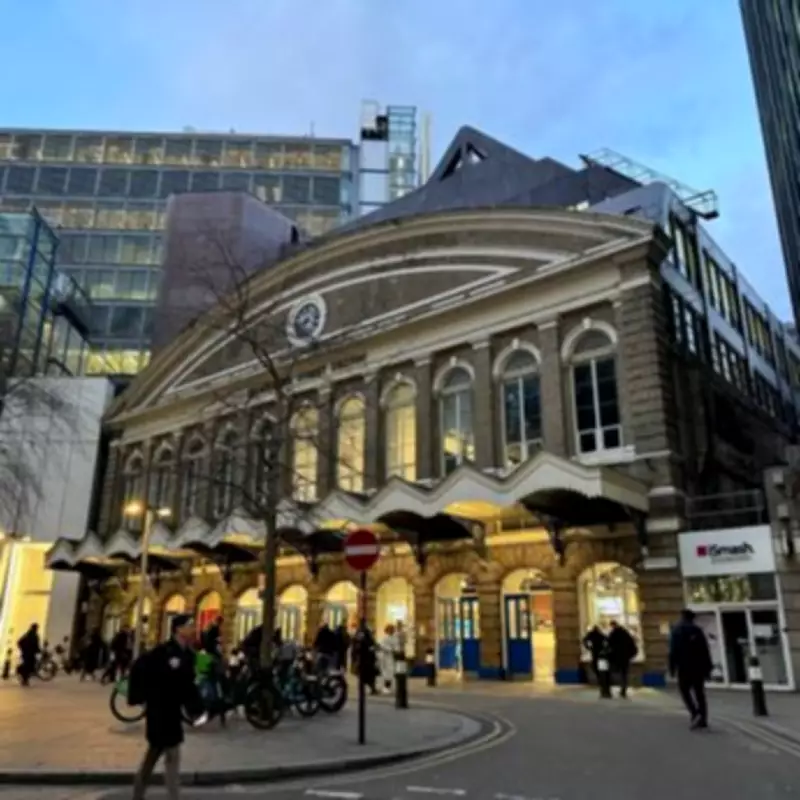
Fenchurch Street station, one of the four railway stations featured on the classic British Monopoly board, is a location countless Londoners have heard of but never actually visited. This paradox stems from a simple fact: unlike its famous counterparts, Fenchurch Street has no direct connection to the London Underground network. Originally constructed in 1854 by George Berkley as the terminus for the London and Blackwall Railway, it once stood as one of the capital's most important railway terminals, boasting a striking architectural frontage.
Over the decades, however, the station has been overshadowed by Central London's soaring office blocks and its operational scope has narrowed. Today, it exclusively operates c2c train services to Essex, which explains why it remains off the radar for the majority of Londoners who rely on the Tube for daily commuting. The station's beautiful facade, often highlighted in photographs, belies its relatively quiet platforms.
The Jubilee Line That Never Was
Here's where the story takes an intriguing turn. During the 1970s, there was a serious proposal to incorporate Fenchurch Street into the Underground system through what was then known as the Fleet line, which later evolved into the Jubilee line. Initial plans outlined a route traveling from Charing Cross alongside the Thames, with proposed stations at Cannon Street and Fenchurch Street before turning southward.
By 1980, these proposals were revised, extending the route towards Woolwich Arsenal and Beckton instead, completely excluding Fenchurch Street. Just a year later, the entire scheme was abandoned due to spiraling expenses and elevated inflation. The Jubilee line, as completed in 1999, ultimately bypassed Fenchurch Street entirely, with Stratford established as the primary transport hub in East London.
A Glimmer of Hope for the Future
Despite this historical oversight, there may still be hope for Fenchurch Street's integration into London's main transport network. Recent proposals have emerged to relocate the station eastwards, expand it with six additional platforms, and create a direct link to Tower Hill Underground station. This ambitious plan would also involve the closure of Tower Gateway DLR, with a replacement stop established at the redeveloped Fenchurch Street.
Whether these proposals will materialize remains uncertain, but they represent a potential renaissance for this forgotten Monopoly board landmark. For now, Fenchurch Street continues to operate as a beautiful but underutilized station, waiting for its chance to become a fully integrated part of London's transport tapestry.