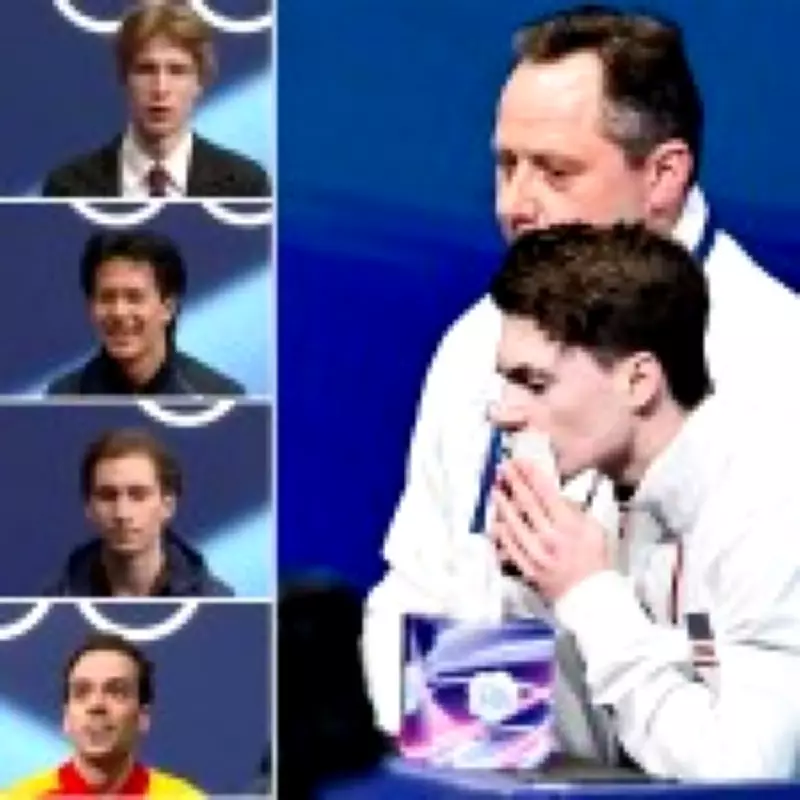
The Busiest Man at the Winter Olympics: A Coach with 13 National Allegiances
An unexpected star has emerged from the Milan-Cortina 2026 Winter Olympics, and it's not an athlete breaking records on the ice. Instead, the spotlight shines on French figure skating coach and choreographer Benoit Richaud, whose remarkable workload has made him arguably the busiest individual at the entire Games.
A Whirlwind of Jackets and National Colors
The 38-year-old Richaud has become a familiar face in television coverage from Italy, consistently appearing alongside different teams and athletes. His most visible trademark? The rapid swapping of national team jackets to match his ever-changing allegiances. In total, Richaud is coaching an astonishing 16 athletes representing 13 different countries at this year's Winter Olympics.
Sometimes the transitions happen within minutes. On one notable Tuesday, cameras captured Richaud supporting Georgia's Nika Egadze, only for him to appear shortly afterward wearing a Team Canada jacket while embracing skater Stephen Gogolev. This fluid movement between teams is perfectly permissible under Olympic rules, which allow coaches to work with athletes from multiple nations, even when those athletes compete directly against each other.
The Logistics of Multiple Allegiances
Richaud's primary organizational challenge involves ensuring he wears the correct jacket at the appropriate time. "It's an organization. It's going to be fast," Richaud explained to the BBC's More than the Score podcast. "I usually put everything in the dressing room of the skater. Usually, I'm not allowed but they let me put some stuff [in there]. They are very friendly."
When that isn't possible, team leaders or national team managers help by storing jackets and handing them to Richaud as needed. The coach has drawn attention for his frequent jacket changes, with many observers noting his typical preference for black attire now punctuated by bursts of national colors.
Emotional Demands of Coaching Multiple Competitors
Beyond the jacket logistics, Richaud faces significant emotional challenges working with so many competitors simultaneously. "It's actually very demanding emotionally because, you know, depending on [how it goes]," he revealed. "Let's imagine everything is fine and beautiful and everyone skates good, very easy. If one skates bad, then the other one skates good, you have this peak of emotion that is very difficult to express because it's something like when you are with your skater, you are fully with them."
Thankfully for Richaud, his skaters don't typically compete immediately one after another, which would create even greater emotional whiplash. Still, the emotional management remains a substantial aspect of his Olympic experience.
A Philosophical Approach to Figure Skating
Richaud, clearly a popular and sought-after coach, approaches figure skating as an artistic endeavor meant to connect with broad audiences. "Olympics, it's the grail, the most important, so I want to come with something different," he told Olympics.com. "I would like to do something bigger for figure skating. I will try to bring something deeper and bigger to the audience of figure skating and non-figure skating fans, for everyone. I want to connect skating more to art."
He elaborated on this artistic philosophy: "I will not be satisfied if my work as a choreographer will be only to do choreography. We need to try to bring something higher than just the sports. It has to be almost philosophical. It has to be spiritual. I always try to bring stories. I always try to make people feel an emotion. I always try to catch the attention of different people, not just fans."
Richaud's unique position at these Winter Olympics—coaching athletes from nearly a dozen and a half nations while rapidly switching jackets and managing emotional connections—has made him an unforgettable figure at the Milan-Cortina Games. His story highlights not just the logistical realities of international coaching, but the deeper artistic aspirations that drive elite figure skating.