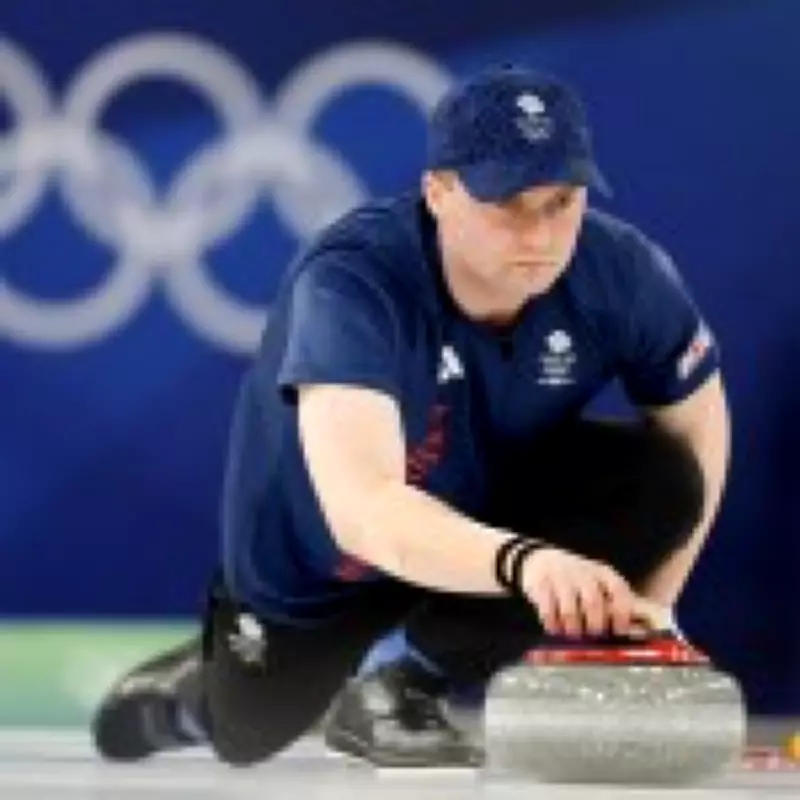
Your Complete Guide to Curling at the 2026 Winter Olympics
Curling consistently ranks among the most watched Winter Olympic sports for audiences across the United Kingdom. This enduring popularity is bolstered by Great Britain's impressive record in the discipline, having secured six Olympic medals over the years, including three prestigious golds. The nation's most recent triumph came four years ago in Beijing, where skip Eve Muirhead led the women's team to a thrilling gold medal victory over Japan in the final.
At the ongoing Milano Cortina 2026 Games, British hopes now rest on the mixed doubles pair of Bruce Mouat and Jennifer Dodds. After a semi-final defeat to Sweden, they are set to compete for the bronze medal against hosts Italy. For viewers tuning into this crucial match, understanding the nuances of curling—from the number of ends to the purpose of frantic sweeping—can greatly enhance the experience. This guide provides a comprehensive explanation of how the sport operates.
Competition Format and Scoring Explained
Traditional men's and women's curling matches are contested over ten ends. In each end, both teams deliver eight stones, with each of the four team members throwing two. The mixed doubles variant, featuring one male and one female athlete per team, is shorter, consisting of eight ends. Here, each side delivers five stones, with one pre-positioned stone placed on the ice before the end commences.
Scoring is determined once all stones for an end have been delivered. The team with the stone closest to the centre of the target, known as the house, scores one point. If that team also has the second-closest stone, they score two points, and so on. The team with the highest cumulative score after all ends wins the match. Should the scores be level, an extra end is played to decide the winner.
Team Roles and the Art of Sweeping
A standard four-person team comprises distinct roles: the Lead, Second, Third, and Skip. The Lead delivers the first two stones and typically undertakes sweeping duties. The Second throws the third and fourth stones and assists with sweeping. The Third, who throws the fifth and sixth stones, acts as the deputy skip. The Skip, serving as team captain and chief strategist, is responsible for delivering the crucial final two stones.
The vigorous sweeping seen during matches is a critical tactical element. Sweeping creates friction, generating a thin layer of water on the ice surface. This reduces friction, allowing the stone to travel further and with greater precision. Frantic brushing often indicates the team is attempting to correct the stone's speed or line, providing curlers with essential control over the stone's final resting place.
Key Rules: The Hammer and Power Plays
The hammer refers to the right to deliver the last stone in an end, a significant strategic advantage. The team with the hammer can react to all preceding stones, making it easier to score. If the team with the hammer scores at least one point, the hammer passes to the opponent for the next end. If they fail to score (a blanked end), they retain the hammer. This can lead to teams strategically blanking an end to keep the hammer for a potential multi-point score later.
In extra ends for traditional matches, the hammer goes to the team that did not score in the final regular end. The power play is a rule exclusive to mixed doubles. Each team can use one power play per match, where they may position their pre-placed stone on the tee line, opening up scoring opportunities. Only the team with the hammer can call a power play, and it cannot be used in extra ends.
Tournament Structure and Time-Outs
Ten nations compete in each of the men's, women's, and mixed doubles tournaments. The initial round-robin stage sees every team play each other once, with the top four advancing to the semi-finals. The semi-final winners progress to the gold medal match, while the losers contest the bronze medal match.
Each team is allocated one 60-second time-out per match, pausing the game to allow players to confer on strategy, sometimes with their coach. If a match goes to an extra end, each team receives an additional time-out.
As Bruce Mouat and Jennifer Dodds aim for bronze, this guide equips viewers with the knowledge to fully appreciate the skill, strategy, and tension that define Olympic curling.