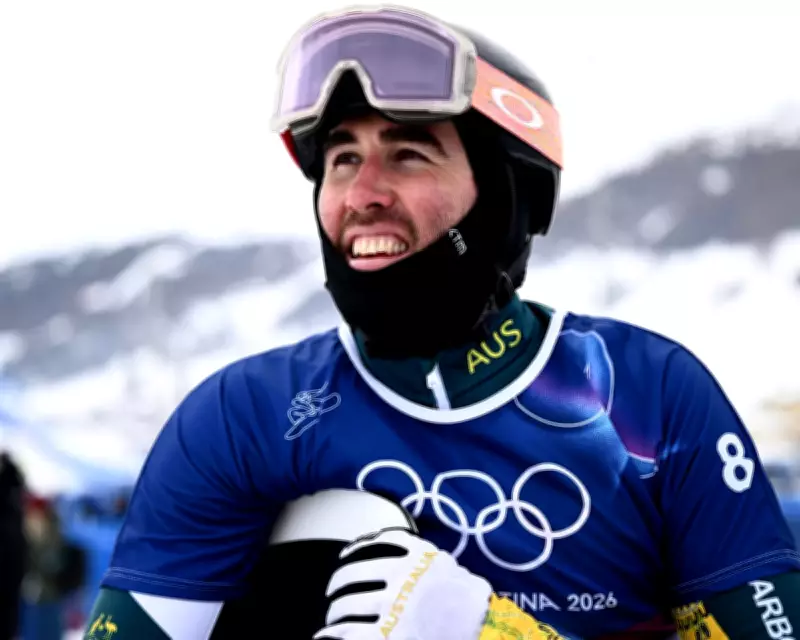
Australian Snowboard Star Hospitalised with Serious Neck Injury During Winter Olympics Training
In a devastating blow to Australia's Winter Olympic team, veteran snowboarder Cam Bolton has been airlifted to hospital after breaking his neck during a training session for the 2026 Games. The 35-year-old athlete, competing at his fourth Olympics, suffered the serious injury while preparing for the snowboard cross event at Livigno Snow Park in Italy.
Training Accident Ends Olympic Campaign
The incident occurred on Monday when Bolton experienced a crash during his training run. While he initially continued with his preparations, he woke the following day with worsening neck pain that prompted immediate medical attention. Scans subsequently revealed two fractures in his neck, leading to his emergency evacuation from the mountain by helicopter for further treatment in Milan.
Australian chef de mission Alisa Camplin confirmed that Bolton has been ruled out of the Winter Olympics entirely, ending what would have been his fourth Games appearance. "Cam wanted to make his teammates understood what was happening and that he was fine and doing well and being looked after well," Camplin stated from Livigno.
Team Support and Athlete's Spirit
Despite the severity of his injury, reports indicate that Bolton remains in remarkably good spirits. His wife has joined him in hospital, and the Australian Olympic team has mobilised comprehensive support around the popular athlete. "He knows how seriously we're taking the process of support around him and the communication has been really good," Camplin added. "I'm proud of the level of care."
Bolton's absence creates a significant gap in Australia's snowboard cross contingent. As the highest-placed Australian men's rider in Beijing with a 13th-place finish, and having achieved ninth in the inaugural team event alongside Belle Brockhoff, his experience will be sorely missed. He has been replaced by debutant James Johnstone for the men's seeding round originally scheduled for Thursday.
Latest in Series of Australian Team Setbacks
This serious injury represents the fourth significant setback for the Australian Winter Olympic team in the lead-up to the 2026 Games. The team has been plagued by misfortune across multiple disciplines:
- Aerials medal favourite Laura Peel injured her knee during pre-Olympics training
- Young freeskier Daisy Thomas suffered a knee injury in a fall, withdrawing from slopestyle but hoping to compete in big air
- Snowboard halfpipe athlete Misaki Vaughan was ruled out of her Olympic debut after failing a Head Injury Assessment following a training incident
Camplin, who famously won aerials gold in Salt Lake City while competing on two fractured ankles, expressed sympathy for the affected athletes. "Unfortunately with winter sport injuries happen along the way, in 53 athletes doing relatively high risk sports it's not something that's unusual I'm afraid to say," she acknowledged. "My heart breaks on their behalf – I know how much work goes into an Olympic dream."
Recovery Focus and Team Adjustments
With Bolton's Olympic campaign tragically cut short, attention now turns to his recovery and the Australian team's adjustments to their competition plans. The snowboard cross veteran's positive attitude despite his serious condition has been noted as characteristic of his professional approach throughout his career.
Meanwhile, other injured team members continue their rehabilitation efforts. Camplin reported that Laura Peel is "making progress" with her knee injury, noting that "our aerials team haven't even arrived yet so we don't need to rush her." The team continues to balance athlete welfare with competitive ambitions as the Winter Olympics approach.
This series of injuries highlights the inherent risks in winter sports, particularly in the high-speed, technical disciplines like snowboard cross where athletes regularly push the boundaries of performance in challenging conditions. The Australian team's response demonstrates their commitment to athlete care while managing the competitive pressures of Olympic preparation.