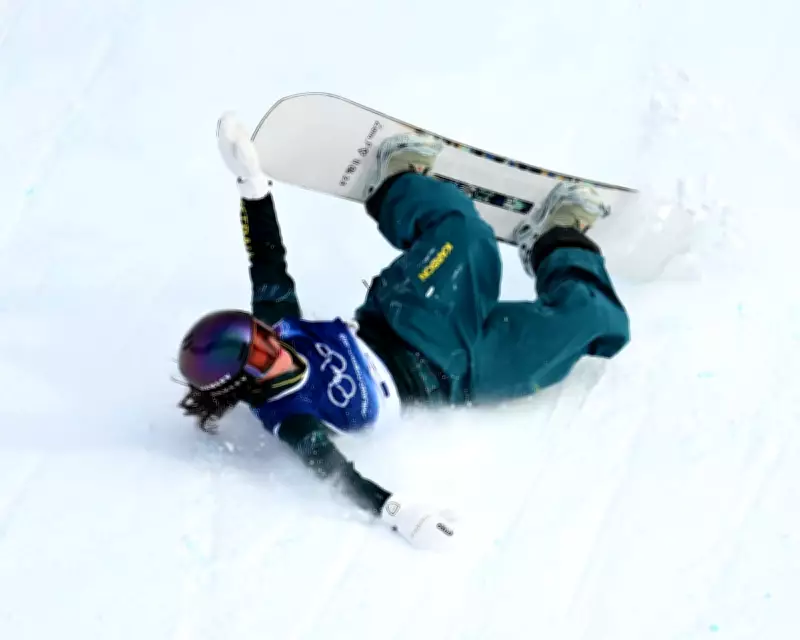
Australian teenage snowboarder Ally Hickman demonstrated remarkable resilience at the 2026 Winter Olympic Games in Livigno, Italy, battling through a painful injury to finish seventh in the highly competitive women's slopestyle final. The sixteen-year-old Sydney schoolgirl, making her Olympic debut, suffered a bruised sternum after a dramatic crash during her second run but courageously continued to compete.
A Promising Start Derailed by Injury
Hickman began the final with impressive momentum, securing fourth position after her initial run with a solid score of 67.70 points. Her performance navigating the challenging course featuring three technical rails and three demanding jumps showcased her potential on the world stage. However, her Olympic journey took a difficult turn during the second run when she experienced a significant fall that resulted in immediate injury to her sternum area.
Medical Assessment and Continued Competition
The Australian Olympic team promptly provided medical attention, transporting Hickman to the Olympic Village polyclinic for comprehensive evaluation. Medical staff conducted precautionary imaging including x-rays and ultrasound examinations to assess the extent of her injuries. The diagnosis confirmed a bruised sternum without any fractures or additional abdominal complications.
Despite the painful injury, Hickman received medical clearance to attempt her third and final run. Unfortunately, she experienced another fall at the last jump that further aggravated her sternum injury. Her determination to complete the competition despite these setbacks highlighted her competitive spirit and dedication to representing Australia at the highest level of winter sports.
Japanese Victory in Thrilling Final
The women's slopestyle event, delayed twenty-four hours due to heavy snowfall conditions, culminated in an exciting final round with dramatic score changes. New Zealand's defending champion Zoi Sadowski-Synnott delivered an exceptional performance scoring 87.48 points, only to be narrowly surpassed by Japanese rider Mari Fukada who claimed gold with 87.83 points.
Fukada's compatriot Kokomo Murase, who previously defeated Sadowski-Synnott in the big air competition earlier in the Games, secured bronze with 85.80 points. This marked another strong showing for Japanese snowboarders at the Milan-Cortina Winter Olympics.
Historic Achievement for New Zealand Star
Zoi Sadowski-Synnott's silver medal performance established a new milestone in Olympic snowboarding history. At just twenty-four years old, the New Zealand athlete has now accumulated five Olympic medals comprising one gold, three silver, and one bronze, making her the most decorated snowboarder in Winter Games history.
"Someone told me that after I got given this medal. I couldn't have even believed that that was a possibility when I was a kid, so it's pretty special," Sadowski-Synnott reflected after the competition. "The last two years hasn't really been easy with an ankle injury and then some bone-bruising coming into this season, so I'm pretty grateful to be standing here today with another Olympic medal."
Australian Representation and Future Prospects
Hickman represented Australia as the sole competitor from her nation to qualify for the top-twelve final, with Beijing bronze medallist Tess Coady failing to advance beyond the preliminary rounds. The young Australian's seventh-place finish despite injury demonstrates significant promise for future international competitions and highlights the growing depth of Australian winter sports talent.
The incident underscores the physical demands and risks inherent in elite snowboarding competitions, where athletes navigate complex courses at high speeds while executing technically demanding maneuvers. Hickman's experience will likely contribute to ongoing discussions about athlete safety protocols and injury management during major winter sports events.