Gary Wilson Voices Frustration Over Snooker Form and 'Naive' Pundit Commentary
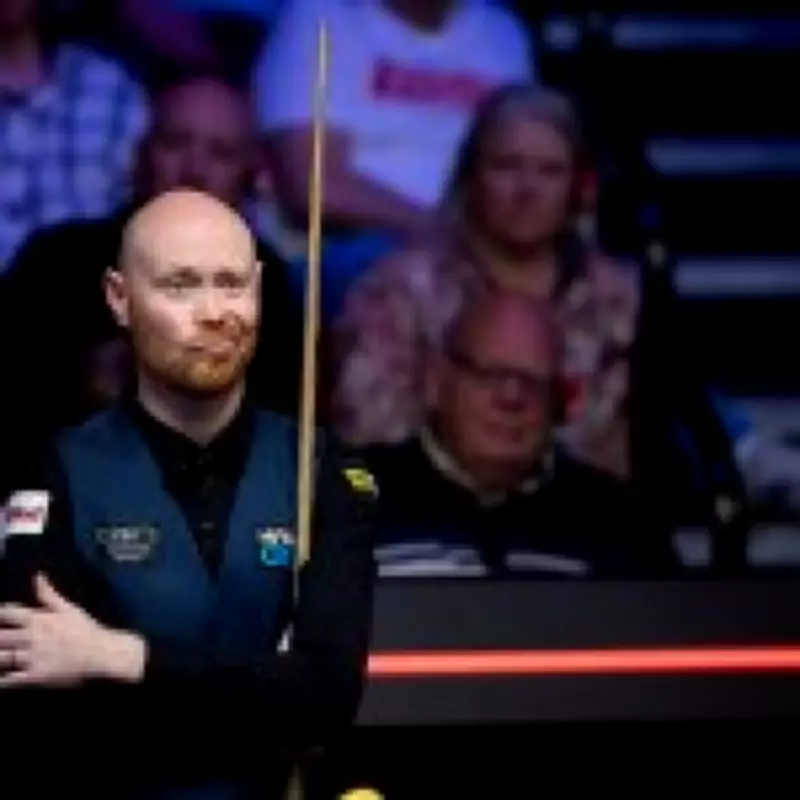
Snooker professional Gary Wilson has openly expressed feeling "lost" with his current game while criticizing what he describes as "naive" pundits who continue to praise his performances. The 40-year-old's comments come after a disappointing 10-5 defeat to world number one Judd Trump in the opening round of the World Snooker Championship on Tuesday.
Championship Defeat Highlights Deep-Rooted Issues
Despite racing to an impressive 4-1 lead early in the match, including a break of 139, Wilson watched helplessly as Trump secured nine of the next ten frames to advance to the second round. The world number 27 revealed his despondency stems not primarily from losing to the former world champion, but from profound discomfort with his own game that has persisted for an extended period.
"Deep down as I was cueing awful, as usual, it's just constant disappointment," Wilson told the BBC. "I am and always have been since the age of 13 been a better player than this. It's just a constant struggle all the time now the yips are getting worse."

Frustration with Pundit Analysis Reaches Breaking Point
Wilson directed particular criticism toward snooker commentators and analysts, accusing them of missing fundamental flaws in his play. "People are being really naive if, I'm being totally honest, people who know snooker, people are watching and saying I'm playing good, but missing all the really bad shots and really snatchy ones and not seeing anything a normal good player would notice," he explained.
The frustration extends beyond mere performance issues. "That's even frustrating, everything's frustrating because no one's even seeing what I'm showing them," Wilson added. "I'm just riding it out, playing ok at times, but I'm just masking the problems, its just debilitating."
Psychological Battle Beyond Simple Composure
Wilson rejected conventional explanations about composure under pressure, describing instead a more complex psychological struggle. "Towards the end there you lose a bit of heart, it's not composure, I get that nonsense off commentators, it's a bit of heart and embarrassment where you know you're playing a little bit worse towards the end than you even were at the start," he said.
He detailed the desperation that sets in during matches: "Even if you do manage to get in you feel like you can't hold yourself together. So you just try different things, it's not composure. You try to speed up, be more aggressive, anything, its desperation. I just wish I could have a game like I used to have and I'd come to these tournaments to compete and enjoy it."
Paradox of Success Amidst Personal Dissatisfaction
Despite his profound dissatisfaction, Wilson has achieved notable results this season, reaching a ranking final and semi-final. "I'm still sort of competing playing like that and that's the sad thing, I'm sort of competing," he acknowledged. "What do you do? There's not a lot you can do."
The professional success provides little consolation. "I'm making a good living, trying to enjoy the game I'm trying to do well in tournaments but me game is just letting us down. It's as simple as that really," Wilson stated. "It's been a number of years and I'm completely lost at this point."
Seeking Solutions Beyond Mental Coaching
Wilson revealed he has sought professional help but emphasized his issues extend beyond typical mental challenges. "I've started speaking to somebody, and I've done that before, it's not a mental thing for me. We've all got temperaments on a scale, some might be better than others, but mine isn't bad when I feel I can actually cue the ball in a straight line," he explained.
The fundamental problem remains elusive. "I just don't have anything really I don't know what to do from here. I'm making a good living, doing ok, that's just depressing though, the more the years go on, unfortunately."
Opponent Offers More Balanced Perspective
Judd Trump, who advanced to face either Si Jiahui or Hossein Vafaei in the next round, offered a more charitable assessment of Wilson's performance. "I think he was a bit hard on himself in that interview," Trump observed. "At the start he was playing well, all the long balls were going in, he was hitting the ball well, you don't do that if you're struggling."

Trump acknowledged the psychological dimension that emerged as the match progressed: "Towards the end it built up a little bit and the game was slipping away. He missed a couple and maybe started rushing a little bit. We all struggle at points and Gary is a great player, just sometimes just a little bit too hard on himself."
The stark contrast between Wilson's self-assessment and Trump's external perspective highlights the complex relationship between professional performance, personal expectation, and public commentary in elite sports.