Andy Simpson: The Unluckiest England Rugby Player Finally Honored
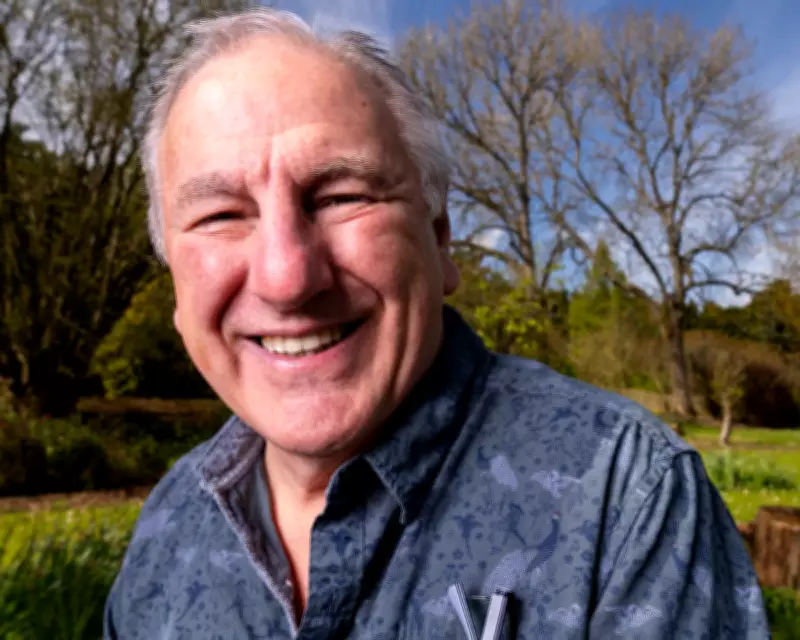
Initially, Andy Simpson thought it was a Saturday morning prank. A call from the Rugby Football Union museum informed him that, at 71 years old, he was finally a capped England player. Having retired without featuring in an officially recognized Test match, his skepticism was natural. "The first thing you think is: 'Who's taking the mickey here?'" Simpson recalled. But it was entirely legitimate. Simpson is among 47 former players now basking in a warm, rosy glow that had previously eluded them.
A Belated Recognition
After trawling through its archives, the RFU has determined that several fixtures against full-strength national teams, including a 1986 contest between Italy and an England B side featuring Simpson, were effectively Test matches. The long wait is over, and these golden oldie debutants have been invited to attend a special, albeit belated, capping ceremony on 8 June. Short of a winning lottery ticket or a pain-relieving new hip, it is hard to imagine more uplifting news for someone who spent four decades as one of English rugby's longsuffering nearly men.
Particularly for Simpson, who, until now, has arguably been the unluckiest player never to win an England cap. His story should be compulsory reading for every modern replacement. Simpson, extraordinarily, sat on England's bench for 21 matches in the 1970s and 1980s without once taking the field. A hard-edged hooker who played for Sale, he was also a teammate of Bill Beaumont, Fran Cotton, Roger Uttley, and others in the North side that beat the All Blacks in 1979. While he did represent England in six tour games, he was otherwise a perennial understudy to Peter Wheeler, Steve Brain, and Steve Mills.

The Perils of the Amateur Era
Part of the problem was simple macho stubbornness; back then, his rivals flatly refused to come off. "I should have got on the pitch twice," says Simpson from his home in Kent. "Once in New Zealand, in the second Test in 1985, someone gave Steve Brain a good shoeing, and he was staggering around for 90% of the game. They should have taken him off and shoved me on. The other time was up in Scotland in 1986 when I was covering hooker and back row. Jon Hall came off, and they put on a lock, Nigel Redman, instead of me. You're waiting for someone to say: 'You're on,' but it never came."
The cruellest blow came in the 1981 Five Nations when Simpson was in line to replace the established Wheeler, only to sever the top of his thumb in a freak accident the previous weekend. "We'd just lost to Leicester at Welford Road in the quarter-final of the John Player Cup. The father of one of our second-row forwards was parked at the back of the main stand and needed some help. I was helping to push on the doorpost by the window when someone jumped in and slammed the door. That was it. Thumb gone. It was almost certain I was going to be picked, but it never happened."
Resilience and Recognition
Remarkably, Simpson was back playing within three weeks – "nothing much stops us front-rowers" – and toured Argentina with England two months later. But his injury started to shift perceptions. Every time a lineout throw missed its target, Simpson could sense glances being exchanged up in the stand. "It definitely stays with you. They always say: 'Not a bad player, but couldn't throw in because of his thumb.' That stuck with me for a long time." Never mind if one of his jumpers was at fault. As Simpson puts it: "You practise with people, and they leap like salmon. Come the game, and they can hardly get off the ground."
Which is another reason why the RFU's call meant so much. Amateur-era forwards were hard nuts, but Simpson, who spent 30 years working in education, admits it has been an emotional few days. "You just can't imagine how proud I'll be when I get hold of that cap. Because that's all I wanted to do: play for England. And it never happened." Today, it would have been a completely different story. "With roll-on roll-off subs, I'd probably have had 21 caps. Though I haven't enough digits to count to more than 10 anyway."

Shared Joy Among Peers
It has been a similarly heartwarming time at Richard Lee's farm near Wellington, Somerset, where the former Bath prop has also received scores of congratulatory messages. Lee used to drive tens of thousands of miles up and back to Bath for training, often in the company of his old mate Graham Dawe, and has finally been rewarded for his years of sacrifice. "In a way, it feels a little bit strange. You don't get the nod when you're playing, and then suddenly, when everything's falling off, you're a capped player. But it's wonderful really. It's the recognition of being the best, after all you put in. That you were at the top of your game."
Lee was also involved in that 1986 Italy fixture at the Stadio Olimpico – "there were firecrackers going off, and I reckon there were at least 30,000 watching" – and has vivid memories of the pre-game preparations. "I remember driving up some windy roads to visit some vineyards, drinking a little bit of wine, and coming home again. Rome was a nice place to go out in." The game ended in a 15-15 draw – "we were really pressing hard at the end, but we just couldn't make it over the line," says Simpson – after which the home side were formally presented with caps. England's squad members could only raise quizzical eyebrows, as was also the case before their preceding midweek game in Sicily.
Reflections on a Bygone Era
"When we arrived, they said we had to talk to a guy from Italy's equivalent of MI5 before dinner," says Simpson. "He sat us down and said: 'In this town, there are many bad people. There are prostitutes, there are drugs.' Some of the lads were saying: 'Where exactly do we go? Can you name names?'" Ah, the old amateur days. Simpson still chuckles wryly at the memory of Budge Rogers, then England's chair of selectors, approaching the bar in Otley in 1979 as the North's players celebrated their All Black win and wondered how many of them would feature in the Twickenham Test. "This Yorkshireman in a ratting cap came up to Budge, slapped the match programme against his chest, and said: 'There's the bloody team, now pick it.'"
It did not work out that way, but at least Simpson and his peers are having the last laugh. "I'm just glad we've been able to do this now," says Rob Udwin, the RFU's immediate past president. "There are some good players who, in another age, with more consistency of selection, would have had a better opportunity." Which leaves us to contemplate sport's most agonising question: what if? Had Simpson and Lee been capped 40 years ago, would it have transformed their outlook on life? Or did it make them more resilient? Simpson, either way, would love someone to send him the footage of the forgotten try he scored for the North v New Zealand at Gateshead in November 1983. If anyone deserves to lie back and watch TV with his England cap resting proudly on his head, it is surely him.